
Viruses are fascinating microscopic particles that blur the line between... Mehr anzeigen
 Biology4 aufrufe·Aktualisiert Jun 10, 2026·8 Seiten
Understanding Viruses: Structure, Life Cycle, and Impact
1 / 8
1
of 8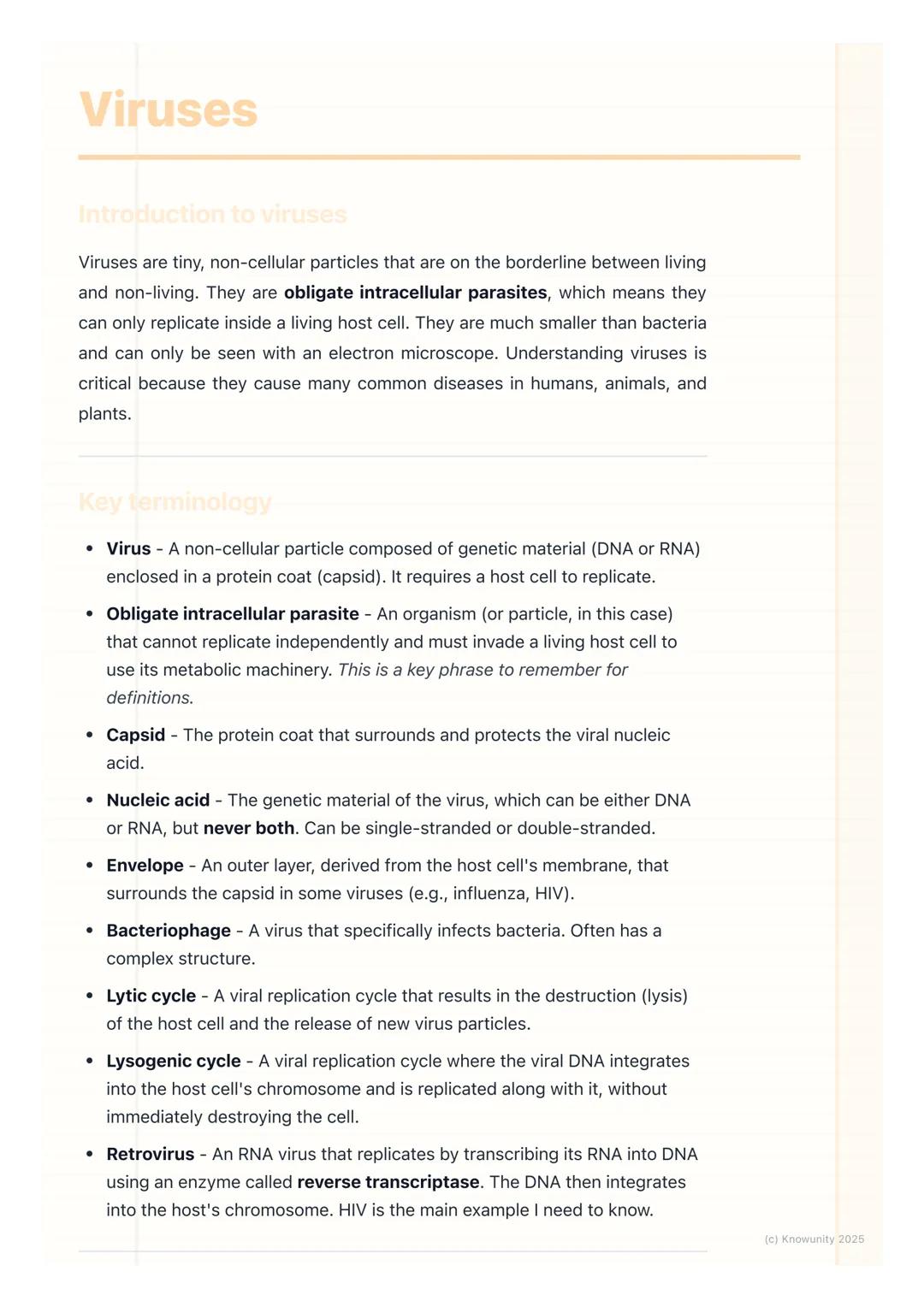
Introduction to Viruses
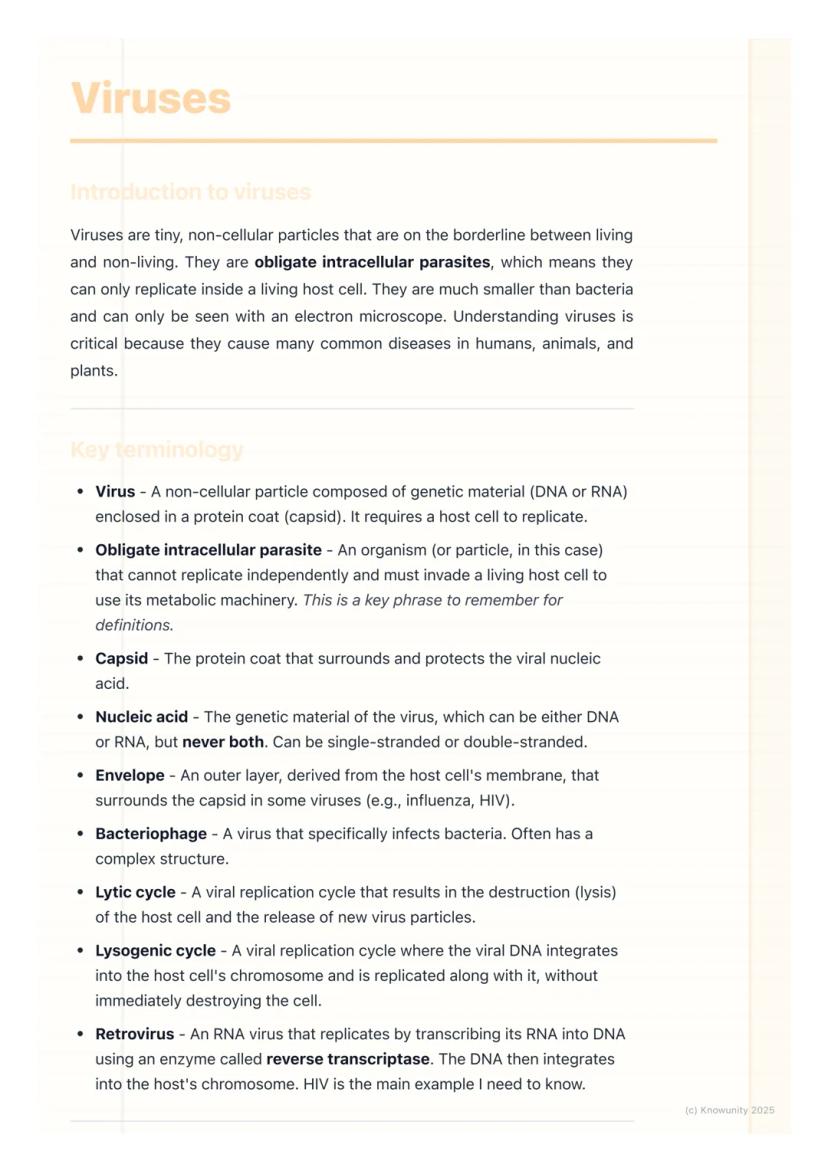
Think of viruses as nature's ultimate freeloaders - they literally can't survive without hijacking other cells! These tiny particles are non-cellular and exist as obligate intracellular parasites, meaning they absolutely must invade a living host cell to replicate. You can't see them with a regular microscope because they're much smaller than bacteria.
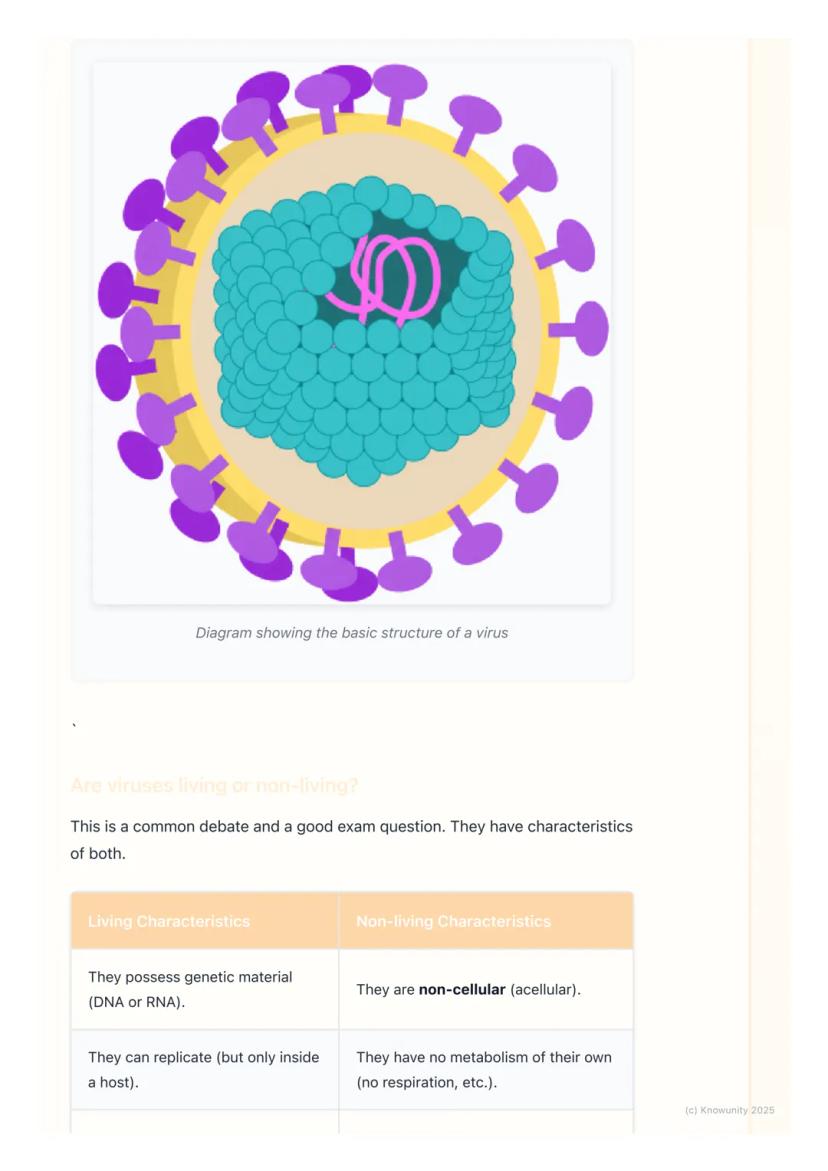
What makes viruses so interesting is their simple yet effective design. Each virus consists of genetic material (either DNA or RNA, never both) wrapped in a protective protein coat called a capsid. Some viruses also have an envelope - think of it as an extra outer layer stolen from their host cell's membrane.
Key terms you need to know: A bacteriophage specifically targets bacteria, whilst a retrovirus like HIV does something sneaky - it converts its RNA into DNA using an enzyme called reverse transcriptase. Remember these definitions as they're exam favourites!
Quick Tip: The phrase "obligate intracellular parasite" perfectly sums up what viruses are - learn this definition by heart!
2
of 8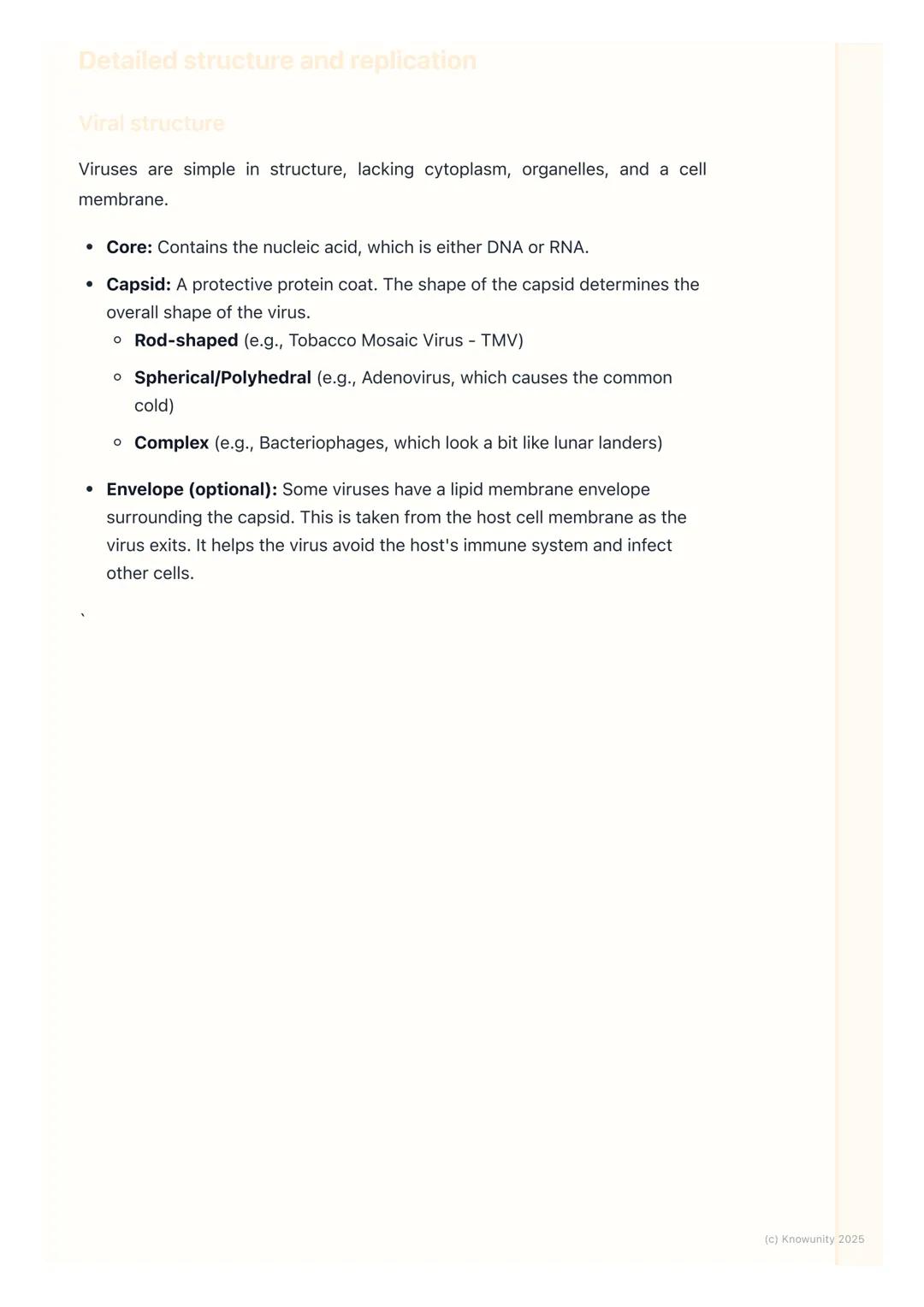
Viral Structure and Living vs Non-Living Debate
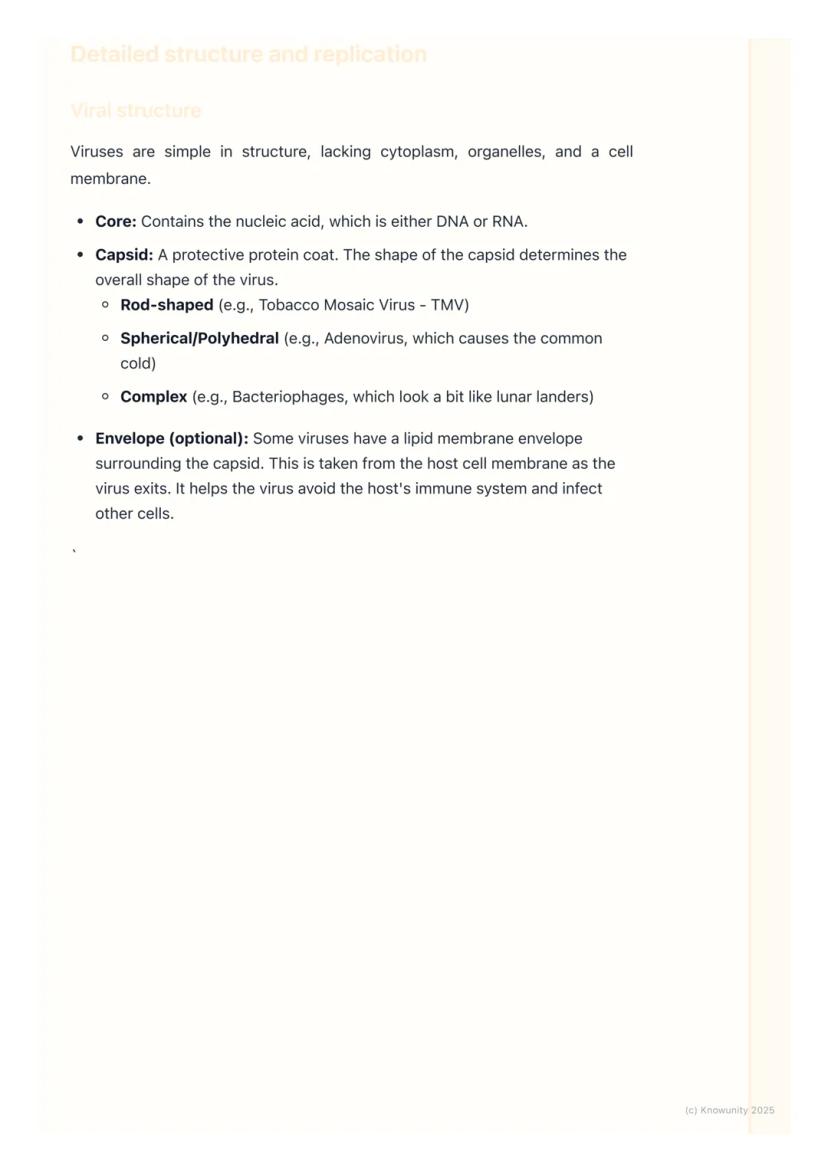
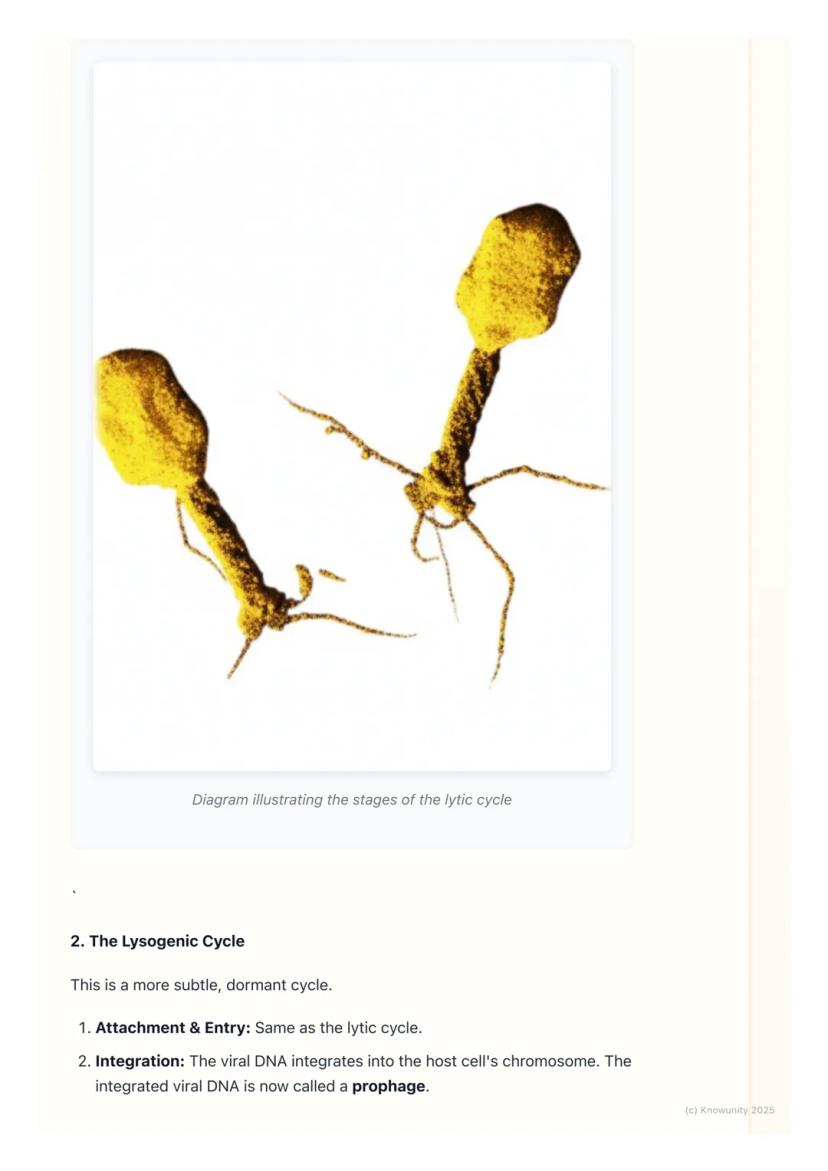
Viruses come in three main shapes that you should recognise: rod-shaped (like Tobacco Mosaic Virus), spherical (like the adenovirus causing common colds), and complex (like bacteriophages that look like tiny space landers). Their structure is surprisingly simple - no cytoplasm, no organelles, just the basics needed to hijack cells.
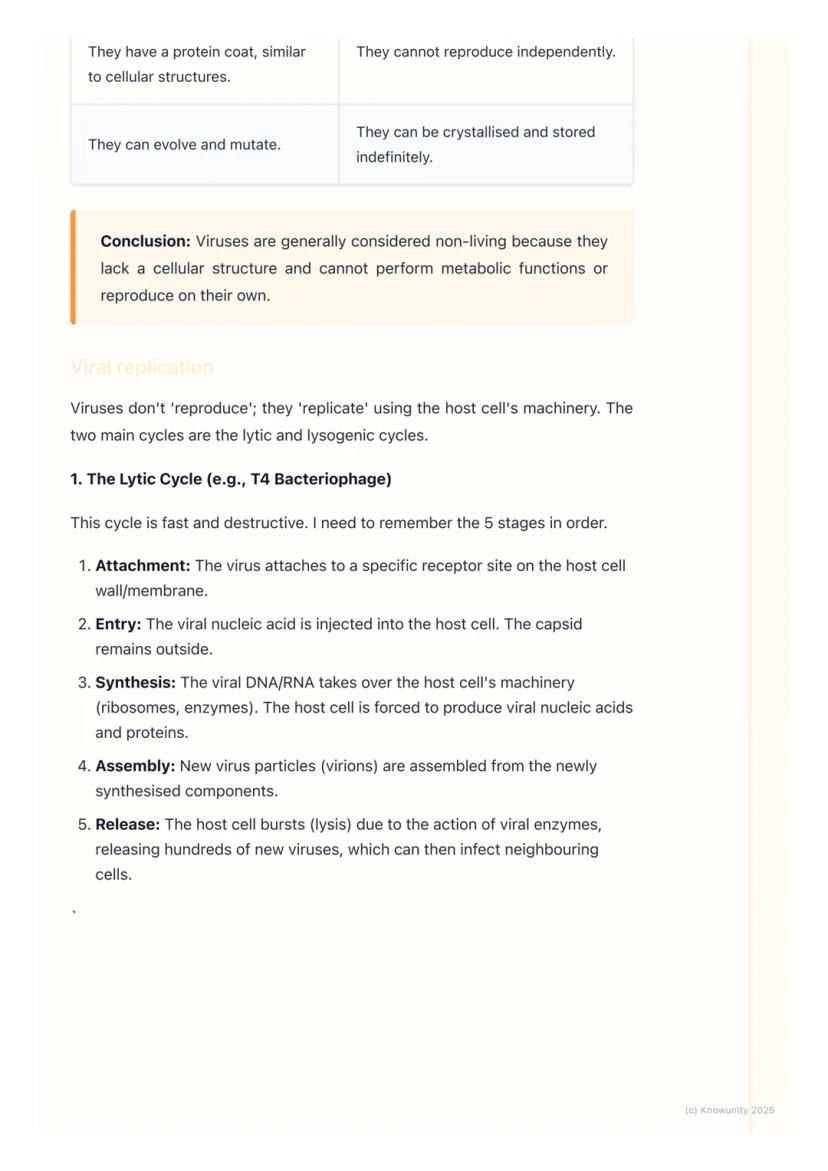
Here's a classic exam question: are viruses living or non-living? They're a bit of both, which makes them tricky! On the living side, they have genetic material, can replicate (sort of), and can evolve and mutate. However, they're considered non-living because they're not made of cells, have no metabolism, and can't reproduce independently.
The scientific consensus leans towards non-living since they lack the fundamental characteristics of life. You can even crystallise viruses and store them indefinitely - try doing that with your pet!
Exam Alert: Be ready to list both living and non-living characteristics of viruses - it's a popular comparison question!
3
of 8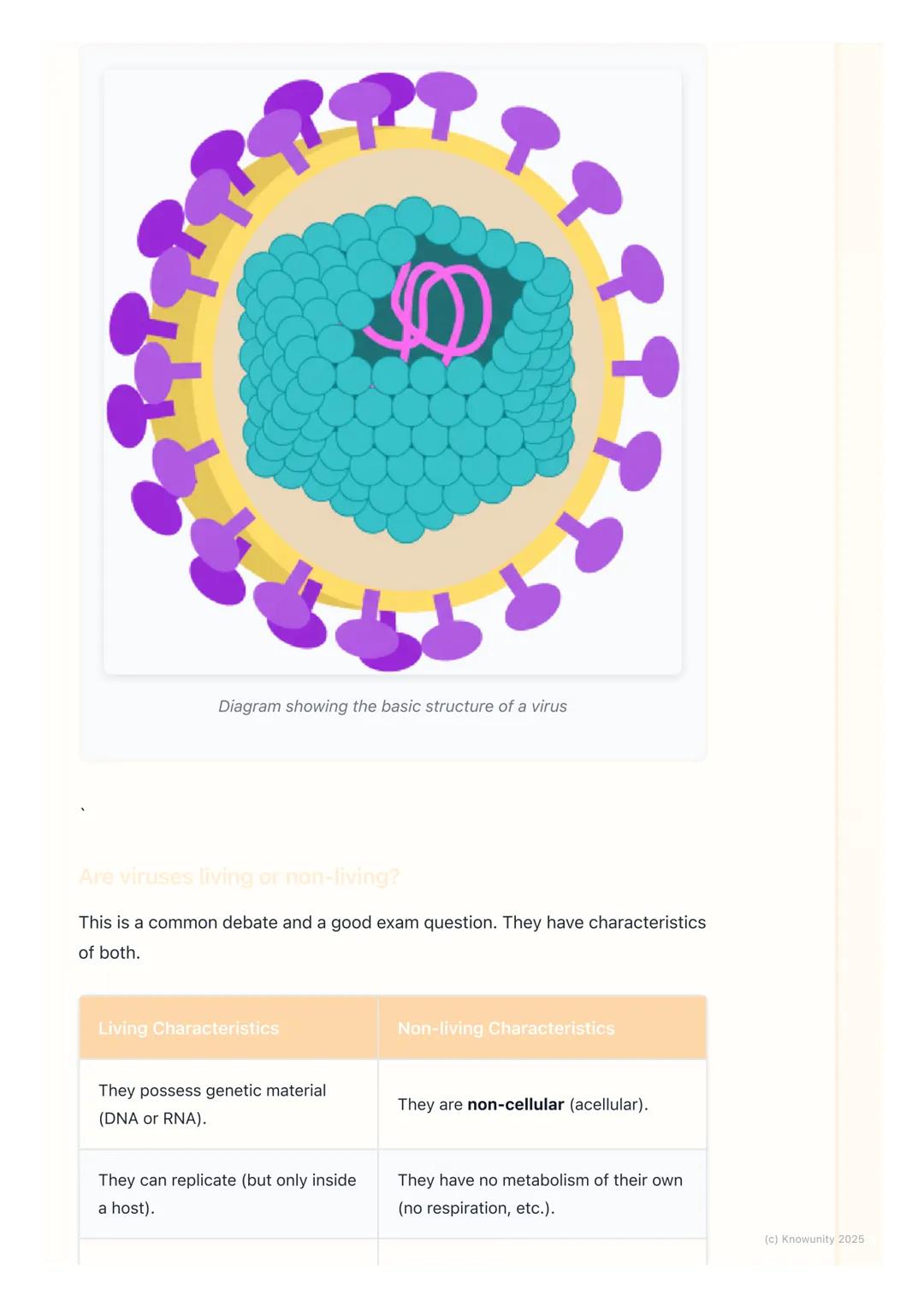
The Lytic Cycle - Fast and Destructive
The lytic cycle is like a viral smash-and-grab operation that destroys the host cell. You need to memorise these five stages in order: Attachment, Entry, Synthesis, Assembly, and Release. It's actually quite brutal when you think about it!
First, the virus attaches to specific receptor sites on the host cell - it's picky about its targets. Then it enters by injecting its genetic material inside whilst leaving its protein coat outside. During synthesis, the viral DNA or RNA basically takes over the cell's machinery, forcing it to make viral components instead of doing its normal job.
Next comes assembly, where new virus particles are put together like a factory production line. Finally, release happens when the host cell bursts open (called lysis), releasing hundreds of new viruses ready to infect neighbouring cells. The whole process is fast and always ends with the host cell's death.
Memory Trick: Remember "AESAR" - Attachment, Entry, Synthesis, Assembly, Release - or make up your own phrase to remember the order!
4
of 8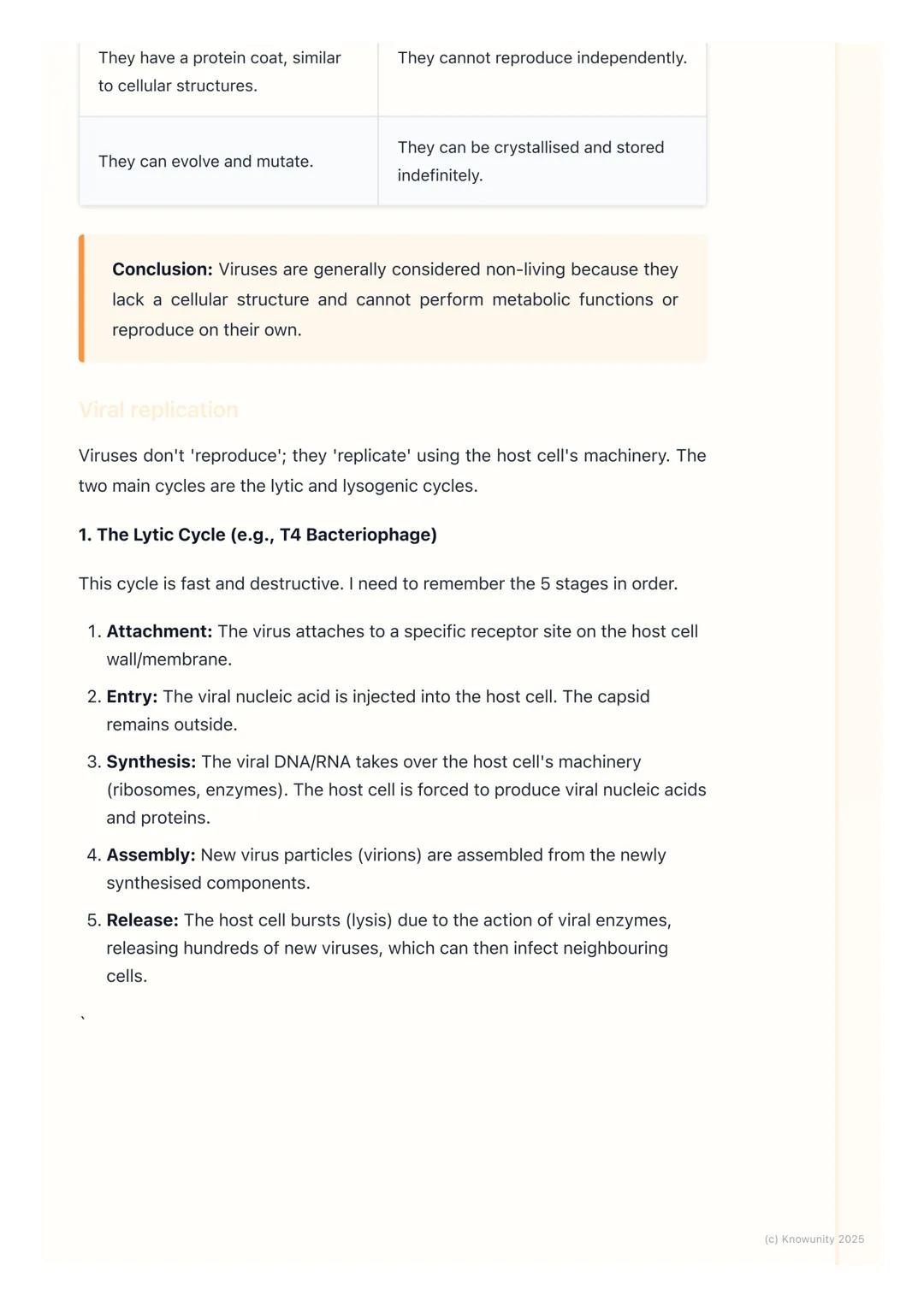
The Lysogenic Cycle - The Sneaky Approach
The lysogenic cycle is much more patient and cunning than the lytic cycle. Instead of immediately destroying the host cell, the virus plays the long game by integrating its DNA into the host's chromosome, forming what's called a prophage.
Here's the clever bit: the host cell continues living normally, but every time it divides, it copies the viral DNA along with its own. The virus essentially becomes a permanent part of the cell's genetic makeup, passed down to all daughter cells like a family heirloom nobody wants.
The virus can stay dormant for ages until something triggers it - like UV radiation or chemical stress. When activated, the prophage exits the host chromosome and switches to the lytic cycle, suddenly producing new viruses and destroying the cell. It's like a sleeper agent finally getting the call to action!
This cycle explains why some viral infections can remain dormant in your body for years before causing problems again.
Real-Life Example: Cold sores are caused by herpes virus that stays dormant in your nerve cells and reactivates when you're stressed or run down!
5
of 8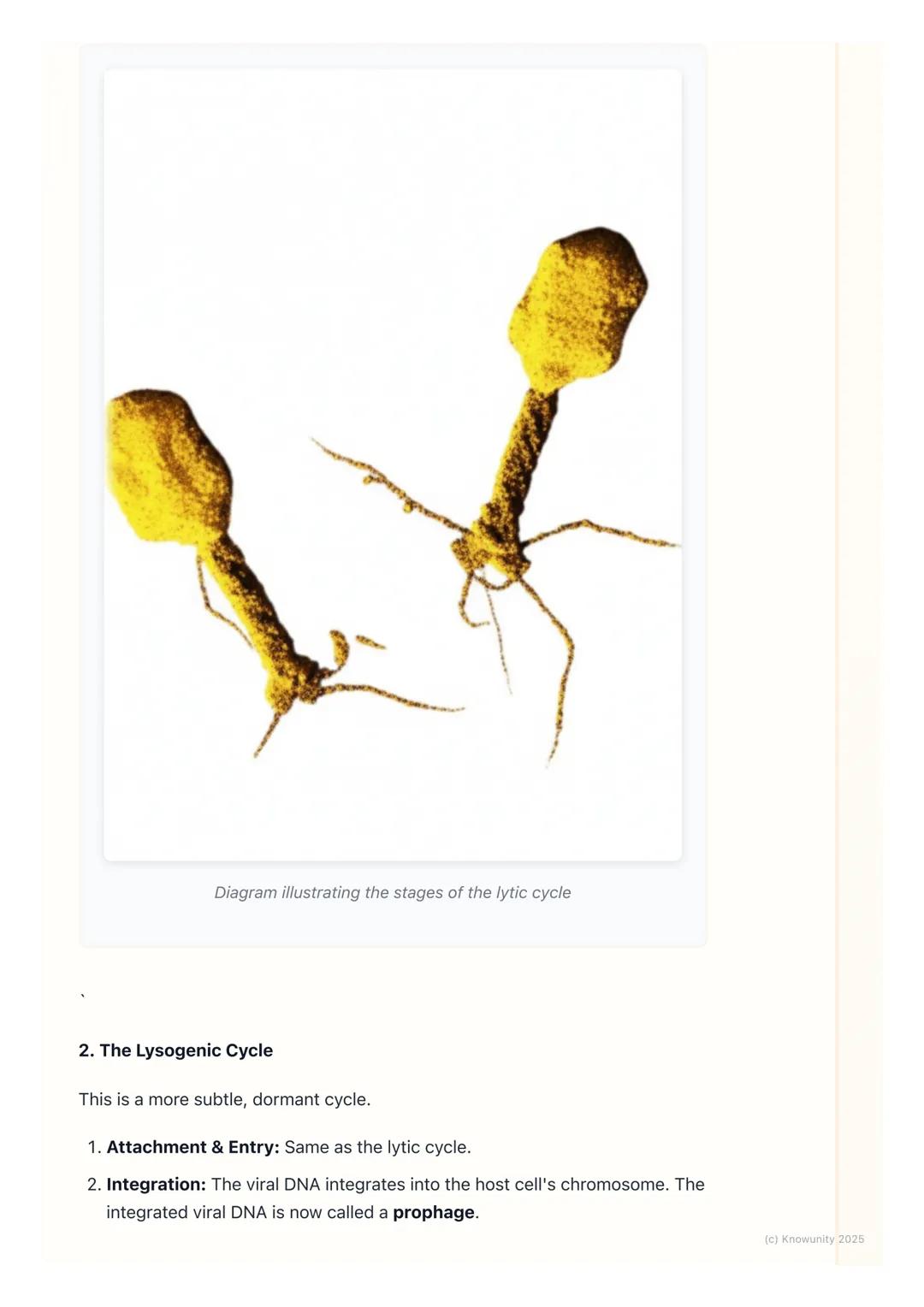
Viral Diseases - Human Impact
Influenza is probably the viral infection you're most familiar with. This RNA virus with an envelope spreads through droplets when people cough or sneeze. It causes fever, muscle aches, and that generally awful feeling that makes you want to stay in bed all day. The tricky thing about flu is that it mutates rapidly, which is why you need a new vaccine every year.
HIV/AIDS represents one of the most serious viral diseases. HIV is a retrovirus that specifically targets and destroys T-helper cells - the very cells your immune system needs to fight infections. When these cells are depleted, you develop AIDS, making you vulnerable to infections that wouldn't normally be dangerous.
HIV spreads through exchange of bodily fluids like blood and semen, but not through casual contact like hugging or sharing food. There's no cure yet, but anti-retroviral drugs can help manage the infection by blocking reverse transcriptase.
Important Note: Antibiotics are useless against viruses - they only work on bacteria! Antiviral drugs are needed instead.
6
of 8
Viral Diseases - Plants and Animals
Tobacco Mosaic Virus (TMV) might not affect you directly, but it's a major headache for farmers. This virus creates a distinctive mottled pattern on plant leaves and seriously reduces crop yields. It spreads through contact, often on workers' hands or farming tools, making it difficult to control in agricultural settings.
Foot-and-Mouth Disease is a nightmare scenario for livestock farmers, especially here in Ireland. This highly contagious virus affects cattle, pigs, and sheep, causing fever and painful blisters in their mouths and on their feet. The economic impact is devastating because infected herds often need to be culled to prevent the disease spreading.
These examples show how viruses don't just affect human health - they have massive economic consequences too. When crops fail or livestock need to be destroyed, it affects food supplies and farmers' livelihoods.
The key lesson is that viral diseases ripple through entire ecosystems and economies, not just individual organisms.
Think About It: Consider how a single viral outbreak can affect global food prices and trade - viruses really do have worldwide impact!
7
of 8
Key Points for Exam Success
Remember the crucial distinction: viruses are non-cellular whilst bacteria are prokaryotic cells - don't mix these up in exams! The definition "obligate intracellular parasite" is absolutely essential and perfectly captures what viruses are all about.
For the lytic cycle, memorise those five stages: Attachment, Entry, Synthesis, Assembly, Release. For the lysogenic cycle, focus on the integration forming a prophage that can remain dormant before switching to lytic mode.
Viruses have both advantages and disadvantages for humans. The disadvantages are obvious - disease, healthcare costs, and economic losses from crop and livestock infections. However, viruses are increasingly useful in genetic engineering as vectors to transfer genes between organisms, and phage therapy using bacteriophages to treat bacterial infections is showing promise.
Exam Strategy: Practice comparing viruses with bacteria in terms of size, structure, reproduction, and treatment options - it's a popular question format!
8
of 8
Quick Revision Summary
Nature: Non-cellular, obligate intracellular parasites that blur the line between living and non-living.
Structure: Core containing DNA OR RNA (never both) surrounded by a protein capsid. Some have an additional lipid envelope.
Replication cycles: Lytic cycle hijacks the cell, produces new viruses quickly, and destroys the host cell through lysis. Lysogenic cycle integrates viral DNA into host chromosome as a prophage, remains dormant, but can switch to lytic cycle when triggered.
Disease examples: Influenza and HIV in humans, TMV in plants, Foot-and-Mouth in animals. Control methods: Vaccines for prevention, antiviral drugs for treatment - remember that antibiotics don't work on viruses!
Final Reminder: Viruses are fascinating examples of how simple structures can have enormous impacts on life and society!
Wir dachten schon, du fragst nie...
Was ist der Knowunity KI-Begleiter?
Unser KI-Begleiter ist ein speziell für Schüler entwickeltes KI-Tool, das mehr als nur Antworten bietet. Basierend auf Millionen von Knowunity-Inhalten liefert er relevante Informationen, personalisierte Lernpläne, Quizze und Inhalte direkt im Chat und passt sich deinem individuellen Lernweg an.
Wo kann ich die Knowunity-App herunterladen?
Du kannst die App im Google Play Store und im Apple App Store herunterladen.
Ist Knowunity wirklich kostenlos?
Genau! Genieße kostenlosen Zugang zu Lerninhalten, vernetze dich mit anderen Schülern und hol dir sofortige Hilfe – alles direkt auf deinem Handy.
Beliebtester Inhalt in Biology
8BiologyEcology introduction notes!
Start of the leaving cert ecology chapter
6th Year131
BiologyDNA & RNA
All notes on DNA & RNA including protein synthesis which is a HL topic
5th Year250
BiologyVertebrates and Invertebrates
Students will distinguish between animals that have a backbone (vertebrates) and those that do not (invertebrates), identifying examples of each.
2nd Year240
BiologyBiomolecules: chapter 8
Summary and easily understandable notes to revise chapter 8 biomolecules. Includes good labelled diagrams for visual learners
5th Year210
BiologyCirculatory System
Students will learn about the heart, blood, and blood vessels, and how this system transports oxygen, nutrients, and waste products around the body.
3rd Year140
BiologyRespiration
All respiration notes including simple diagrams and glycolysis and the Krebs cycle
5th Year120
BiologyPhotosynthesis : Biology
Photosynthesis
6th Year371
BiologyPlant Cells
Learning about the unique structures found in plant cells, such as the cell wall, chloroplasts, and large vacuole, and how they differ from animal cells.
1st Year80
Beliebtester Inhalt
9 Irish
IrishIrish oral questions and answers
Questions and answers for the leaving cert oral
5th Year4264
 English
Key Quotes : Sive
Key Quotes and explanations: Sive
6th Year2842
IrishIrish oral questions
Outline of oral questions
5th Year2055
IrishIníon- le hÁine Durkin
Aine Durkin’s poem, Iníon: Themes & summary
5th Year850
IrishIrish poetry 2027
Iníon + Dínit an Bhróin
5th Year1133
IrishLC HL notes- Iníon (poem)
Includes poem in English and Irish, theme, key words & phrases
5th Year2284
EnglishCultural Context : Shawshank Redemption : Sive : Small Things Like These
Comparative Study : Cultural Context : Shawshank Redemption, Sive and Small Things Like These
6th Year1430
IrishMo Ghrá-sa (Idir Lúibíní)
Notes on mo ghrá-sa
5th Year380
IrishAn Gaeilge Aiste
Irish Language essay
6th Year1320
Findest du nicht, was du suchst? Entdecke andere Fächer.
Schüler lieben uns — und du auch.
4.6/5App Store
4.7/5Google Play
Die App ist sehr einfach zu bedienen und gut gestaltet. Ich habe bisher alles gefunden, wonach ich gesucht habe, und konnte viel aus den Präsentationen lernen! Ich werde die App definitiv für ein Schulprojekt nutzen! Und natürlich hilft sie auch sehr als Inspiration.
Stefan SiOS-Nutzer
Diese App ist wirklich super. Es gibt so viele Lernzettel und Hilfen [...]. Mein Problemfach ist zum Beispiel Französisch und die App hat so viele Möglichkeiten zur Hilfe. Dank dieser App habe ich mich in Französisch verbessert. Ich würde sie jedem empfehlen.
Samantha KlichAndroid-Nutzerin
Wow, ich bin wirklich begeistert. Ich habe die App einfach mal ausprobiert, weil ich sie schon oft beworben gesehen habe und war absolut beeindruckt. Diese App ist DIE HILFE, die man für die Schule braucht und vor allem bietet sie so viele Dinge wie Übungen und Lernzettel, die mir persönlich SEHR geholfen haben.
AnnaiOS-Nutzerin
Biology4 aufrufe·Aktualisiert Jun 10, 2026·8 SeitenUnderstanding Viruses: Structure, Life Cycle, and Impact
Viruses are fascinating microscopic particles that blur the line between living and non-living things. They're responsible for everything from the common cold to more serious diseases, and understanding how they work is crucial for your biology studies and everyday health... Mehr anzeigen
1
of 8Melde dich an, um den Inhalt zu sehen. Kostenlos!
- Zugriff auf alle Dokumente
- Verbessere deine Noten
- Schließ dich Millionen Schülern an
Introduction to Viruses
Think of viruses as nature's ultimate freeloaders - they literally can't survive without hijacking other cells! These tiny particles are non-cellular and exist as obligate intracellular parasites, meaning they absolutely must invade a living host cell to replicate. You can't see them with a regular microscope because they're much smaller than bacteria.
What makes viruses so interesting is their simple yet effective design. Each virus consists of genetic material (either DNA or RNA, never both) wrapped in a protective protein coat called a capsid. Some viruses also have an envelope - think of it as an extra outer layer stolen from their host cell's membrane.
Key terms you need to know: A bacteriophage specifically targets bacteria, whilst a retrovirus like HIV does something sneaky - it converts its RNA into DNA using an enzyme called reverse transcriptase. Remember these definitions as they're exam favourites!
Quick Tip: The phrase "obligate intracellular parasite" perfectly sums up what viruses are - learn this definition by heart!
2
of 8Melde dich an, um den Inhalt zu sehen. Kostenlos!
- Zugriff auf alle Dokumente
- Verbessere deine Noten
- Schließ dich Millionen Schülern an
Viral Structure and Living vs Non-Living Debate
Viruses come in three main shapes that you should recognise: rod-shaped (like Tobacco Mosaic Virus), spherical (like the adenovirus causing common colds), and complex (like bacteriophages that look like tiny space landers). Their structure is surprisingly simple - no cytoplasm, no organelles, just the basics needed to hijack cells.
Here's a classic exam question: are viruses living or non-living? They're a bit of both, which makes them tricky! On the living side, they have genetic material, can replicate (sort of), and can evolve and mutate. However, they're considered non-living because they're not made of cells, have no metabolism, and can't reproduce independently.
The scientific consensus leans towards non-living since they lack the fundamental characteristics of life. You can even crystallise viruses and store them indefinitely - try doing that with your pet!
Exam Alert: Be ready to list both living and non-living characteristics of viruses - it's a popular comparison question!
3
of 8Melde dich an, um den Inhalt zu sehen. Kostenlos!
- Zugriff auf alle Dokumente
- Verbessere deine Noten
- Schließ dich Millionen Schülern an
The Lytic Cycle - Fast and Destructive
The lytic cycle is like a viral smash-and-grab operation that destroys the host cell. You need to memorise these five stages in order: Attachment, Entry, Synthesis, Assembly, and Release. It's actually quite brutal when you think about it!
First, the virus attaches to specific receptor sites on the host cell - it's picky about its targets. Then it enters by injecting its genetic material inside whilst leaving its protein coat outside. During synthesis, the viral DNA or RNA basically takes over the cell's machinery, forcing it to make viral components instead of doing its normal job.
Next comes assembly, where new virus particles are put together like a factory production line. Finally, release happens when the host cell bursts open (called lysis), releasing hundreds of new viruses ready to infect neighbouring cells. The whole process is fast and always ends with the host cell's death.
Memory Trick: Remember "AESAR" - Attachment, Entry, Synthesis, Assembly, Release - or make up your own phrase to remember the order!
4
of 8Melde dich an, um den Inhalt zu sehen. Kostenlos!
- Zugriff auf alle Dokumente
- Verbessere deine Noten
- Schließ dich Millionen Schülern an
The Lysogenic Cycle - The Sneaky Approach
The lysogenic cycle is much more patient and cunning than the lytic cycle. Instead of immediately destroying the host cell, the virus plays the long game by integrating its DNA into the host's chromosome, forming what's called a prophage.
Here's the clever bit: the host cell continues living normally, but every time it divides, it copies the viral DNA along with its own. The virus essentially becomes a permanent part of the cell's genetic makeup, passed down to all daughter cells like a family heirloom nobody wants.
The virus can stay dormant for ages until something triggers it - like UV radiation or chemical stress. When activated, the prophage exits the host chromosome and switches to the lytic cycle, suddenly producing new viruses and destroying the cell. It's like a sleeper agent finally getting the call to action!
This cycle explains why some viral infections can remain dormant in your body for years before causing problems again.
Real-Life Example: Cold sores are caused by herpes virus that stays dormant in your nerve cells and reactivates when you're stressed or run down!
5
of 8Melde dich an, um den Inhalt zu sehen. Kostenlos!
- Zugriff auf alle Dokumente
- Verbessere deine Noten
- Schließ dich Millionen Schülern an
Viral Diseases - Human Impact
Influenza is probably the viral infection you're most familiar with. This RNA virus with an envelope spreads through droplets when people cough or sneeze. It causes fever, muscle aches, and that generally awful feeling that makes you want to stay in bed all day. The tricky thing about flu is that it mutates rapidly, which is why you need a new vaccine every year.
HIV/AIDS represents one of the most serious viral diseases. HIV is a retrovirus that specifically targets and destroys T-helper cells - the very cells your immune system needs to fight infections. When these cells are depleted, you develop AIDS, making you vulnerable to infections that wouldn't normally be dangerous.
HIV spreads through exchange of bodily fluids like blood and semen, but not through casual contact like hugging or sharing food. There's no cure yet, but anti-retroviral drugs can help manage the infection by blocking reverse transcriptase.
Important Note: Antibiotics are useless against viruses - they only work on bacteria! Antiviral drugs are needed instead.
6
of 8Melde dich an, um den Inhalt zu sehen. Kostenlos!
- Zugriff auf alle Dokumente
- Verbessere deine Noten
- Schließ dich Millionen Schülern an
Viral Diseases - Plants and Animals
Tobacco Mosaic Virus (TMV) might not affect you directly, but it's a major headache for farmers. This virus creates a distinctive mottled pattern on plant leaves and seriously reduces crop yields. It spreads through contact, often on workers' hands or farming tools, making it difficult to control in agricultural settings.
Foot-and-Mouth Disease is a nightmare scenario for livestock farmers, especially here in Ireland. This highly contagious virus affects cattle, pigs, and sheep, causing fever and painful blisters in their mouths and on their feet. The economic impact is devastating because infected herds often need to be culled to prevent the disease spreading.
These examples show how viruses don't just affect human health - they have massive economic consequences too. When crops fail or livestock need to be destroyed, it affects food supplies and farmers' livelihoods.
The key lesson is that viral diseases ripple through entire ecosystems and economies, not just individual organisms.
Think About It: Consider how a single viral outbreak can affect global food prices and trade - viruses really do have worldwide impact!
7
of 8Melde dich an, um den Inhalt zu sehen. Kostenlos!
- Zugriff auf alle Dokumente
- Verbessere deine Noten
- Schließ dich Millionen Schülern an
Key Points for Exam Success
Remember the crucial distinction: viruses are non-cellular whilst bacteria are prokaryotic cells - don't mix these up in exams! The definition "obligate intracellular parasite" is absolutely essential and perfectly captures what viruses are all about.
For the lytic cycle, memorise those five stages: Attachment, Entry, Synthesis, Assembly, Release. For the lysogenic cycle, focus on the integration forming a prophage that can remain dormant before switching to lytic mode.
Viruses have both advantages and disadvantages for humans. The disadvantages are obvious - disease, healthcare costs, and economic losses from crop and livestock infections. However, viruses are increasingly useful in genetic engineering as vectors to transfer genes between organisms, and phage therapy using bacteriophages to treat bacterial infections is showing promise.
Exam Strategy: Practice comparing viruses with bacteria in terms of size, structure, reproduction, and treatment options - it's a popular question format!
8
of 8Melde dich an, um den Inhalt zu sehen. Kostenlos!
- Zugriff auf alle Dokumente
- Verbessere deine Noten
- Schließ dich Millionen Schülern an
Quick Revision Summary
Nature: Non-cellular, obligate intracellular parasites that blur the line between living and non-living.
Structure: Core containing DNA OR RNA (never both) surrounded by a protein capsid. Some have an additional lipid envelope.
Replication cycles: Lytic cycle hijacks the cell, produces new viruses quickly, and destroys the host cell through lysis. Lysogenic cycle integrates viral DNA into host chromosome as a prophage, remains dormant, but can switch to lytic cycle when triggered.
Disease examples: Influenza and HIV in humans, TMV in plants, Foot-and-Mouth in animals. Control methods: Vaccines for prevention, antiviral drugs for treatment - remember that antibiotics don't work on viruses!
Final Reminder: Viruses are fascinating examples of how simple structures can have enormous impacts on life and society!
Wir dachten schon, du fragst nie...
Was ist der Knowunity KI-Begleiter?
Unser KI-Begleiter ist ein speziell für Schüler entwickeltes KI-Tool, das mehr als nur Antworten bietet. Basierend auf Millionen von Knowunity-Inhalten liefert er relevante Informationen, personalisierte Lernpläne, Quizze und Inhalte direkt im Chat und passt sich deinem individuellen Lernweg an.
Wo kann ich die Knowunity-App herunterladen?
Du kannst die App im Google Play Store und im Apple App Store herunterladen.
Ist Knowunity wirklich kostenlos?
Genau! Genieße kostenlosen Zugang zu Lerninhalten, vernetze dich mit anderen Schülern und hol dir sofortige Hilfe – alles direkt auf deinem Handy.
Beliebtester Inhalt in Biology
8BiologyEcology introduction notes!
Start of the leaving cert ecology chapter
6th Year131
BiologyDNA & RNA
All notes on DNA & RNA including protein synthesis which is a HL topic
5th Year250
BiologyVertebrates and Invertebrates
Students will distinguish between animals that have a backbone (vertebrates) and those that do not (invertebrates), identifying examples of each.
2nd Year240
BiologyBiomolecules: chapter 8
Summary and easily understandable notes to revise chapter 8 biomolecules. Includes good labelled diagrams for visual learners
5th Year210
BiologyCirculatory System
Students will learn about the heart, blood, and blood vessels, and how this system transports oxygen, nutrients, and waste products around the body.
3rd Year140
BiologyRespiration
All respiration notes including simple diagrams and glycolysis and the Krebs cycle
5th Year120
BiologyPhotosynthesis : Biology
Photosynthesis
6th Year371
BiologyPlant Cells
Learning about the unique structures found in plant cells, such as the cell wall, chloroplasts, and large vacuole, and how they differ from animal cells.
1st Year80
Beliebtester Inhalt
9IrishIrish oral questions and answers
Questions and answers for the leaving cert oral
5th Year4264
EnglishKey Quotes : Sive
Key Quotes and explanations: Sive
6th Year2842
IrishIrish oral questions
Outline of oral questions
5th Year2055
IrishIníon- le hÁine Durkin
Aine Durkin’s poem, Iníon: Themes & summary
5th Year850
IrishIrish poetry 2027
Iníon + Dínit an Bhróin
5th Year1133
IrishLC HL notes- Iníon (poem)
Includes poem in English and Irish, theme, key words & phrases
5th Year2284
EnglishCultural Context : Shawshank Redemption : Sive : Small Things Like These
Comparative Study : Cultural Context : Shawshank Redemption, Sive and Small Things Like These
6th Year1430
IrishMo Ghrá-sa (Idir Lúibíní)
Notes on mo ghrá-sa
5th Year380
IrishAn Gaeilge Aiste
Irish Language essay
6th Year1320
Findest du nicht, was du suchst? Entdecke andere Fächer.
Schüler lieben uns — und du auch.
4.6/5App Store
4.7/5Google Play
Die App ist sehr einfach zu bedienen und gut gestaltet. Ich habe bisher alles gefunden, wonach ich gesucht habe, und konnte viel aus den Präsentationen lernen! Ich werde die App definitiv für ein Schulprojekt nutzen! Und natürlich hilft sie auch sehr als Inspiration.
Stefan SiOS-Nutzer
Diese App ist wirklich super. Es gibt so viele Lernzettel und Hilfen [...]. Mein Problemfach ist zum Beispiel Französisch und die App hat so viele Möglichkeiten zur Hilfe. Dank dieser App habe ich mich in Französisch verbessert. Ich würde sie jedem empfehlen.
Samantha KlichAndroid-Nutzerin
Wow, ich bin wirklich begeistert. Ich habe die App einfach mal ausprobiert, weil ich sie schon oft beworben gesehen habe und war absolut beeindruckt. Diese App ist DIE HILFE, die man für die Schule braucht und vor allem bietet sie so viele Dinge wie Übungen und Lernzettel, die mir persönlich SEHR geholfen haben.
AnnaiOS-Nutzerin