
The STP model is your secret weapon for understanding how... Mehr anzeigen
 Business Studies6 aufrufe·Aktualisiert May 29, 2026·8 Seiten
Market Segmentation Strategies: Identifying and Connecting with Your Audience
1 / 8
1
of 8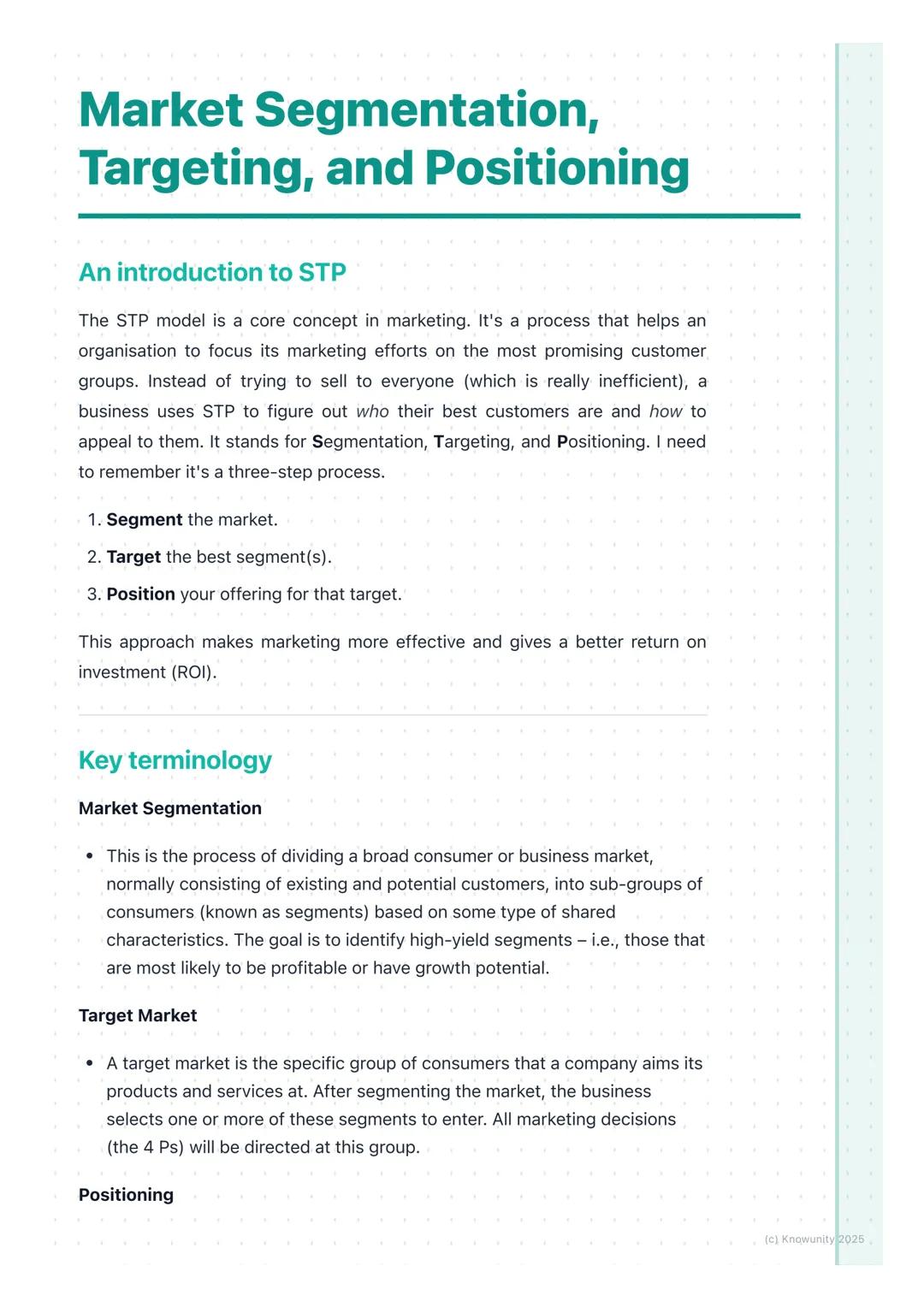
Market Segmentation, Targeting, and Positioning - The Basics
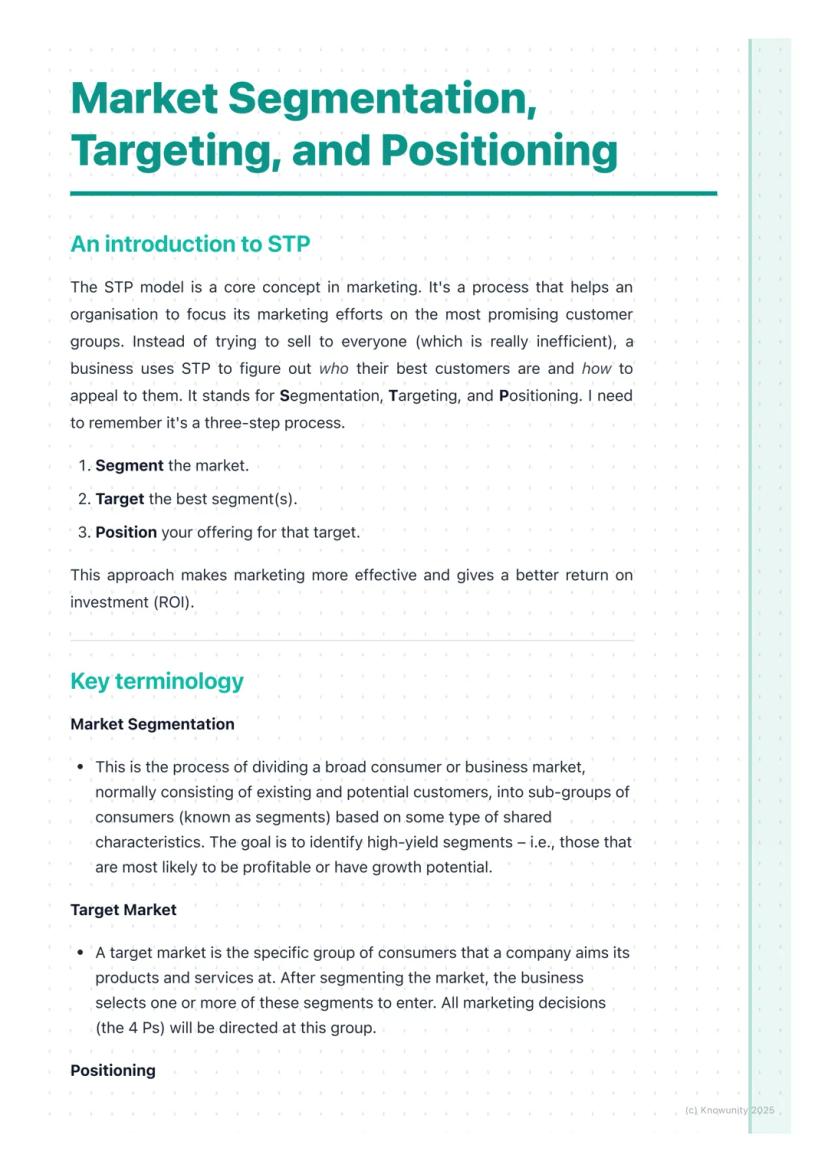
Think about how Netflix recommends different shows to you versus your parents - that's STP in action! This model helps businesses focus their marketing efforts on the customers most likely to buy from them.
The process is dead simple: first you segment the market (divide everyone into groups), then target the best segments (pick your favourites), and finally position your product (decide how you want to be seen). It's like choosing which group to sit with at lunch, then figuring out how to fit in with them.
This approach massively improves your return on investment (ROI) because you're not wasting money trying to sell surfboards to people who live in the midlands. Smart marketing is targeted marketing.
💡 Remember: STP must be done in order - you can't target customers before you've identified who they are!
2
of 8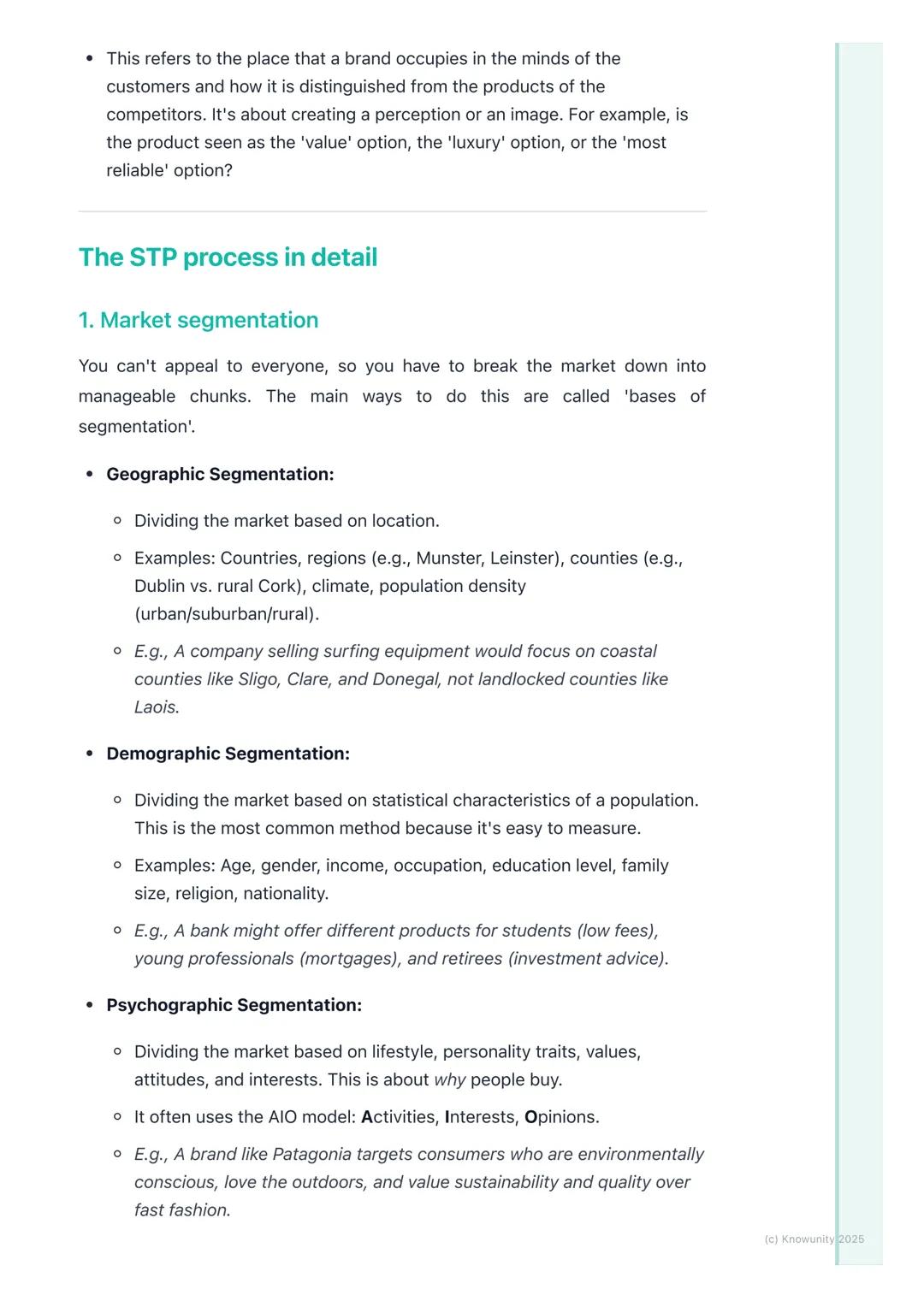
Understanding Market Segmentation
Market segmentation is like sorting your Spotify playlist - you group similar things together to make sense of the chaos. Businesses divide their potential customers into chunks based on shared characteristics.
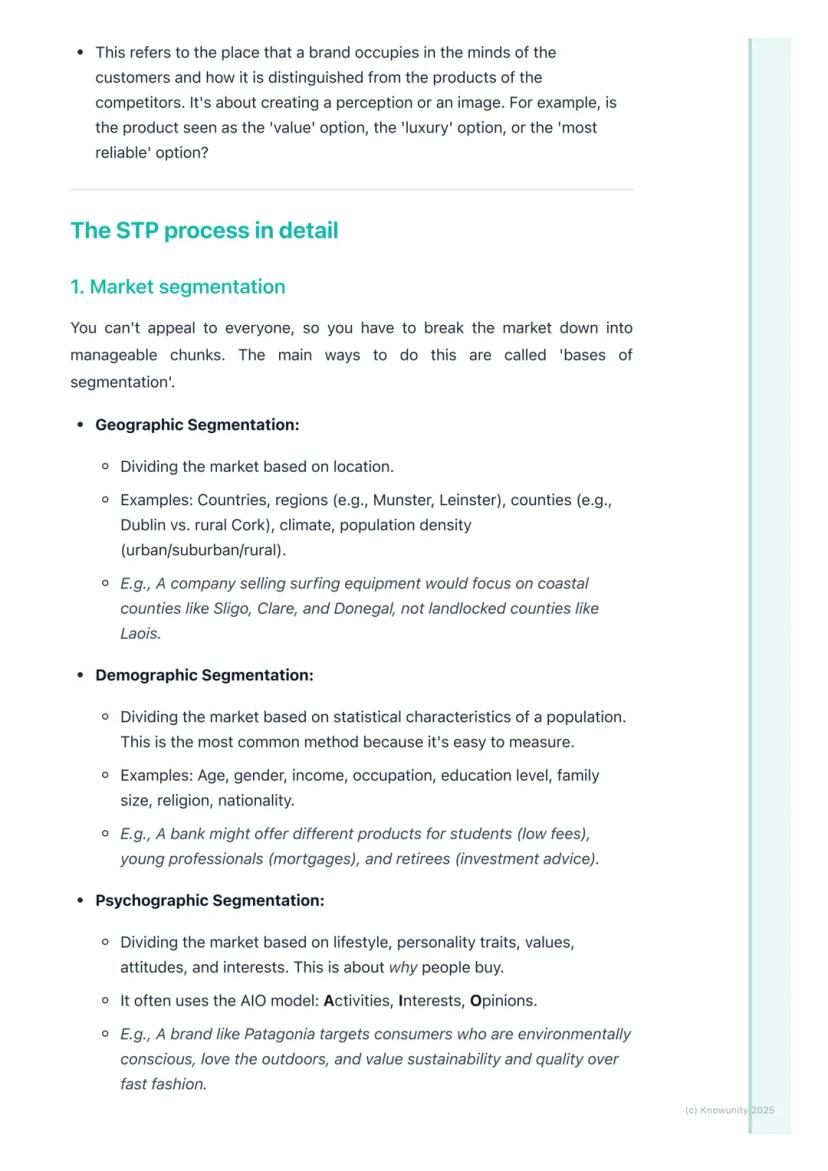
The main ways to slice up a market are through geographic segmentation (where people live), demographic segmentation (age, income, gender), psychographic segmentation (lifestyle and values), and behavioural segmentation (how they actually shop).
For example, a bank might create different products for students (low fees), young professionals (mortgages), and retirees (investment advice). Each group has completely different needs and spending power.
Target markets are the specific groups you choose to focus on after segmentation. Positioning is about creating the right image in your customers' minds - are you the luxury option, the budget choice, or the most reliable brand?
💡 Pro tip: Demographic segmentation is most popular because it's easiest to measure and find data for!
3
of 8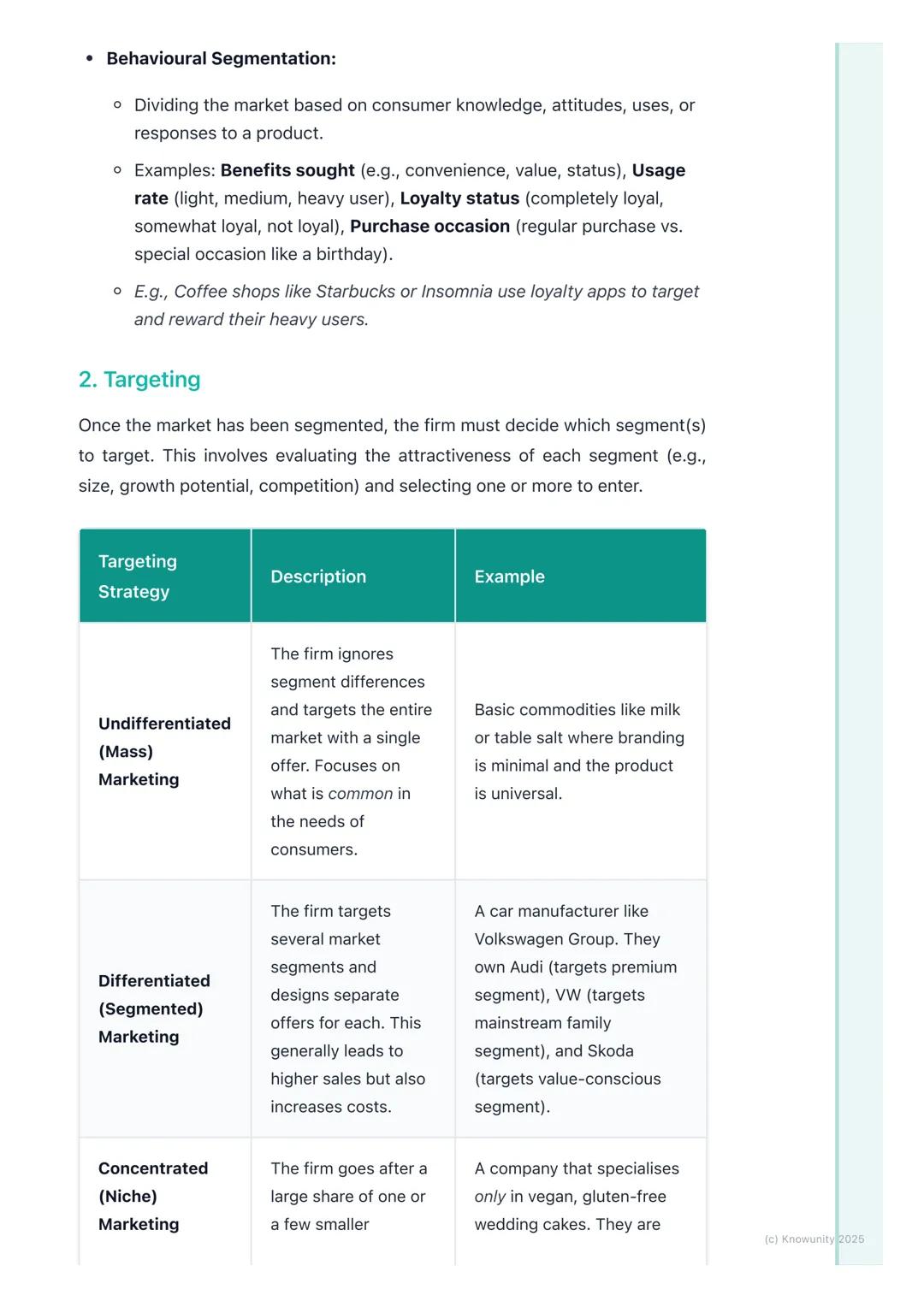
The Four Types of Market Segmentation
Geographic segmentation is straightforward - it's all about location. A surfing company would target coastal counties like Sligo and Clare, not landlocked Laois. Climate, urban versus rural living, and regional culture all matter here.
Demographic segmentation uses hard facts about people - age, gender, income, education, family size. It's super popular because the data is everywhere and easy to collect. Think about how toy companies target different age groups or how luxury brands focus on high-income customers.
Psychographic segmentation gets into people's heads - their lifestyle, values, personality, and interests. Patagonia doesn't just sell outdoor gear; they target environmentally conscious people who value sustainability over fast fashion.
Behavioural segmentation looks at how people actually interact with products. Coffee shops like Insomnia use loyalty apps to identify their heavy users and reward them differently than occasional customers.
💡 Quick check: Can you think of a brand that uses each type of segmentation? This makes great exam material!
4
of 8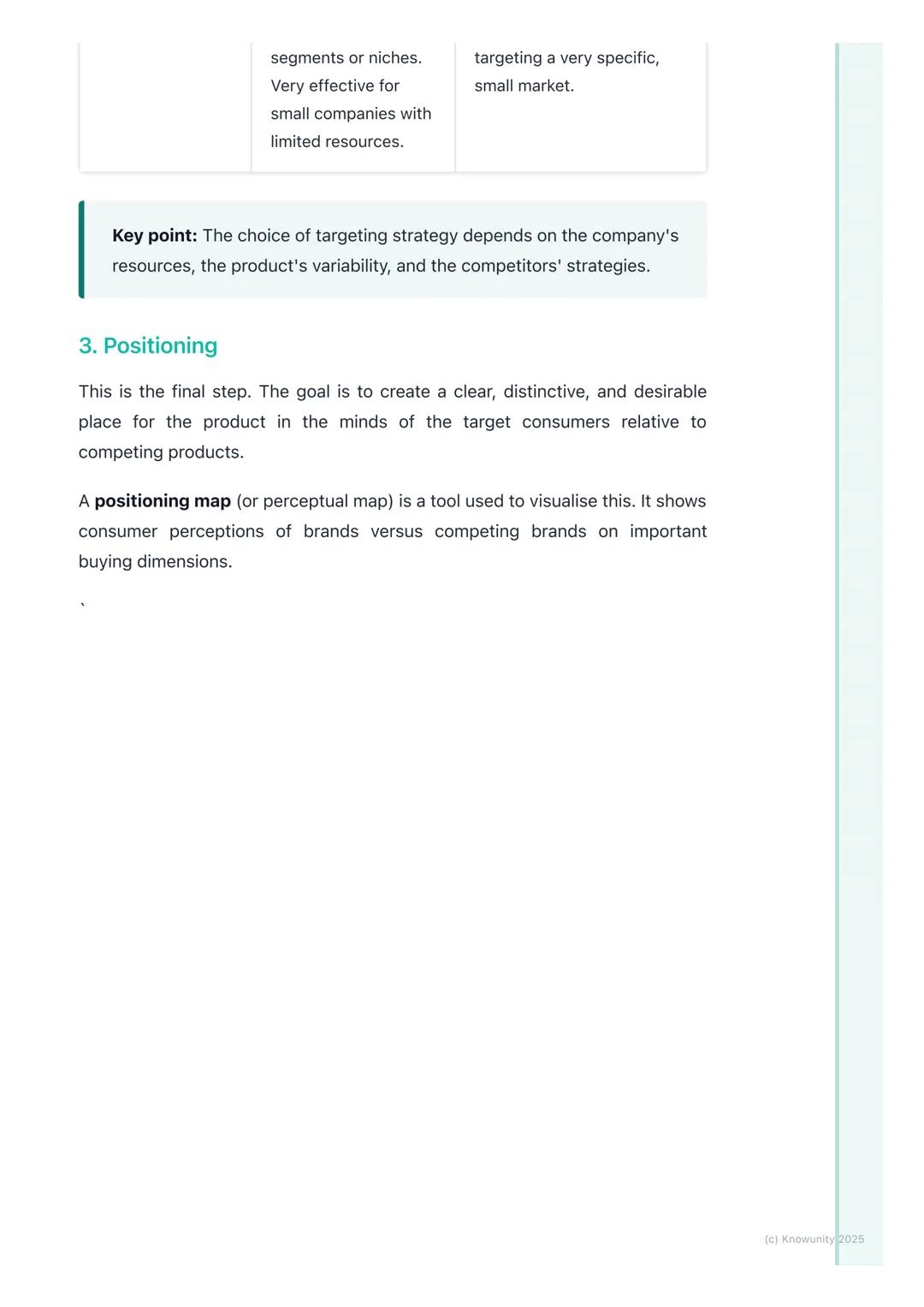
Targeting Strategies That Actually Work
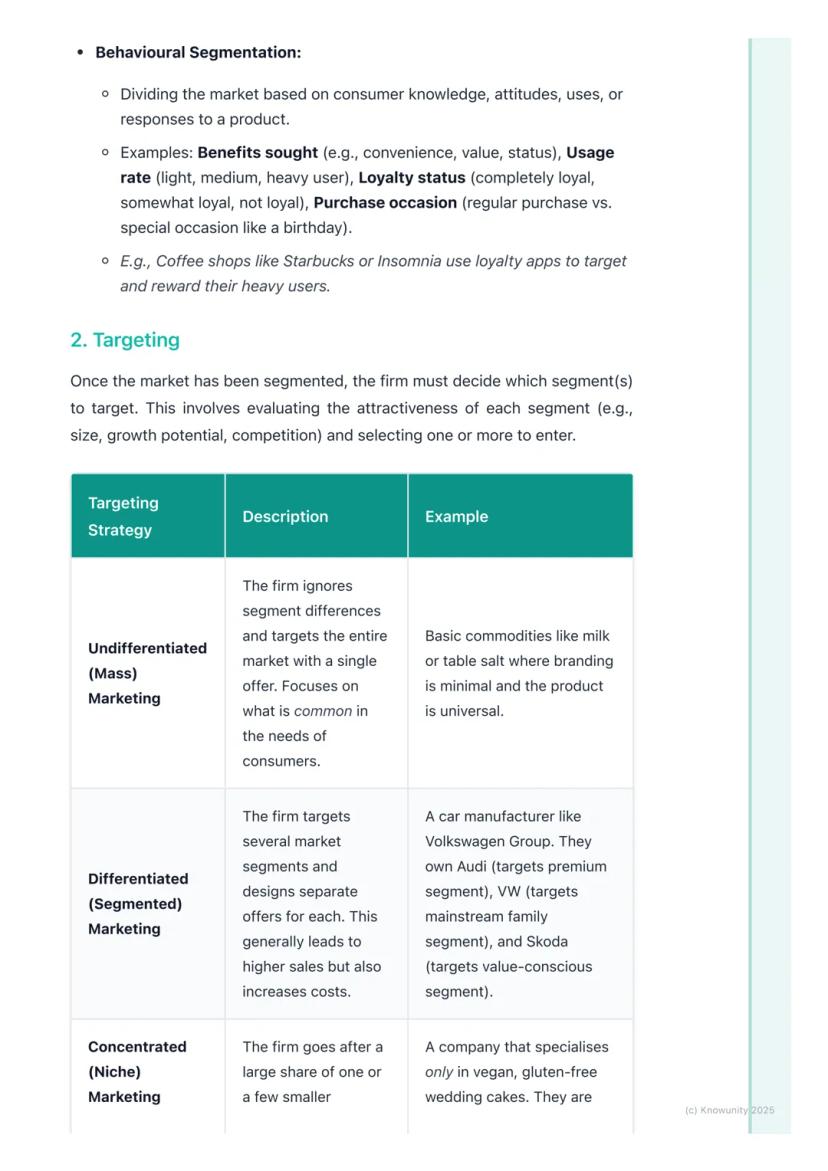
Once you've segmented your market, you need to pick your battles. Undifferentiated marketing means treating everyone the same - like how basic commodities such as milk or salt are marketed. It's cheap but not very effective.
Differentiated marketing is when you target several segments with different approaches. Volkswagen Group owns Audi (premium), VW (mainstream families), and Skoda - same company, completely different targeting strategies.
Concentrated marketing means going all-in on one tiny segment. Think of a company that only makes vegan, gluten-free wedding cakes - they're targeting a super specific niche but can dominate it.
Your choice depends on your resources, competition, and how different your product can be. Small businesses often use concentrated strategies because they can't afford to target everyone.
💡 Exam gold: Always justify why you'd choose each strategy - don't just list them!
5
of 8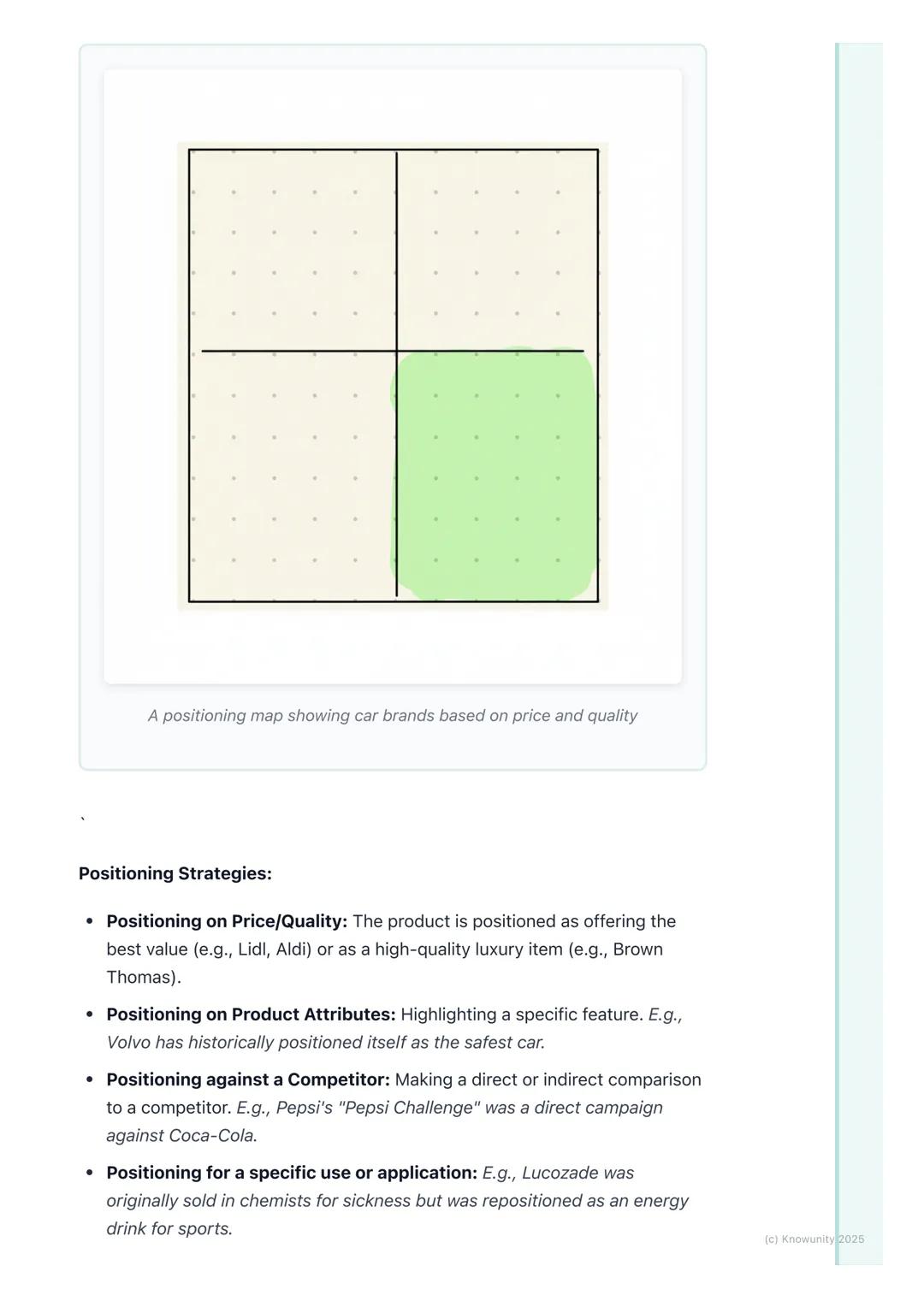
Positioning - Getting Inside Your Customer's Head
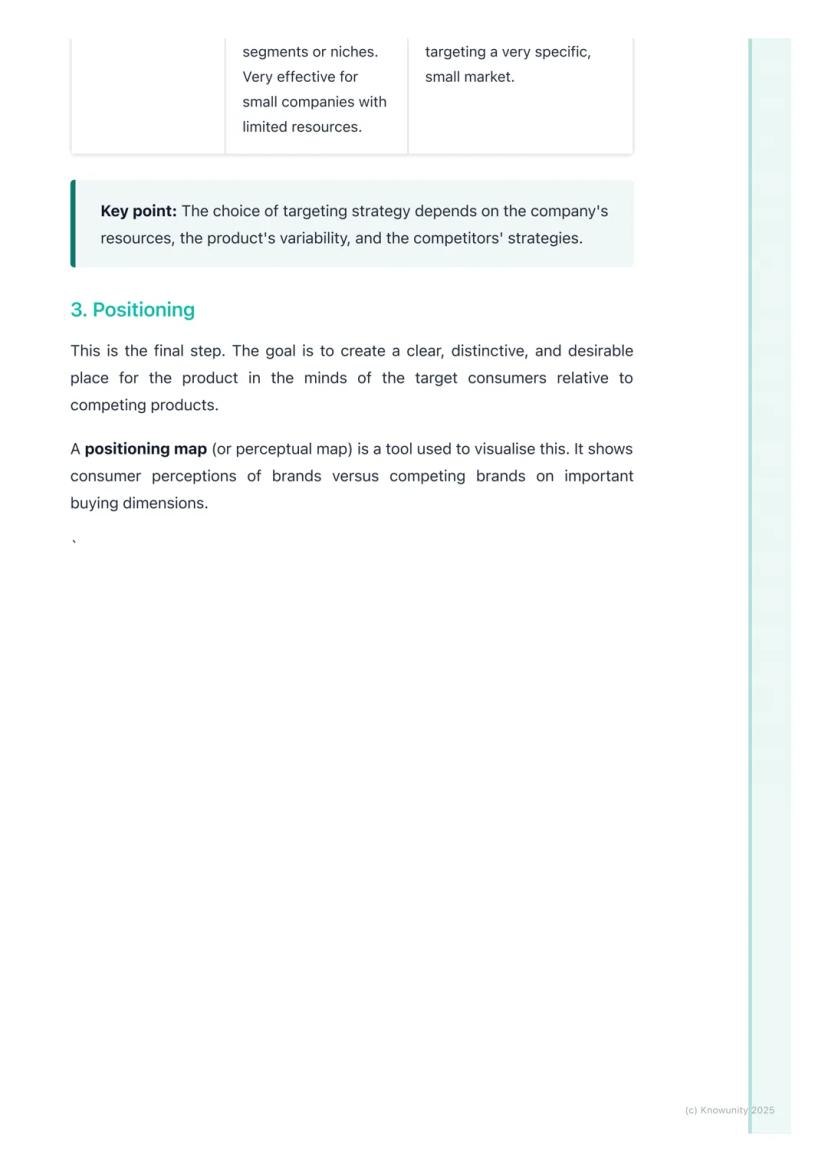
Positioning is the final piece of the puzzle - it's about creating the perfect image in your target customer's mind. This isn't about what you think your product is; it's about what your customers think it is.
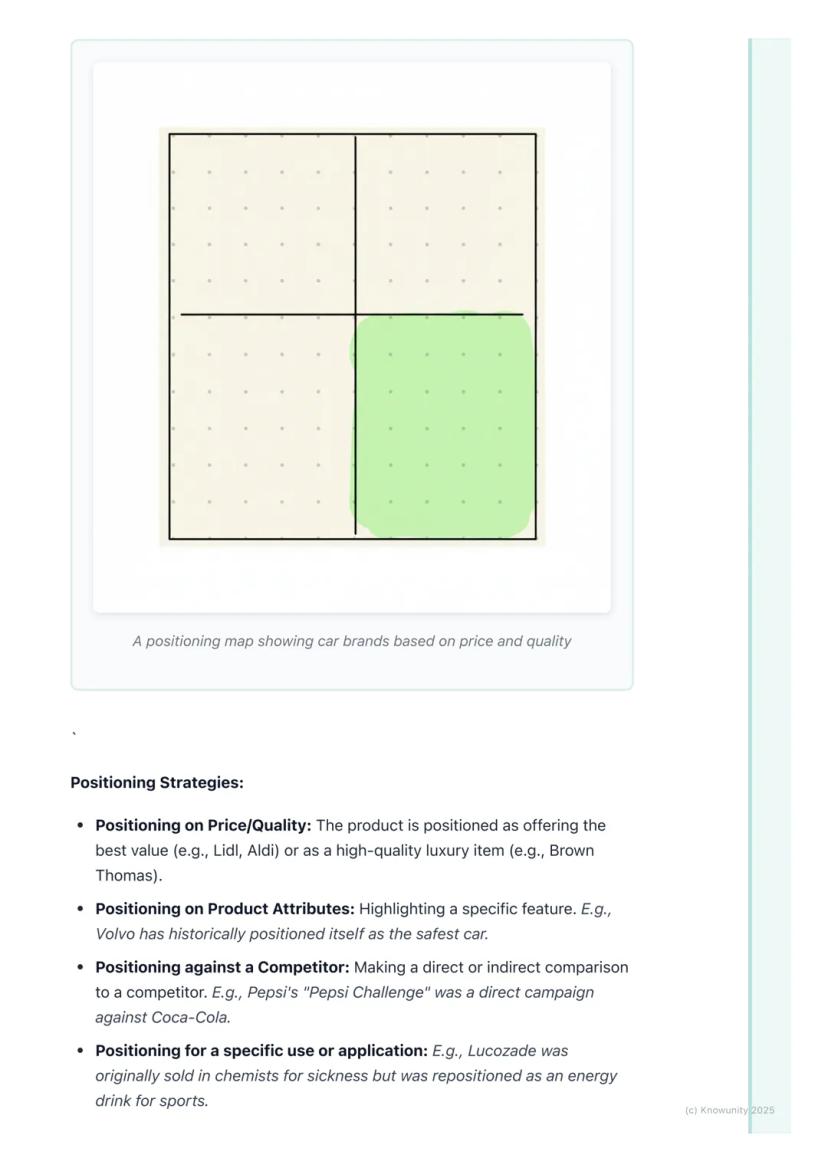
Positioning maps are brilliant visual tools that show where different brands sit compared to competitors. You might map cars based on price versus quality, with luxury brands in one corner and budget options in another.
Common positioning strategies include focusing on price/quality , highlighting specific features , positioning against competitors , or targeting specific uses .
Remember, your entire marketing mix - product, price, place, and promotion - must support your positioning. There's no point positioning as luxury if your product looks cheap or your price is rock-bottom.
💡 Reality check: Successful positioning takes time - brands spend years building the right perception!
6
of 8
Real-World Examples - Ryanair and SuperValu
Ryanair is textbook concentrated targeting. They segment by demographics , behaviour , and psychographics (practical people who'll sacrifice comfort for savings). Their positioning is aggressively low-cost, and everything from their basic website to extra baggage charges reinforces this.
SuperValu uses differentiated targeting beautifully. They segment geographically (local communities), demographically (families and older shoppers), and psychographically . They target different segments with their main range, premium "Signature Tastes," and value own-brand products.
SuperValu positions itself as "Real Food, Real People" - emphasising Irish roots and local suppliers. This cleverly differentiates them from German discounters like Lidl and Aldi by appealing to customers who value community connection over pure price.
Both companies show how market segmentation leads to crystal-clear targeting and positioning strategies that actually work in practice.
💡 Exam strategy: Use Irish examples like these - examiners love local relevance!
7
of 8
Mastering STP for Your Exams
The STP process must always flow logically: segment first, then target, then position. Mixing up this order is a classic exam mistake. Think of it like getting dressed - you don't put on your shoes before your socks!
For case study questions, break everything down step-by-step. First, identify all possible segmentation bases with specific examples. Then choose the best targeting strategy and explain why it suits the business's resources and competition. Finally, describe exactly how they should position their product.
Segmentation is about analysis - understanding your market. Targeting is about strategy - choosing where to compete. Positioning is about perception - controlling how customers see you. Keep these distinctions crystal clear.
Always back up your points with specific examples, especially Irish ones. Don't just say "demographic segmentation exists" - explain how a bank might target students differently than retirees, and why this makes business sense.
💡 Golden rule: In exams, justify every choice you make - why this segment? Why this strategy? Why this position?
8
of 8
Quick Revision - STP in a Nutshell
Market segmentation divides customers into similar groups using geographic (location), demographic , psychographic , or behavioural (shopping patterns) characteristics. This makes marketing way more efficient than the spray-and-pray approach.
Targeting strategies include undifferentiated (everyone gets the same), differentiated (different approaches for different segments), or concentrated . Your choice depends on resources, competition, and how varied your customers' needs are.
Positioning creates a unique space in customers' minds through price/quality, product features, competitor comparisons, or specific uses. Everything in your marketing mix must support this position, and positioning maps help visualise where you stand versus competitors.
The whole point? More efficient use of resources, better customer understanding, clearer marketing messages, and ultimately higher sales and profits. STP turns marketing from guesswork into strategy.
💡 Final tip: Practice applying STP to brands you know - it'll stick better than just memorising definitions!
Wir dachten schon, du fragst nie...
Was ist der Knowunity KI-Begleiter?
Unser KI-Begleiter ist ein speziell für Schüler entwickeltes KI-Tool, das mehr als nur Antworten bietet. Basierend auf Millionen von Knowunity-Inhalten liefert er relevante Informationen, personalisierte Lernpläne, Quizze und Inhalte direkt im Chat und passt sich deinem individuellen Lernweg an.
Wo kann ich die Knowunity-App herunterladen?
Du kannst die App im Google Play Store und im Apple App Store herunterladen.
Ist Knowunity wirklich kostenlos?
Genau! Genieße kostenlosen Zugang zu Lerninhalten, vernetze dich mit anderen Schülern und hol dir sofortige Hilfe – alles direkt auf deinem Handy.
Beliebtester Inhalt in Business Studies
1Beliebtester Inhalt
9Findest du nicht, was du suchst? Entdecke andere Fächer.
Schüler lieben uns — und du auch.
4.6/5App Store
4.7/5Google Play
Die App ist sehr einfach zu bedienen und gut gestaltet. Ich habe bisher alles gefunden, wonach ich gesucht habe, und konnte viel aus den Präsentationen lernen! Ich werde die App definitiv für ein Schulprojekt nutzen! Und natürlich hilft sie auch sehr als Inspiration.
Stefan SiOS-Nutzer
Diese App ist wirklich super. Es gibt so viele Lernzettel und Hilfen [...]. Mein Problemfach ist zum Beispiel Französisch und die App hat so viele Möglichkeiten zur Hilfe. Dank dieser App habe ich mich in Französisch verbessert. Ich würde sie jedem empfehlen.
Samantha KlichAndroid-Nutzerin
Wow, ich bin wirklich begeistert. Ich habe die App einfach mal ausprobiert, weil ich sie schon oft beworben gesehen habe und war absolut beeindruckt. Diese App ist DIE HILFE, die man für die Schule braucht und vor allem bietet sie so viele Dinge wie Übungen und Lernzettel, die mir persönlich SEHR geholfen haben.
AnnaiOS-Nutzerin
Business Studies6 aufrufe·Aktualisiert May 29, 2026·8 SeitenMarket Segmentation Strategies: Identifying and Connecting with Your Audience
The STP model is your secret weapon for understanding how smart businesses actually sell stuff. Instead of trying to appeal to absolutely everyone (which never works), companies use this three-step process to find their perfect customers and speak directly to... Mehr anzeigen
1
of 8Melde dich an, um den Inhalt zu sehen. Kostenlos!
- Zugriff auf alle Dokumente
- Verbessere deine Noten
- Schließ dich Millionen Schülern an
Market Segmentation, Targeting, and Positioning - The Basics
Think about how Netflix recommends different shows to you versus your parents - that's STP in action! This model helps businesses focus their marketing efforts on the customers most likely to buy from them.
The process is dead simple: first you segment the market (divide everyone into groups), then target the best segments (pick your favourites), and finally position your product (decide how you want to be seen). It's like choosing which group to sit with at lunch, then figuring out how to fit in with them.
This approach massively improves your return on investment (ROI) because you're not wasting money trying to sell surfboards to people who live in the midlands. Smart marketing is targeted marketing.
💡 Remember: STP must be done in order - you can't target customers before you've identified who they are!
2
of 8Melde dich an, um den Inhalt zu sehen. Kostenlos!
- Zugriff auf alle Dokumente
- Verbessere deine Noten
- Schließ dich Millionen Schülern an
Understanding Market Segmentation
Market segmentation is like sorting your Spotify playlist - you group similar things together to make sense of the chaos. Businesses divide their potential customers into chunks based on shared characteristics.
The main ways to slice up a market are through geographic segmentation (where people live), demographic segmentation (age, income, gender), psychographic segmentation (lifestyle and values), and behavioural segmentation (how they actually shop).
For example, a bank might create different products for students (low fees), young professionals (mortgages), and retirees (investment advice). Each group has completely different needs and spending power.
Target markets are the specific groups you choose to focus on after segmentation. Positioning is about creating the right image in your customers' minds - are you the luxury option, the budget choice, or the most reliable brand?
💡 Pro tip: Demographic segmentation is most popular because it's easiest to measure and find data for!
3
of 8Melde dich an, um den Inhalt zu sehen. Kostenlos!
- Zugriff auf alle Dokumente
- Verbessere deine Noten
- Schließ dich Millionen Schülern an
The Four Types of Market Segmentation
Geographic segmentation is straightforward - it's all about location. A surfing company would target coastal counties like Sligo and Clare, not landlocked Laois. Climate, urban versus rural living, and regional culture all matter here.
Demographic segmentation uses hard facts about people - age, gender, income, education, family size. It's super popular because the data is everywhere and easy to collect. Think about how toy companies target different age groups or how luxury brands focus on high-income customers.
Psychographic segmentation gets into people's heads - their lifestyle, values, personality, and interests. Patagonia doesn't just sell outdoor gear; they target environmentally conscious people who value sustainability over fast fashion.
Behavioural segmentation looks at how people actually interact with products. Coffee shops like Insomnia use loyalty apps to identify their heavy users and reward them differently than occasional customers.
💡 Quick check: Can you think of a brand that uses each type of segmentation? This makes great exam material!
4
of 8Melde dich an, um den Inhalt zu sehen. Kostenlos!
- Zugriff auf alle Dokumente
- Verbessere deine Noten
- Schließ dich Millionen Schülern an
Targeting Strategies That Actually Work
Once you've segmented your market, you need to pick your battles. Undifferentiated marketing means treating everyone the same - like how basic commodities such as milk or salt are marketed. It's cheap but not very effective.
Differentiated marketing is when you target several segments with different approaches. Volkswagen Group owns Audi (premium), VW (mainstream families), and Skoda - same company, completely different targeting strategies.
Concentrated marketing means going all-in on one tiny segment. Think of a company that only makes vegan, gluten-free wedding cakes - they're targeting a super specific niche but can dominate it.
Your choice depends on your resources, competition, and how different your product can be. Small businesses often use concentrated strategies because they can't afford to target everyone.
💡 Exam gold: Always justify why you'd choose each strategy - don't just list them!
5
of 8Melde dich an, um den Inhalt zu sehen. Kostenlos!
- Zugriff auf alle Dokumente
- Verbessere deine Noten
- Schließ dich Millionen Schülern an
Positioning - Getting Inside Your Customer's Head
Positioning is the final piece of the puzzle - it's about creating the perfect image in your target customer's mind. This isn't about what you think your product is; it's about what your customers think it is.
Positioning maps are brilliant visual tools that show where different brands sit compared to competitors. You might map cars based on price versus quality, with luxury brands in one corner and budget options in another.
Common positioning strategies include focusing on price/quality , highlighting specific features , positioning against competitors , or targeting specific uses .
Remember, your entire marketing mix - product, price, place, and promotion - must support your positioning. There's no point positioning as luxury if your product looks cheap or your price is rock-bottom.
💡 Reality check: Successful positioning takes time - brands spend years building the right perception!
6
of 8Melde dich an, um den Inhalt zu sehen. Kostenlos!
- Zugriff auf alle Dokumente
- Verbessere deine Noten
- Schließ dich Millionen Schülern an
Real-World Examples - Ryanair and SuperValu
Ryanair is textbook concentrated targeting. They segment by demographics , behaviour , and psychographics (practical people who'll sacrifice comfort for savings). Their positioning is aggressively low-cost, and everything from their basic website to extra baggage charges reinforces this.
SuperValu uses differentiated targeting beautifully. They segment geographically (local communities), demographically (families and older shoppers), and psychographically . They target different segments with their main range, premium "Signature Tastes," and value own-brand products.
SuperValu positions itself as "Real Food, Real People" - emphasising Irish roots and local suppliers. This cleverly differentiates them from German discounters like Lidl and Aldi by appealing to customers who value community connection over pure price.
Both companies show how market segmentation leads to crystal-clear targeting and positioning strategies that actually work in practice.
💡 Exam strategy: Use Irish examples like these - examiners love local relevance!
7
of 8Melde dich an, um den Inhalt zu sehen. Kostenlos!
- Zugriff auf alle Dokumente
- Verbessere deine Noten
- Schließ dich Millionen Schülern an
Mastering STP for Your Exams
The STP process must always flow logically: segment first, then target, then position. Mixing up this order is a classic exam mistake. Think of it like getting dressed - you don't put on your shoes before your socks!
For case study questions, break everything down step-by-step. First, identify all possible segmentation bases with specific examples. Then choose the best targeting strategy and explain why it suits the business's resources and competition. Finally, describe exactly how they should position their product.
Segmentation is about analysis - understanding your market. Targeting is about strategy - choosing where to compete. Positioning is about perception - controlling how customers see you. Keep these distinctions crystal clear.
Always back up your points with specific examples, especially Irish ones. Don't just say "demographic segmentation exists" - explain how a bank might target students differently than retirees, and why this makes business sense.
💡 Golden rule: In exams, justify every choice you make - why this segment? Why this strategy? Why this position?
8
of 8Melde dich an, um den Inhalt zu sehen. Kostenlos!
- Zugriff auf alle Dokumente
- Verbessere deine Noten
- Schließ dich Millionen Schülern an
Quick Revision - STP in a Nutshell
Market segmentation divides customers into similar groups using geographic (location), demographic , psychographic , or behavioural (shopping patterns) characteristics. This makes marketing way more efficient than the spray-and-pray approach.
Targeting strategies include undifferentiated (everyone gets the same), differentiated (different approaches for different segments), or concentrated . Your choice depends on resources, competition, and how varied your customers' needs are.
Positioning creates a unique space in customers' minds through price/quality, product features, competitor comparisons, or specific uses. Everything in your marketing mix must support this position, and positioning maps help visualise where you stand versus competitors.
The whole point? More efficient use of resources, better customer understanding, clearer marketing messages, and ultimately higher sales and profits. STP turns marketing from guesswork into strategy.
💡 Final tip: Practice applying STP to brands you know - it'll stick better than just memorising definitions!
Wir dachten schon, du fragst nie...
Was ist der Knowunity KI-Begleiter?
Unser KI-Begleiter ist ein speziell für Schüler entwickeltes KI-Tool, das mehr als nur Antworten bietet. Basierend auf Millionen von Knowunity-Inhalten liefert er relevante Informationen, personalisierte Lernpläne, Quizze und Inhalte direkt im Chat und passt sich deinem individuellen Lernweg an.
Wo kann ich die Knowunity-App herunterladen?
Du kannst die App im Google Play Store und im Apple App Store herunterladen.
Ist Knowunity wirklich kostenlos?
Genau! Genieße kostenlosen Zugang zu Lerninhalten, vernetze dich mit anderen Schülern und hol dir sofortige Hilfe – alles direkt auf deinem Handy.
Beliebtester Inhalt in Business Studies
1Beliebtester Inhalt
9Findest du nicht, was du suchst? Entdecke andere Fächer.
Schüler lieben uns — und du auch.
4.6/5App Store
4.7/5Google Play
Die App ist sehr einfach zu bedienen und gut gestaltet. Ich habe bisher alles gefunden, wonach ich gesucht habe, und konnte viel aus den Präsentationen lernen! Ich werde die App definitiv für ein Schulprojekt nutzen! Und natürlich hilft sie auch sehr als Inspiration.
Stefan SiOS-Nutzer
Diese App ist wirklich super. Es gibt so viele Lernzettel und Hilfen [...]. Mein Problemfach ist zum Beispiel Französisch und die App hat so viele Möglichkeiten zur Hilfe. Dank dieser App habe ich mich in Französisch verbessert. Ich würde sie jedem empfehlen.
Samantha KlichAndroid-Nutzerin
Wow, ich bin wirklich begeistert. Ich habe die App einfach mal ausprobiert, weil ich sie schon oft beworben gesehen habe und war absolut beeindruckt. Diese App ist DIE HILFE, die man für die Schule braucht und vor allem bietet sie so viele Dinge wie Übungen und Lernzettel, die mir persönlich SEHR geholfen haben.
AnnaiOS-Nutzerin