
Ever wondered why it's always raining in Cork but sunny... Mehr anzeigen
 Geography2 aufrufe·Aktualisiert Jun 1, 2026·10 Seiten
Understanding Earth's Atmosphere and Weather

1 / 10
1
of 10
The Atmosphere Basics
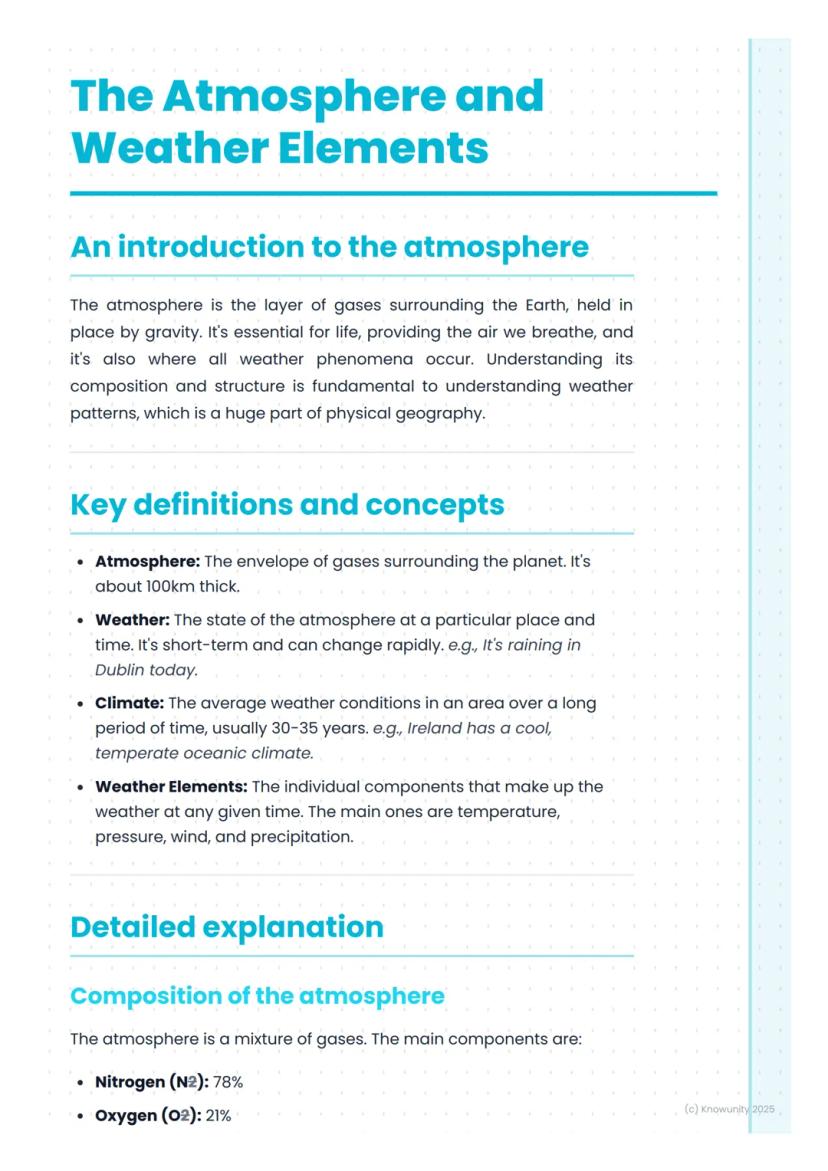
The atmosphere is essentially a 100km-thick layer of gases that keeps us alive and creates all our weather. Think of it as Earth's protective bubble that's constantly moving and changing.
Here's what you're breathing: 78% nitrogen, 21% oxygen, and just 1% of other gases including water vapour. That tiny bit of water vapour might seem insignificant, but it's responsible for every cloud, raindrop, and snowflake you've ever seen.
Weather is what's happening right now - like today's downpour in Dublin. Climate is the long-term average over 30+ years - like Ireland's famously wet reputation. Don't mix these up in your exams!
Quick Tip: Weather elements (temperature, pressure, wind, precipitation) are the building blocks of every weather forecast you check.
2
of 10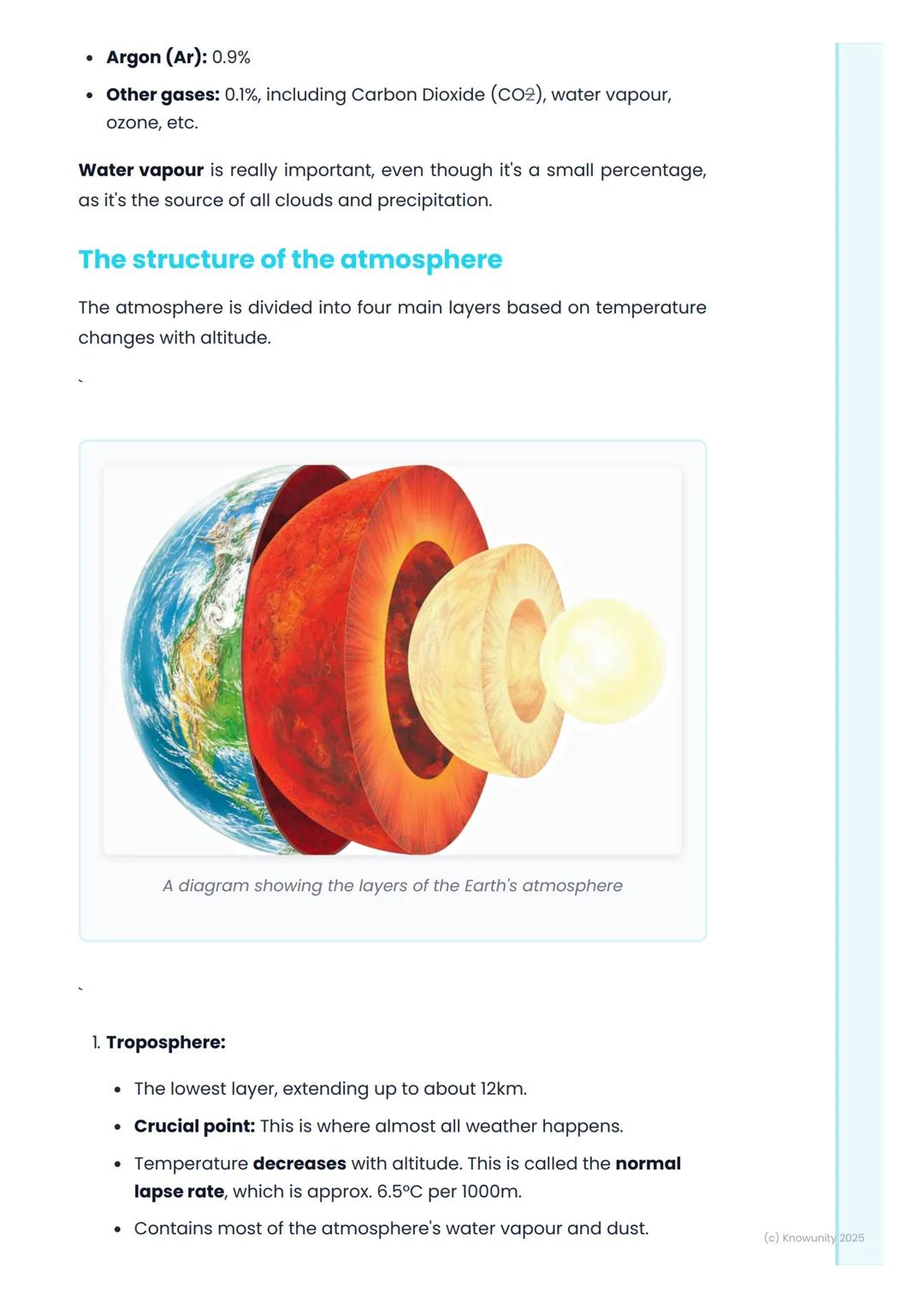
Atmospheric Layers
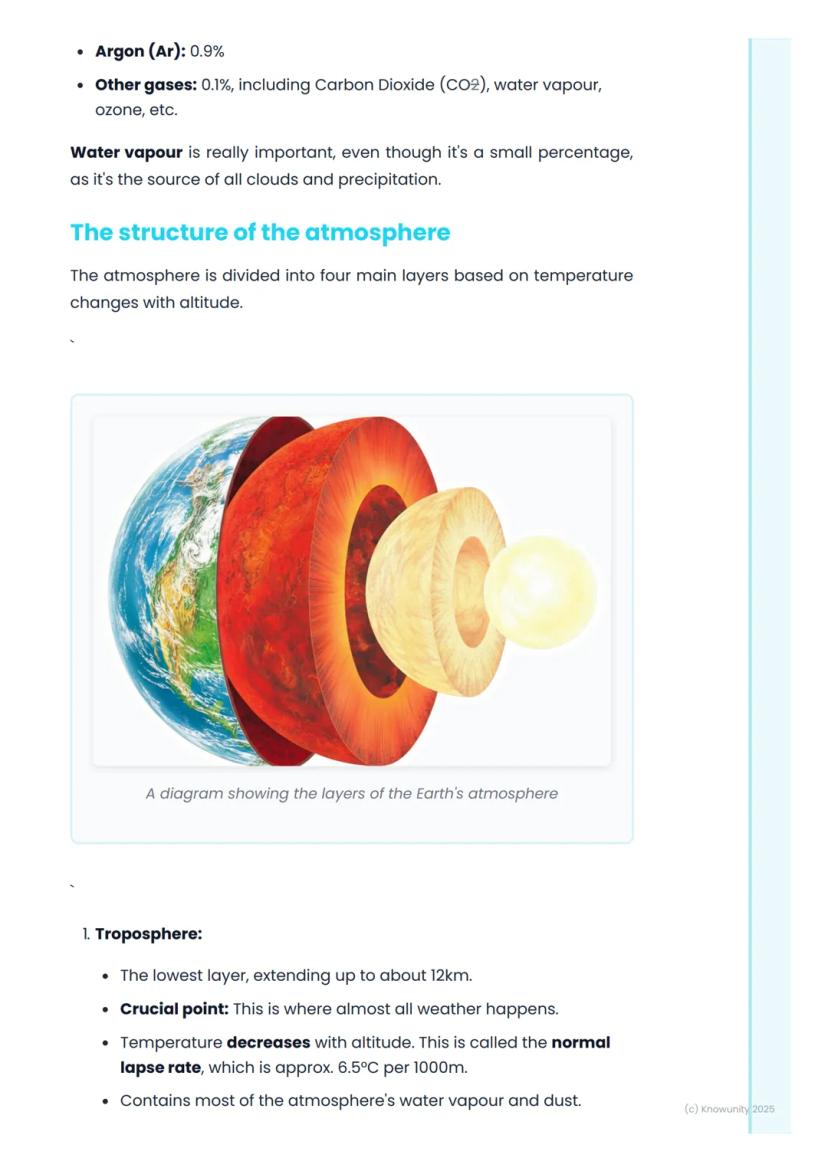
The atmosphere has four main layers, but you really need to know the first two. Here's a handy memory trick: The Sun Makes Things hot (Troposphere, Stratosphere, Mesosphere, Thermosphere).
The troposphere is where all the action happens - it's only 12km thick but contains virtually all our weather. Temperature drops as you go higher (about 6.5°C per 1000m), which explains why Carrauntoohil is always colder than sea level.
The stratosphere sits above it, containing the crucial ozone layer that blocks harmful UV rays. Unlike the troposphere, temperature actually increases with height here because ozone absorbs solar radiation.
Exam Focus: The troposphere is your priority - almost every weather question relates to this bottom layer.
3
of 10
Temperature and Pressure
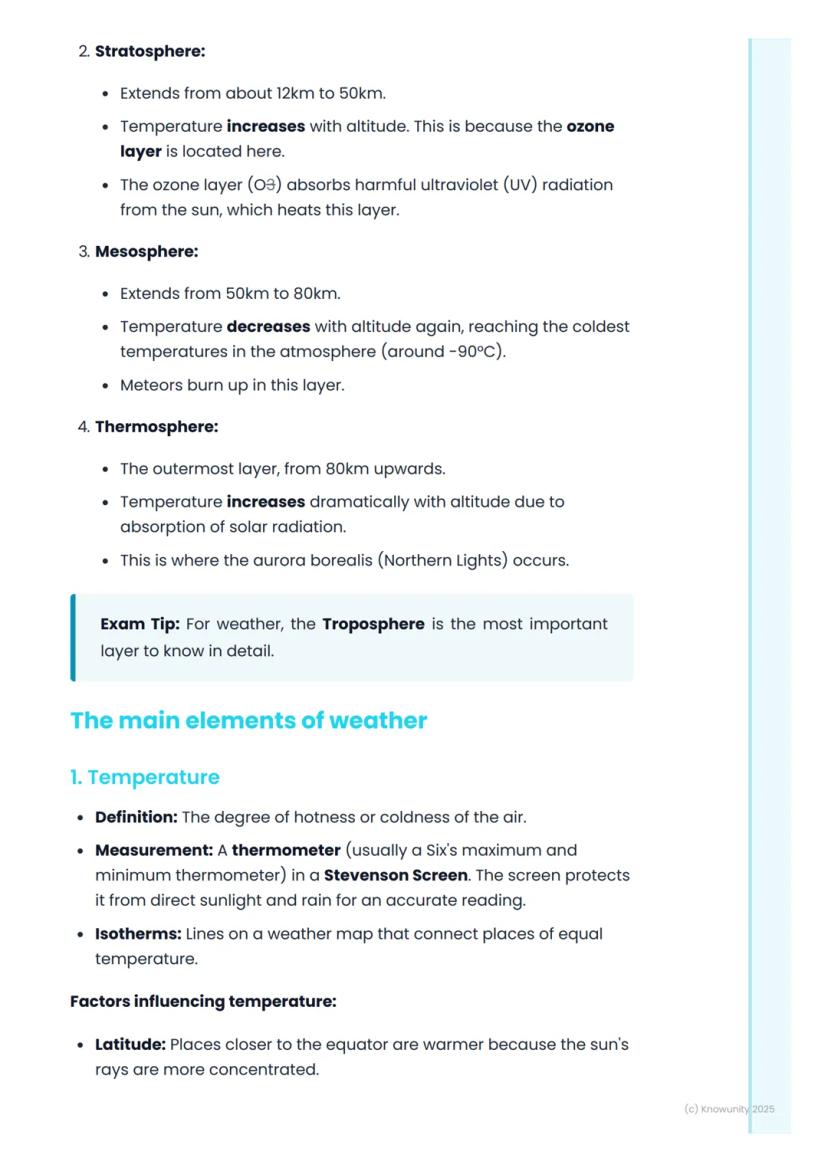
Temperature is measured using thermometers in Stevenson Screens (those white boxes you see at weather stations). Four main factors affect temperature: how close you are to the equator, your height above sea level, distance from the sea, and which way slopes face.
Ireland's coast stays milder year-round thanks to the sea's slow heating and cooling - that's why Galway has cooler summers but warmer winters than inland Athlone.
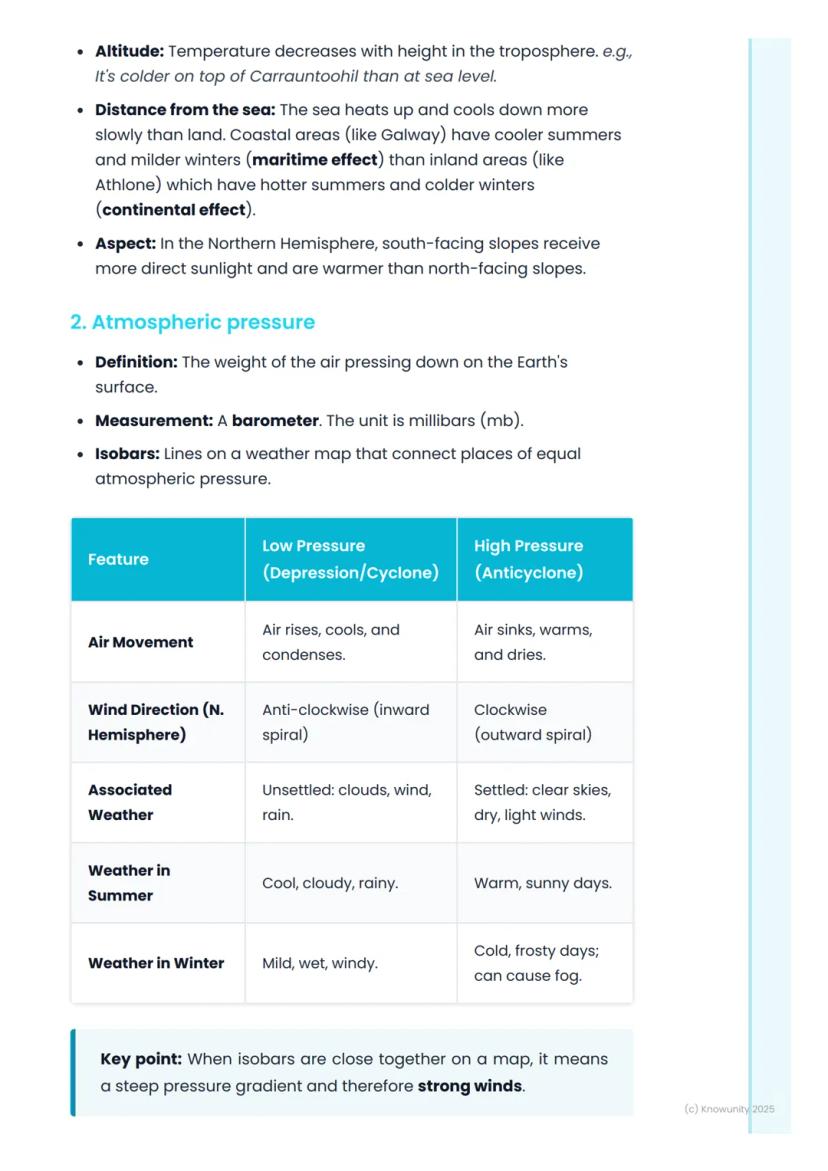
Atmospheric pressure is the weight of air pressing down on you, measured in millibars. Low pressure (depressions) means air is rising, cooling, and forming clouds - hello, rainy day! High pressure (anticyclones) means air is sinking and warming - cue the sunny weather.
Map Reading: When isobars (pressure lines) are squashed together, expect strong winds. Spread apart means light winds.
4
of 10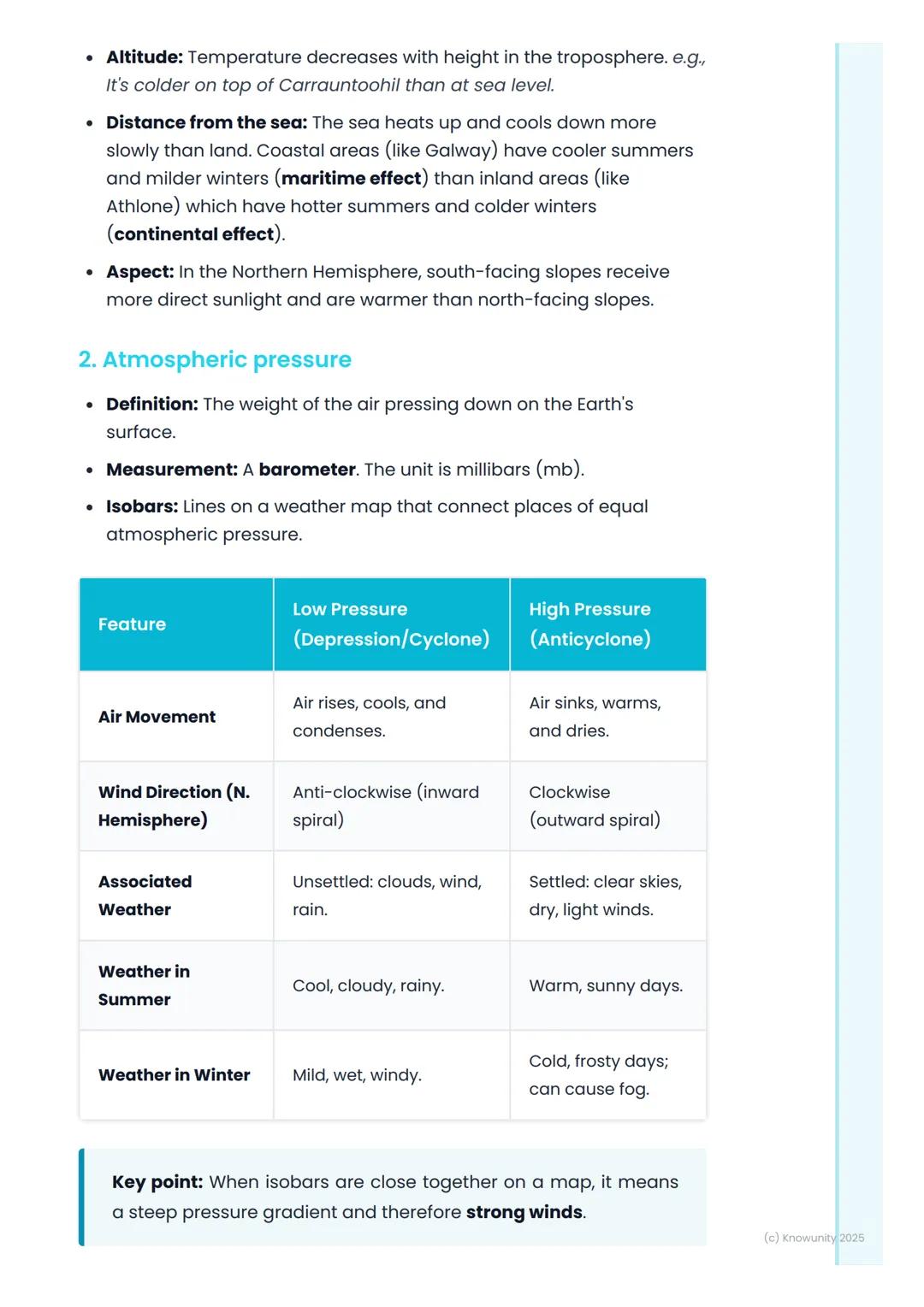
Wind and Weather Patterns
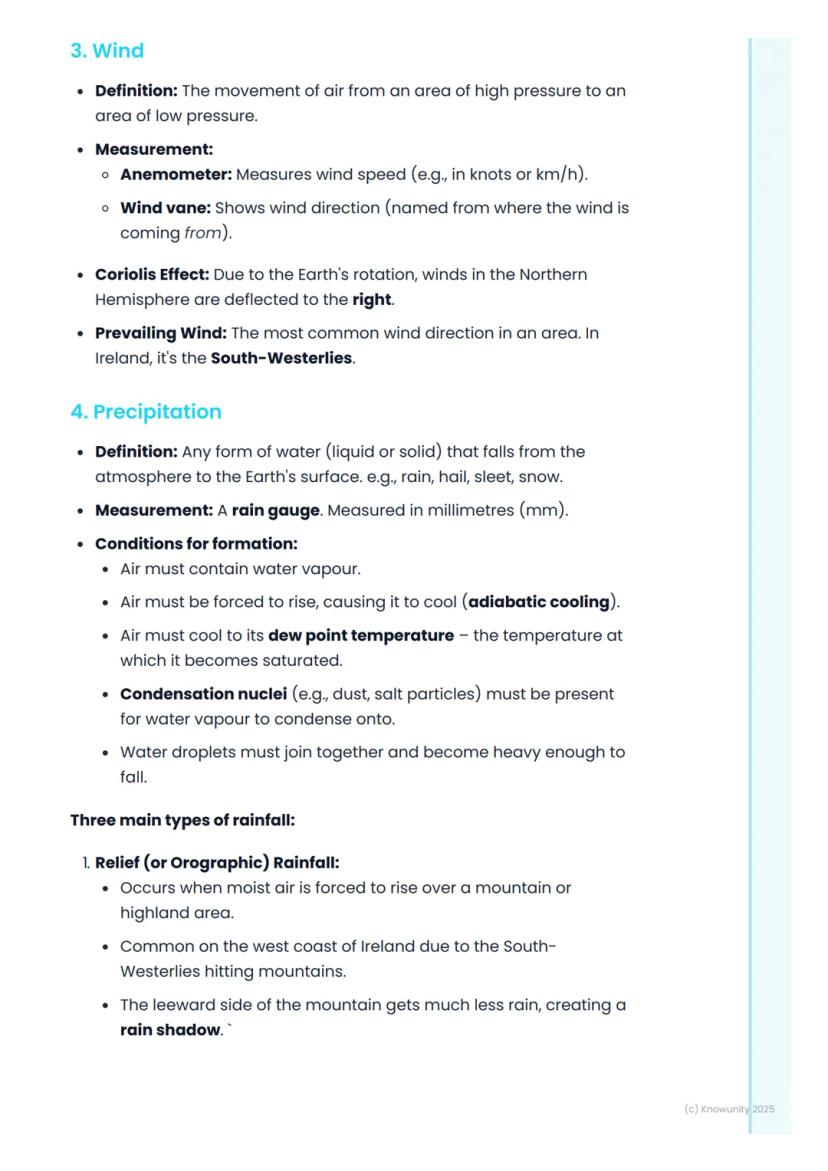
Wind is simply air rushing from high pressure to low pressure areas. In Ireland, our prevailing winds are South-Westerlies - they bring all that Atlantic moisture that keeps our grass so green!
Due to Earth's rotation, winds curve to the right in the Northern Hemisphere (called the Coriolis effect). This is why low-pressure systems spin anti-clockwise and high-pressure systems spin clockwise.
When you see a weather map, look for the 'L' and 'H' symbols. An 'L' means expect clouds, wind, and rain. An 'H' means settled, clear conditions - though in winter, this can bring frost and fog.
Wind Direction: Remember, winds are named from where they're coming from, not where they're going!
5
of 10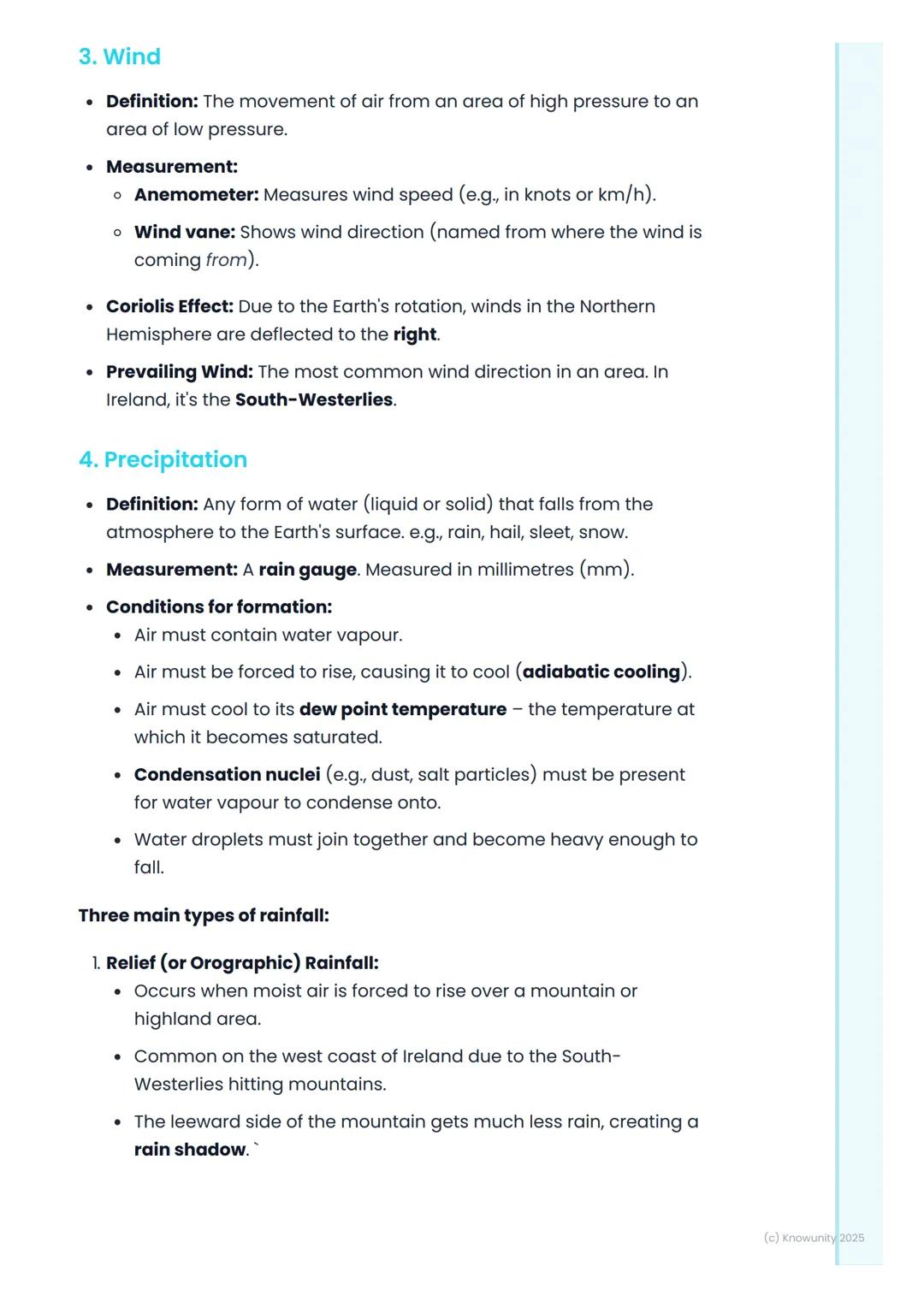
Rainfall Types
For precipitation to form, you need moist air that's forced to rise and cool to its dew point (saturation temperature). There are three main types you'll encounter in Ireland.
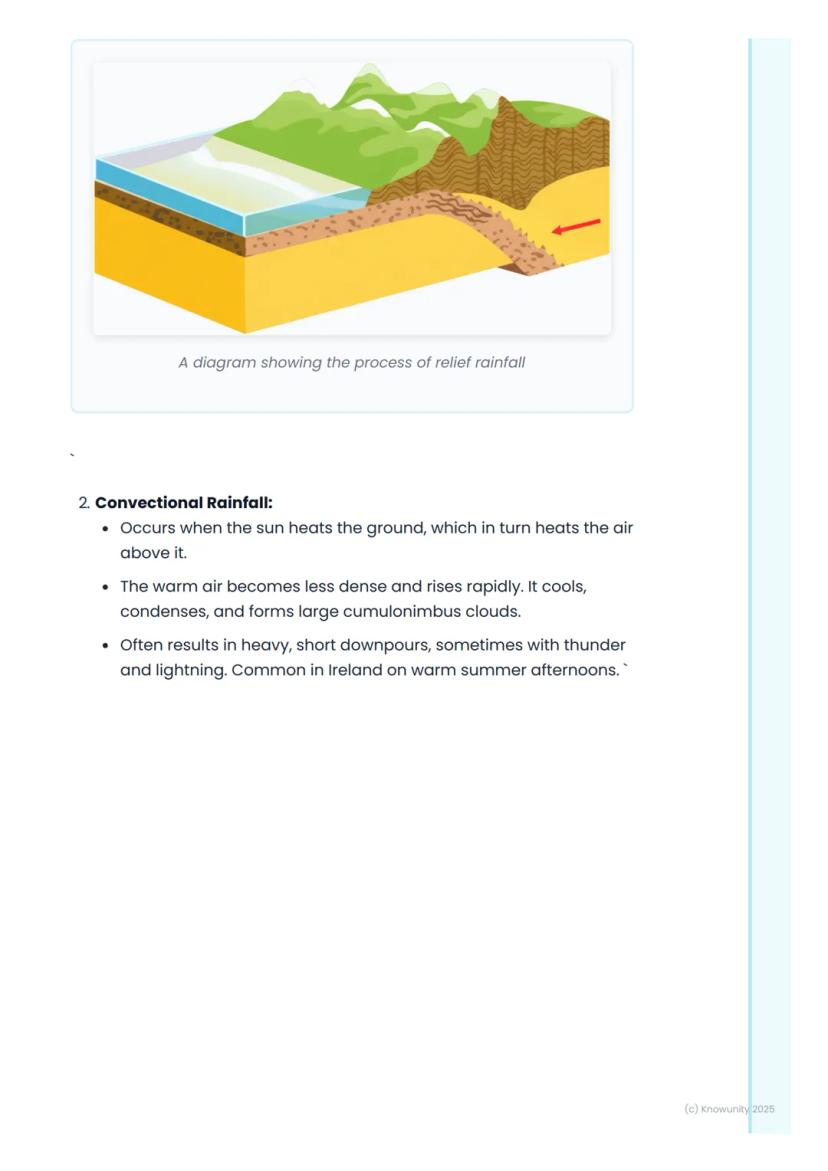
Relief rainfall happens when our South-Westerly winds hit western mountains like the MacGillycuddy's Reeks. The air is forced upwards, cools, and dumps heavy rain on the western slopes. This creates a rain shadow effect - which is why Dublin gets less than 750mm of rain yearly while Valentia Island gets over 1400mm.
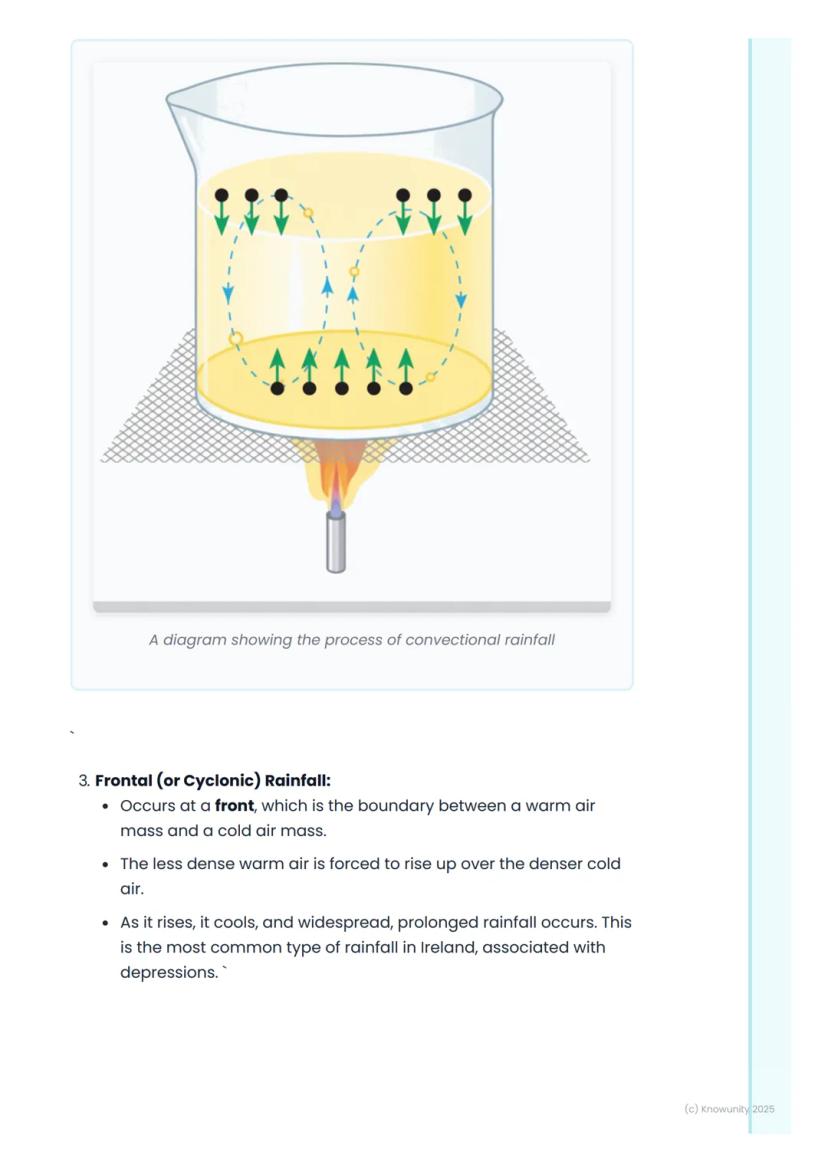
Convectional rainfall occurs on hot summer afternoons when heated ground causes air to rise rapidly, forming towering cumulonimbus clouds. These create those sudden heavy downpours with thunder and lightning.
Ireland's Reality: Most of our rain is frontal rainfall from Atlantic depressions - those weather systems that seem to queue up to soak us!
6
of 10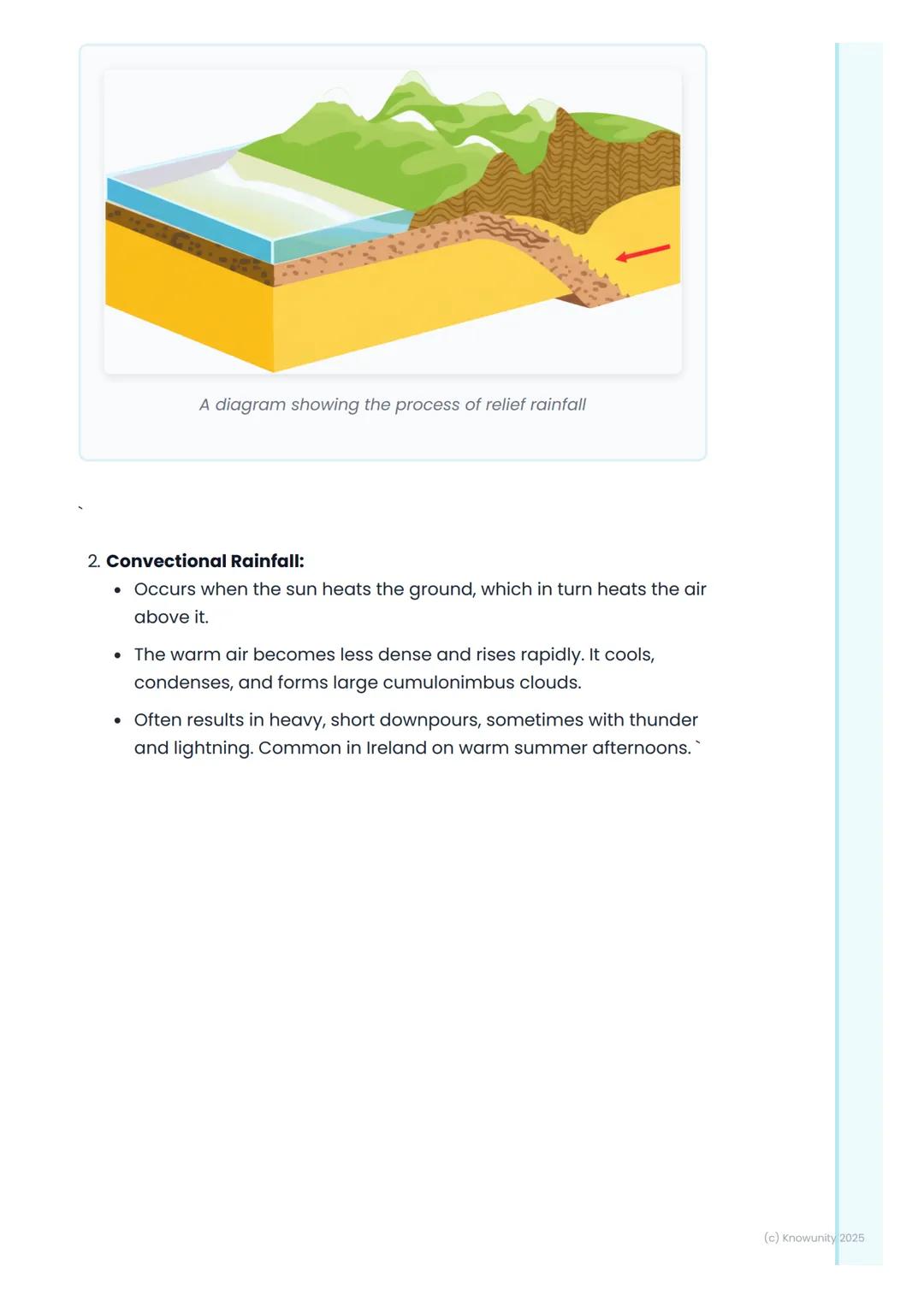
Frontal Systems and Depressions
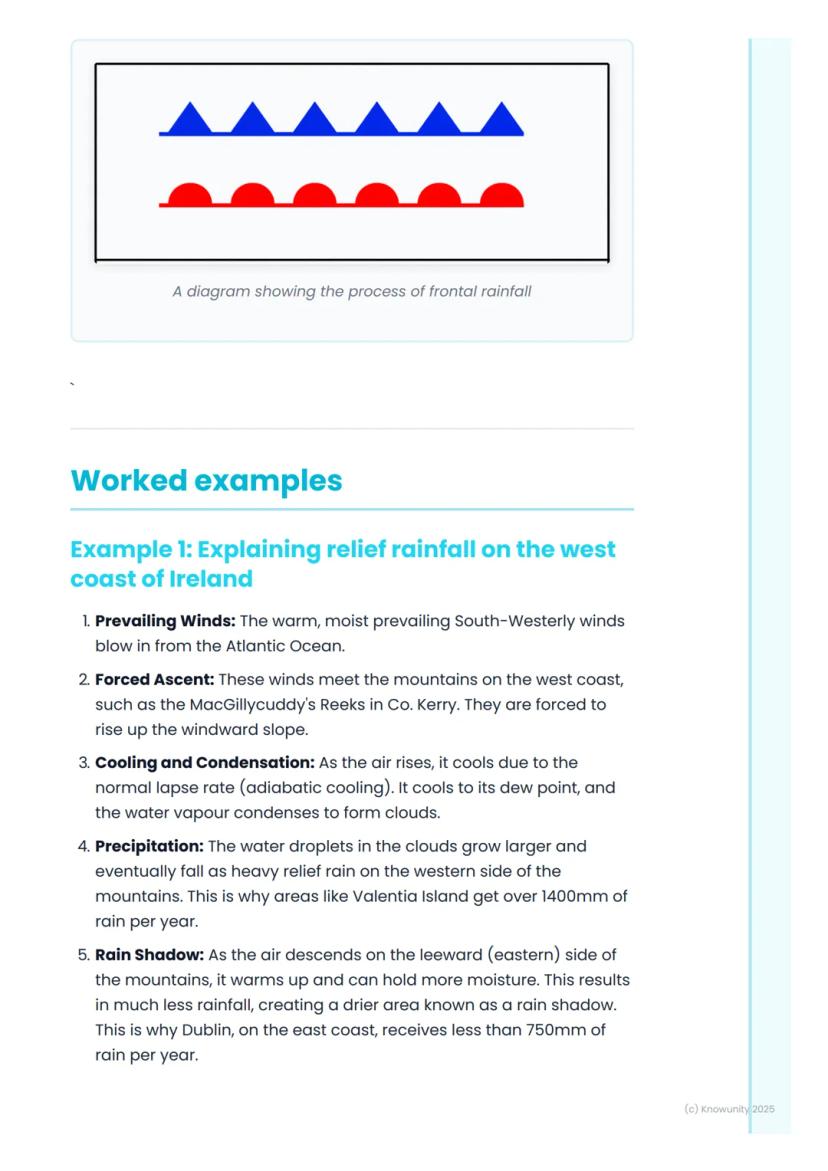
Frontal rainfall is Ireland's specialty - it happens when warm and cold air masses meet at weather fronts. The lighter warm air is forced upwards over the denser cold air, creating widespread, prolonged rainfall.
When a depression passes over Ireland, you'll experience a predictable sequence. First, the warm front approaches with falling pressure, high clouds, and steady light rain. Then comes the warm sector with higher temperatures and broken cloud.
Next, the cold front arrives like nature's drama queen - pressure rises sharply, massive dark clouds form, and you get a short burst of very heavy rain, possibly with hail and thunder. Finally, behind the cold front, temperatures drop, pressure continues rising, and you get those classic Irish "bright spells and showers."
Weather Watching: Cold fronts move faster than warm fronts, which is why they eventually catch up and create more complex weather systems.
7
of 10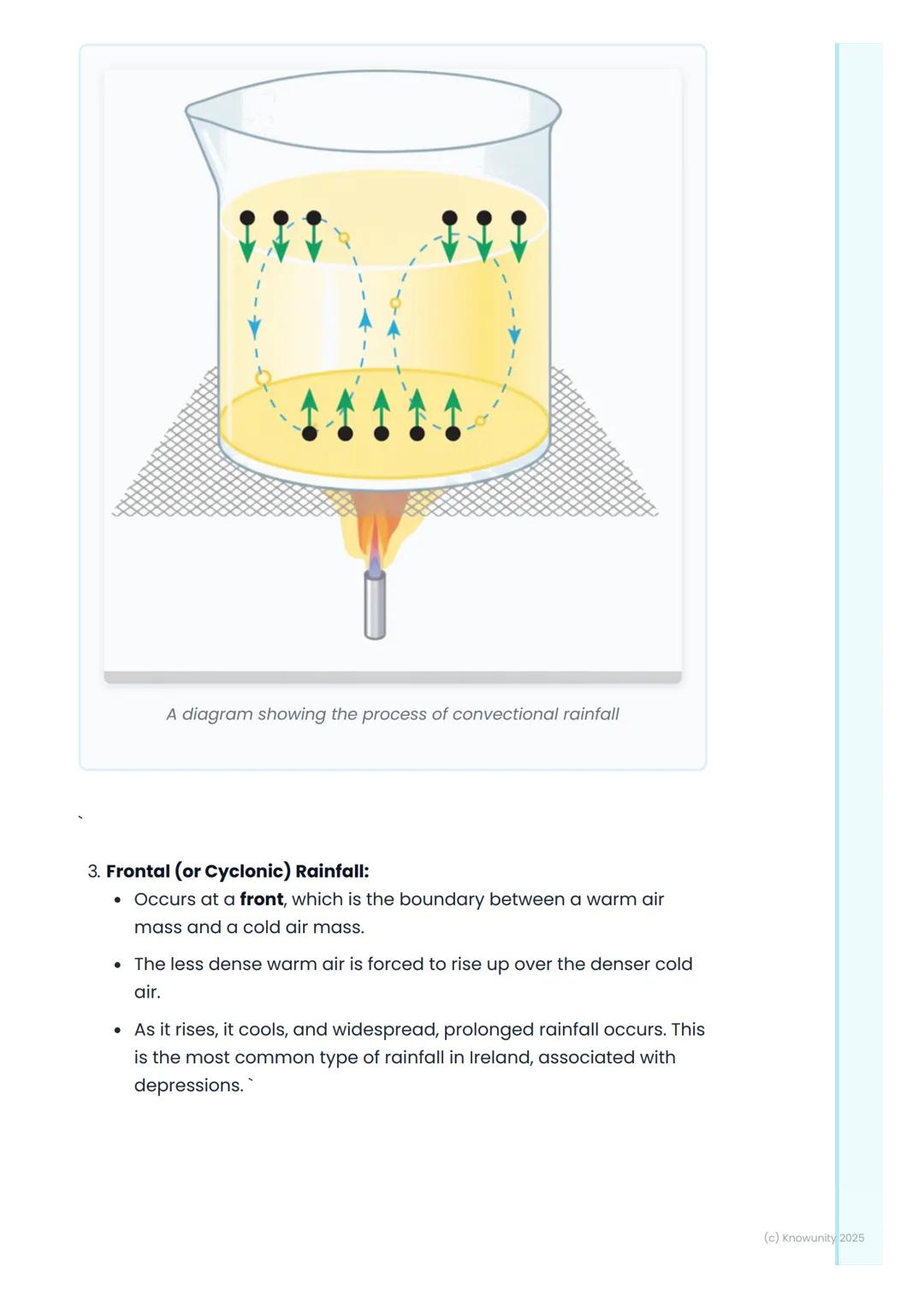
8
of 10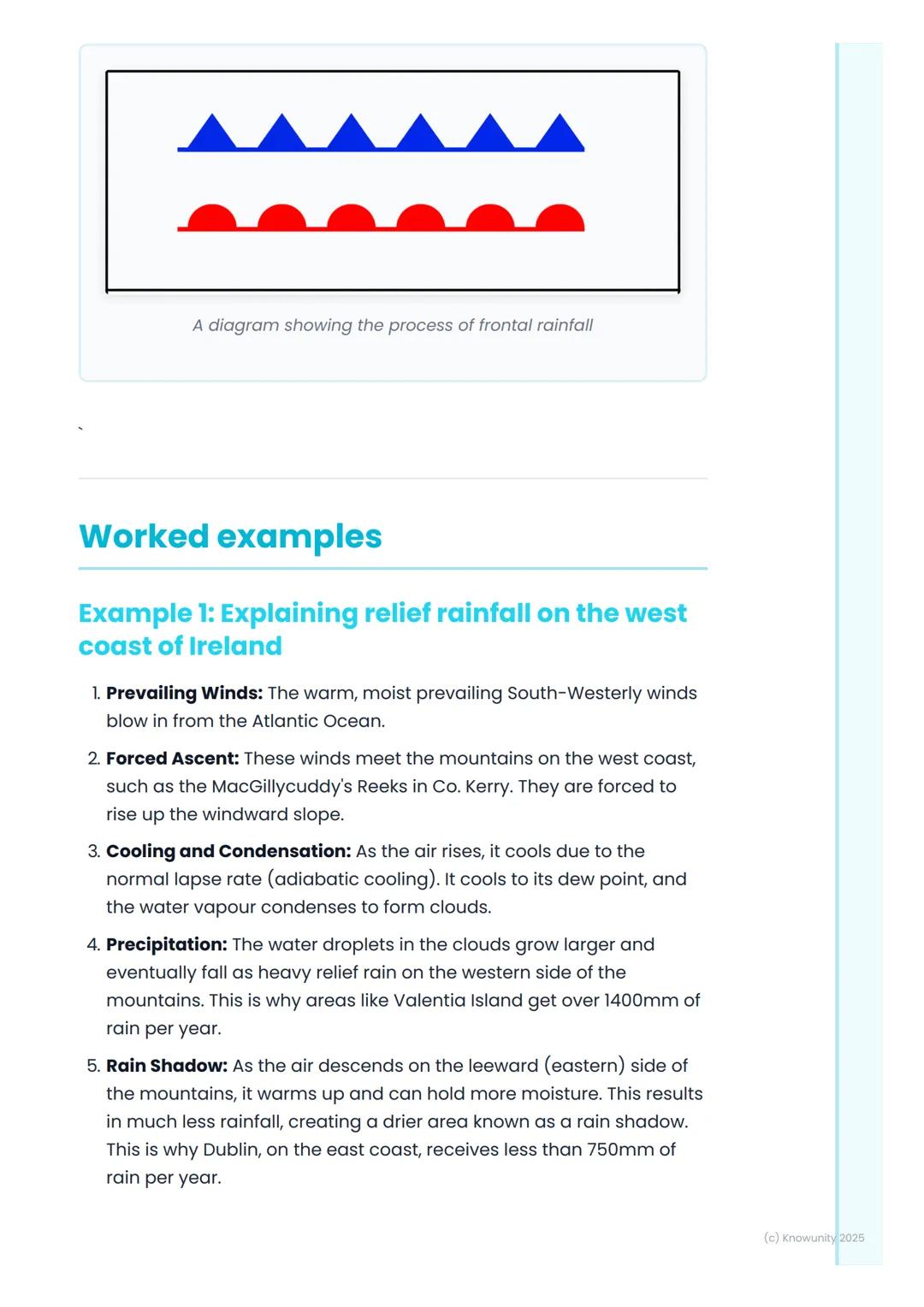
9
of 10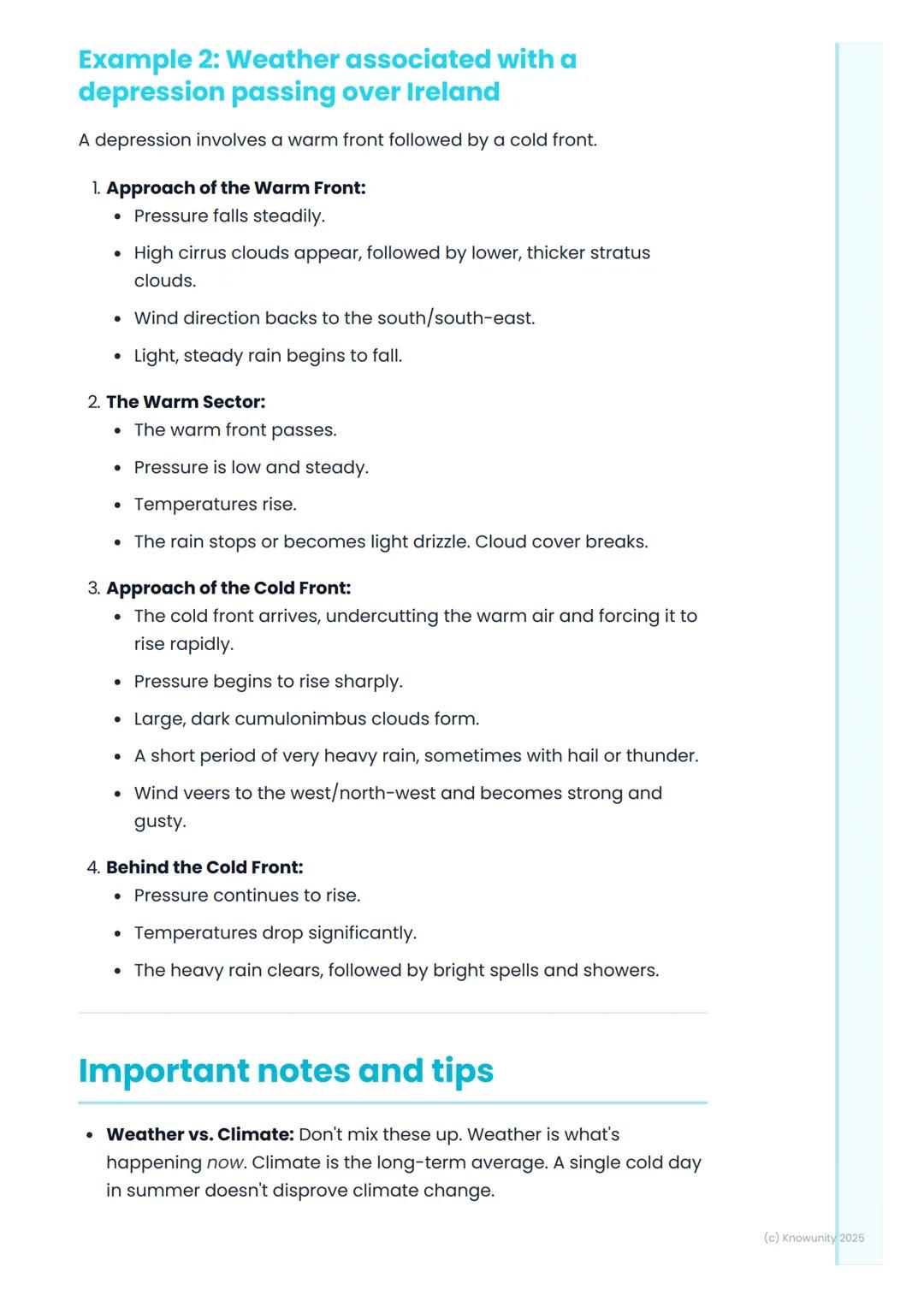
10
of 10
Wir dachten schon, du fragst nie...
Was ist der Knowunity KI-Begleiter?
Unser KI-Begleiter ist ein speziell für Schüler entwickeltes KI-Tool, das mehr als nur Antworten bietet. Basierend auf Millionen von Knowunity-Inhalten liefert er relevante Informationen, personalisierte Lernpläne, Quizze und Inhalte direkt im Chat und passt sich deinem individuellen Lernweg an.
Wo kann ich die Knowunity-App herunterladen?
Du kannst die App im Google Play Store und im Apple App Store herunterladen.
Ist Knowunity wirklich kostenlos?
Genau! Genieße kostenlosen Zugang zu Lerninhalten, vernetze dich mit anderen Schülern und hol dir sofortige Hilfe – alles direkt auf deinem Handy.
Beliebtester Inhalt in Geography
9Beliebtester Inhalt
9Findest du nicht, was du suchst? Entdecke andere Fächer.
Schüler lieben uns — und du auch.
4.6/5App Store
4.7/5Google Play
Die App ist sehr einfach zu bedienen und gut gestaltet. Ich habe bisher alles gefunden, wonach ich gesucht habe, und konnte viel aus den Präsentationen lernen! Ich werde die App definitiv für ein Schulprojekt nutzen! Und natürlich hilft sie auch sehr als Inspiration.
Stefan SiOS-Nutzer
Diese App ist wirklich super. Es gibt so viele Lernzettel und Hilfen [...]. Mein Problemfach ist zum Beispiel Französisch und die App hat so viele Möglichkeiten zur Hilfe. Dank dieser App habe ich mich in Französisch verbessert. Ich würde sie jedem empfehlen.
Samantha KlichAndroid-Nutzerin
Wow, ich bin wirklich begeistert. Ich habe die App einfach mal ausprobiert, weil ich sie schon oft beworben gesehen habe und war absolut beeindruckt. Diese App ist DIE HILFE, die man für die Schule braucht und vor allem bietet sie so viele Dinge wie Übungen und Lernzettel, die mir persönlich SEHR geholfen haben.
AnnaiOS-Nutzerin
Geography2 aufrufe·Aktualisiert Jun 1, 2026·10 SeitenUnderstanding Earth's Atmosphere and Weather
Ever wondered why it's always raining in Cork but sunny in Dublin, or why it's freezing on top of a mountain even in summer? The atmosphere is like Earth's protective blanket, and understanding how it works is the key to... Mehr anzeigen
1
of 10Melde dich an, um den Inhalt zu sehen. Kostenlos!
- Zugriff auf alle Dokumente
- Verbessere deine Noten
- Schließ dich Millionen Schülern an
The Atmosphere Basics
The atmosphere is essentially a 100km-thick layer of gases that keeps us alive and creates all our weather. Think of it as Earth's protective bubble that's constantly moving and changing.
Here's what you're breathing: 78% nitrogen, 21% oxygen, and just 1% of other gases including water vapour. That tiny bit of water vapour might seem insignificant, but it's responsible for every cloud, raindrop, and snowflake you've ever seen.
Weather is what's happening right now - like today's downpour in Dublin. Climate is the long-term average over 30+ years - like Ireland's famously wet reputation. Don't mix these up in your exams!
Quick Tip: Weather elements (temperature, pressure, wind, precipitation) are the building blocks of every weather forecast you check.
2
of 10Melde dich an, um den Inhalt zu sehen. Kostenlos!
- Zugriff auf alle Dokumente
- Verbessere deine Noten
- Schließ dich Millionen Schülern an
Atmospheric Layers
The atmosphere has four main layers, but you really need to know the first two. Here's a handy memory trick: The Sun Makes Things hot (Troposphere, Stratosphere, Mesosphere, Thermosphere).
The troposphere is where all the action happens - it's only 12km thick but contains virtually all our weather. Temperature drops as you go higher (about 6.5°C per 1000m), which explains why Carrauntoohil is always colder than sea level.
The stratosphere sits above it, containing the crucial ozone layer that blocks harmful UV rays. Unlike the troposphere, temperature actually increases with height here because ozone absorbs solar radiation.
Exam Focus: The troposphere is your priority - almost every weather question relates to this bottom layer.
3
of 10Melde dich an, um den Inhalt zu sehen. Kostenlos!
- Zugriff auf alle Dokumente
- Verbessere deine Noten
- Schließ dich Millionen Schülern an
Temperature and Pressure
Temperature is measured using thermometers in Stevenson Screens (those white boxes you see at weather stations). Four main factors affect temperature: how close you are to the equator, your height above sea level, distance from the sea, and which way slopes face.
Ireland's coast stays milder year-round thanks to the sea's slow heating and cooling - that's why Galway has cooler summers but warmer winters than inland Athlone.
Atmospheric pressure is the weight of air pressing down on you, measured in millibars. Low pressure (depressions) means air is rising, cooling, and forming clouds - hello, rainy day! High pressure (anticyclones) means air is sinking and warming - cue the sunny weather.
Map Reading: When isobars (pressure lines) are squashed together, expect strong winds. Spread apart means light winds.
4
of 10Melde dich an, um den Inhalt zu sehen. Kostenlos!
- Zugriff auf alle Dokumente
- Verbessere deine Noten
- Schließ dich Millionen Schülern an
Wind and Weather Patterns
Wind is simply air rushing from high pressure to low pressure areas. In Ireland, our prevailing winds are South-Westerlies - they bring all that Atlantic moisture that keeps our grass so green!
Due to Earth's rotation, winds curve to the right in the Northern Hemisphere (called the Coriolis effect). This is why low-pressure systems spin anti-clockwise and high-pressure systems spin clockwise.
When you see a weather map, look for the 'L' and 'H' symbols. An 'L' means expect clouds, wind, and rain. An 'H' means settled, clear conditions - though in winter, this can bring frost and fog.
Wind Direction: Remember, winds are named from where they're coming from, not where they're going!
5
of 10Melde dich an, um den Inhalt zu sehen. Kostenlos!
- Zugriff auf alle Dokumente
- Verbessere deine Noten
- Schließ dich Millionen Schülern an
Rainfall Types
For precipitation to form, you need moist air that's forced to rise and cool to its dew point (saturation temperature). There are three main types you'll encounter in Ireland.
Relief rainfall happens when our South-Westerly winds hit western mountains like the MacGillycuddy's Reeks. The air is forced upwards, cools, and dumps heavy rain on the western slopes. This creates a rain shadow effect - which is why Dublin gets less than 750mm of rain yearly while Valentia Island gets over 1400mm.
Convectional rainfall occurs on hot summer afternoons when heated ground causes air to rise rapidly, forming towering cumulonimbus clouds. These create those sudden heavy downpours with thunder and lightning.
Ireland's Reality: Most of our rain is frontal rainfall from Atlantic depressions - those weather systems that seem to queue up to soak us!
6
of 10Melde dich an, um den Inhalt zu sehen. Kostenlos!
- Zugriff auf alle Dokumente
- Verbessere deine Noten
- Schließ dich Millionen Schülern an
Frontal Systems and Depressions
Frontal rainfall is Ireland's specialty - it happens when warm and cold air masses meet at weather fronts. The lighter warm air is forced upwards over the denser cold air, creating widespread, prolonged rainfall.
When a depression passes over Ireland, you'll experience a predictable sequence. First, the warm front approaches with falling pressure, high clouds, and steady light rain. Then comes the warm sector with higher temperatures and broken cloud.
Next, the cold front arrives like nature's drama queen - pressure rises sharply, massive dark clouds form, and you get a short burst of very heavy rain, possibly with hail and thunder. Finally, behind the cold front, temperatures drop, pressure continues rising, and you get those classic Irish "bright spells and showers."
Weather Watching: Cold fronts move faster than warm fronts, which is why they eventually catch up and create more complex weather systems.
7
of 10Melde dich an, um den Inhalt zu sehen. Kostenlos!
- Zugriff auf alle Dokumente
- Verbessere deine Noten
- Schließ dich Millionen Schülern an
8
of 10Melde dich an, um den Inhalt zu sehen. Kostenlos!
- Zugriff auf alle Dokumente
- Verbessere deine Noten
- Schließ dich Millionen Schülern an
9
of 10Melde dich an, um den Inhalt zu sehen. Kostenlos!
- Zugriff auf alle Dokumente
- Verbessere deine Noten
- Schließ dich Millionen Schülern an
10
of 10Melde dich an, um den Inhalt zu sehen. Kostenlos!
- Zugriff auf alle Dokumente
- Verbessere deine Noten
- Schließ dich Millionen Schülern an
Wir dachten schon, du fragst nie...
Was ist der Knowunity KI-Begleiter?
Unser KI-Begleiter ist ein speziell für Schüler entwickeltes KI-Tool, das mehr als nur Antworten bietet. Basierend auf Millionen von Knowunity-Inhalten liefert er relevante Informationen, personalisierte Lernpläne, Quizze und Inhalte direkt im Chat und passt sich deinem individuellen Lernweg an.
Wo kann ich die Knowunity-App herunterladen?
Du kannst die App im Google Play Store und im Apple App Store herunterladen.
Ist Knowunity wirklich kostenlos?
Genau! Genieße kostenlosen Zugang zu Lerninhalten, vernetze dich mit anderen Schülern und hol dir sofortige Hilfe – alles direkt auf deinem Handy.
Beliebtester Inhalt in Geography
9Beliebtester Inhalt
9Findest du nicht, was du suchst? Entdecke andere Fächer.
Schüler lieben uns — und du auch.
4.6/5App Store
4.7/5Google Play
Die App ist sehr einfach zu bedienen und gut gestaltet. Ich habe bisher alles gefunden, wonach ich gesucht habe, und konnte viel aus den Präsentationen lernen! Ich werde die App definitiv für ein Schulprojekt nutzen! Und natürlich hilft sie auch sehr als Inspiration.
Stefan SiOS-Nutzer
Diese App ist wirklich super. Es gibt so viele Lernzettel und Hilfen [...]. Mein Problemfach ist zum Beispiel Französisch und die App hat so viele Möglichkeiten zur Hilfe. Dank dieser App habe ich mich in Französisch verbessert. Ich würde sie jedem empfehlen.
Samantha KlichAndroid-Nutzerin
Wow, ich bin wirklich begeistert. Ich habe die App einfach mal ausprobiert, weil ich sie schon oft beworben gesehen habe und war absolut beeindruckt. Diese App ist DIE HILFE, die man für die Schule braucht und vor allem bietet sie so viele Dinge wie Übungen und Lernzettel, die mir persönlich SEHR geholfen haben.
AnnaiOS-Nutzerin