
Ever wondered how one monk's complaints about corrupt church practices... Mehr anzeigen
 History11 aufrufe·Aktualisiert Jun 12, 2026·6 Seiten
The Protestant Reformation: Key Causes and Figures
1 / 6
1
of 6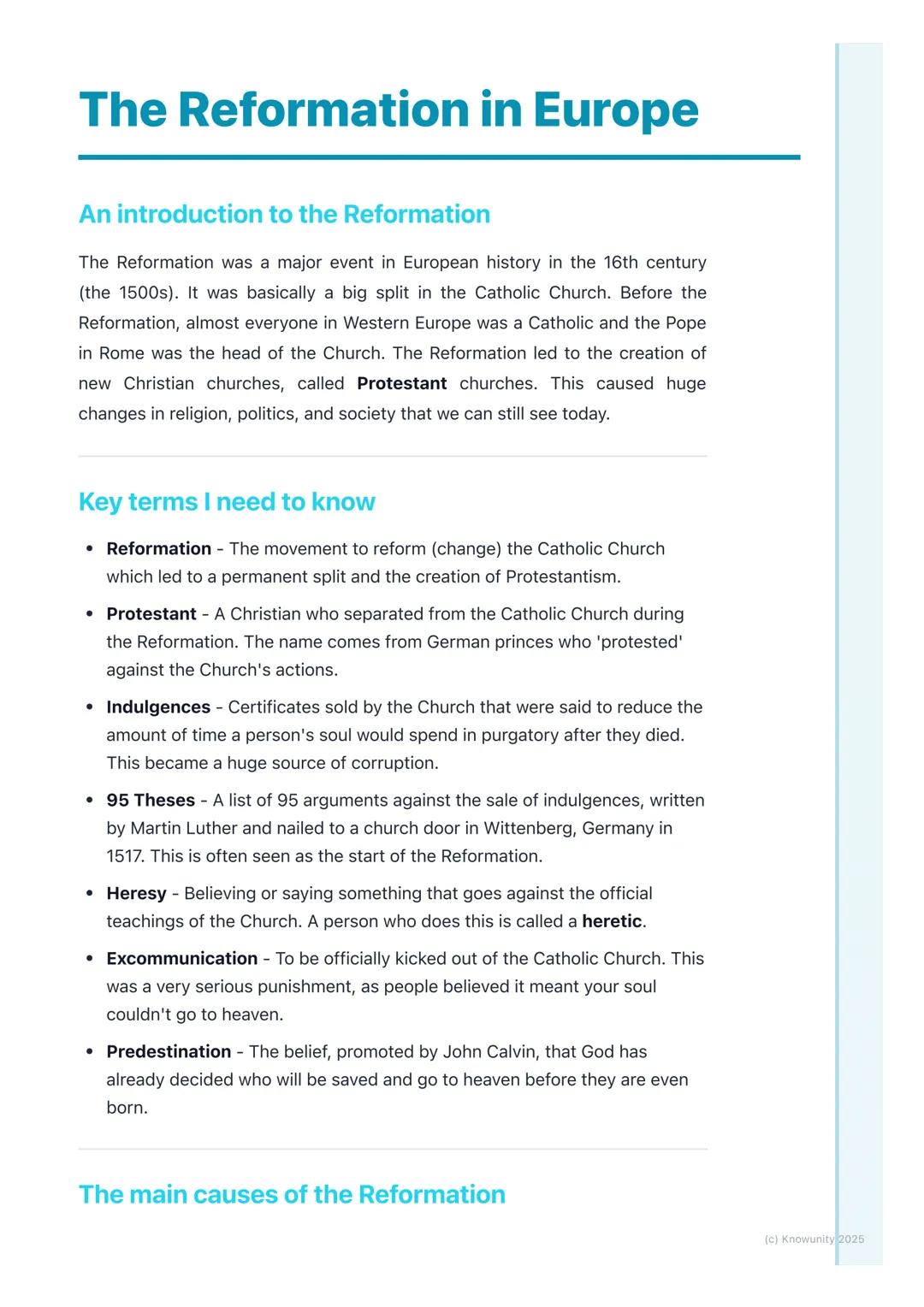
What Was the Reformation?
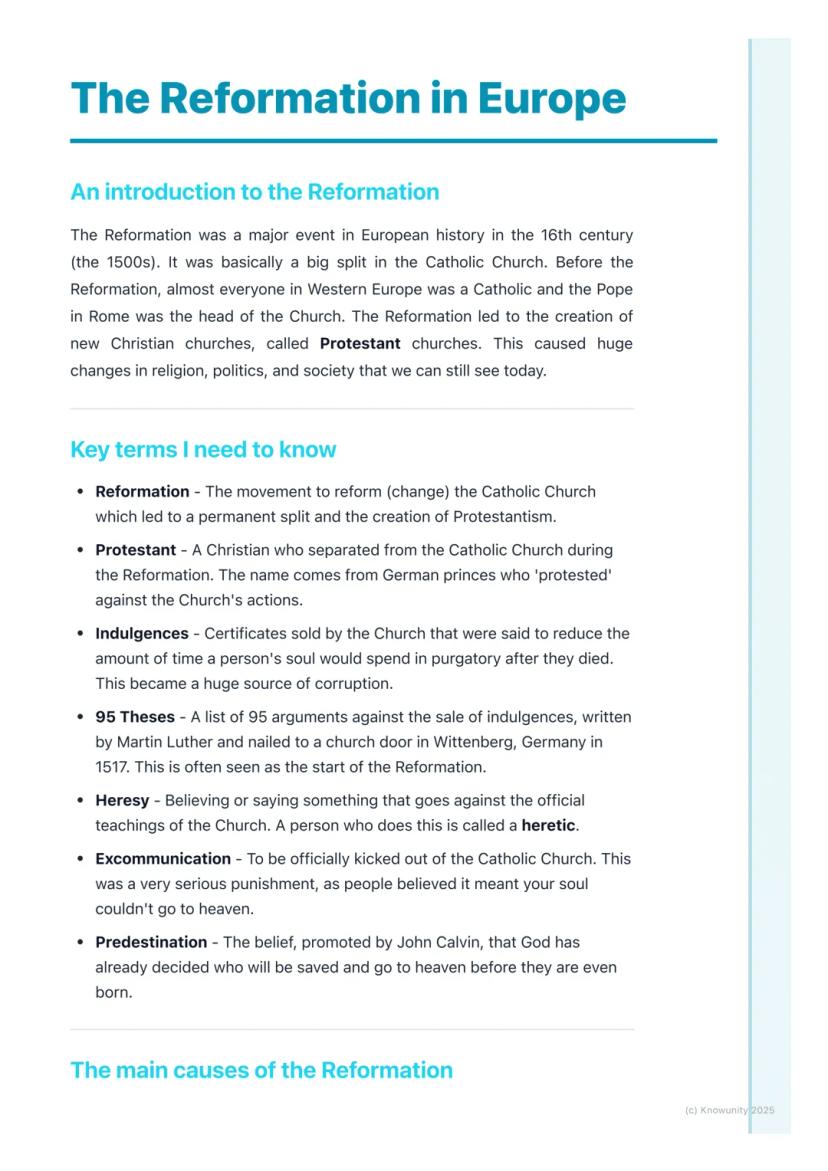
Think of the Reformation as the biggest religious breakup in European history. Before the 1500s, nearly everyone in Western Europe was Catholic, with the Pope calling all the shots from Rome. Then everything changed when people started questioning whether the Church had become too corrupt and powerful.
The Reformation was basically a movement to reform (or fix) the Catholic Church that ended up creating Protestant churches instead. These Protestants got their name because German princes literally "protested" against the Church's dodgy practices.
Some key terms you'll definitely need to know: indulgences were like "get out of hell free" cards that the Church sold for money. The 95 Theses were Martin Luther's famous list of complaints that he nailed to a church door in 1517. If you went against Church teachings, you were guilty of heresy and could face excommunication - basically being kicked out of the Church forever.
Quick Tip: Remember that predestination was John Calvin's controversial idea that God had already decided who was going to heaven before they were even born!
2
of 6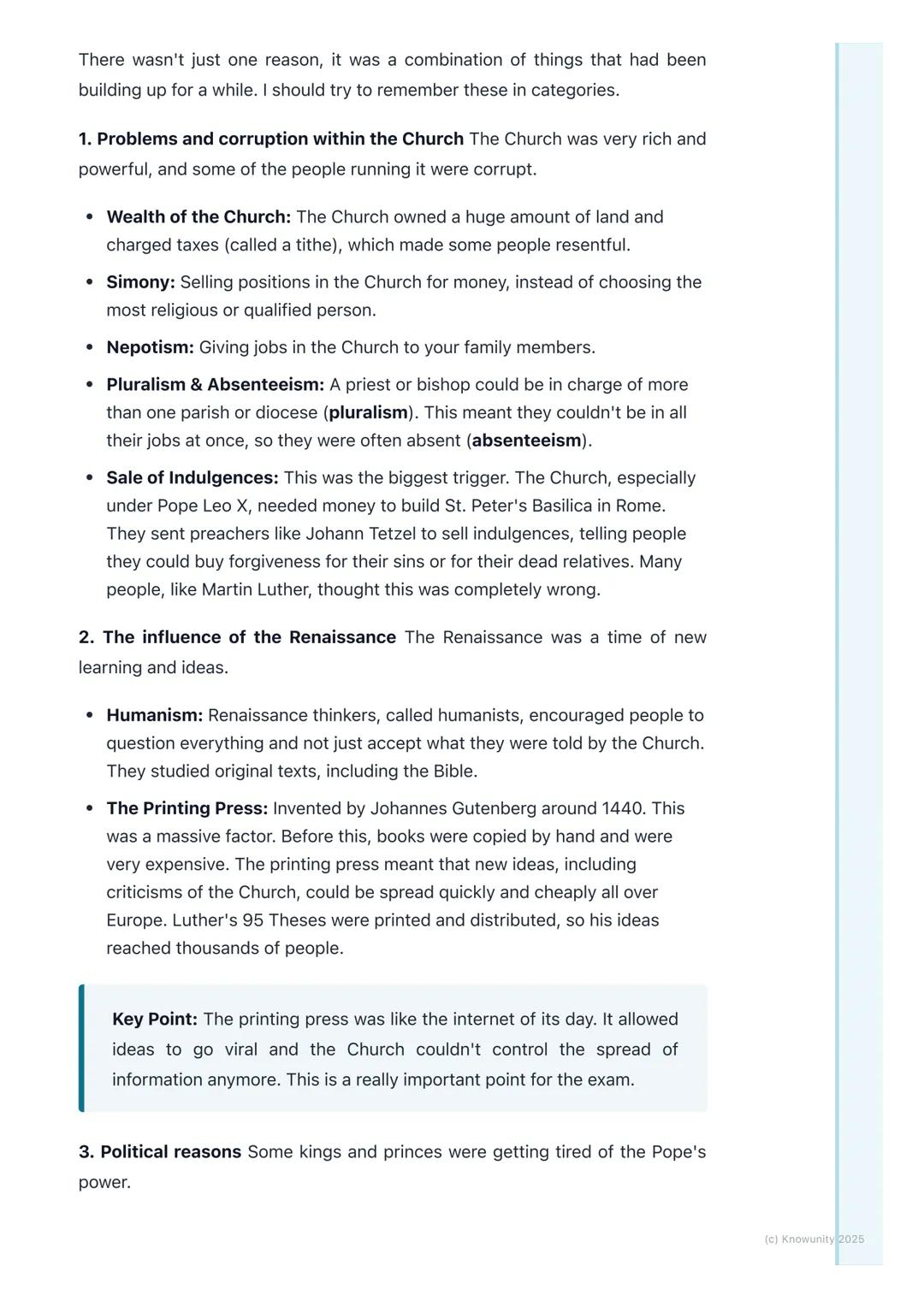
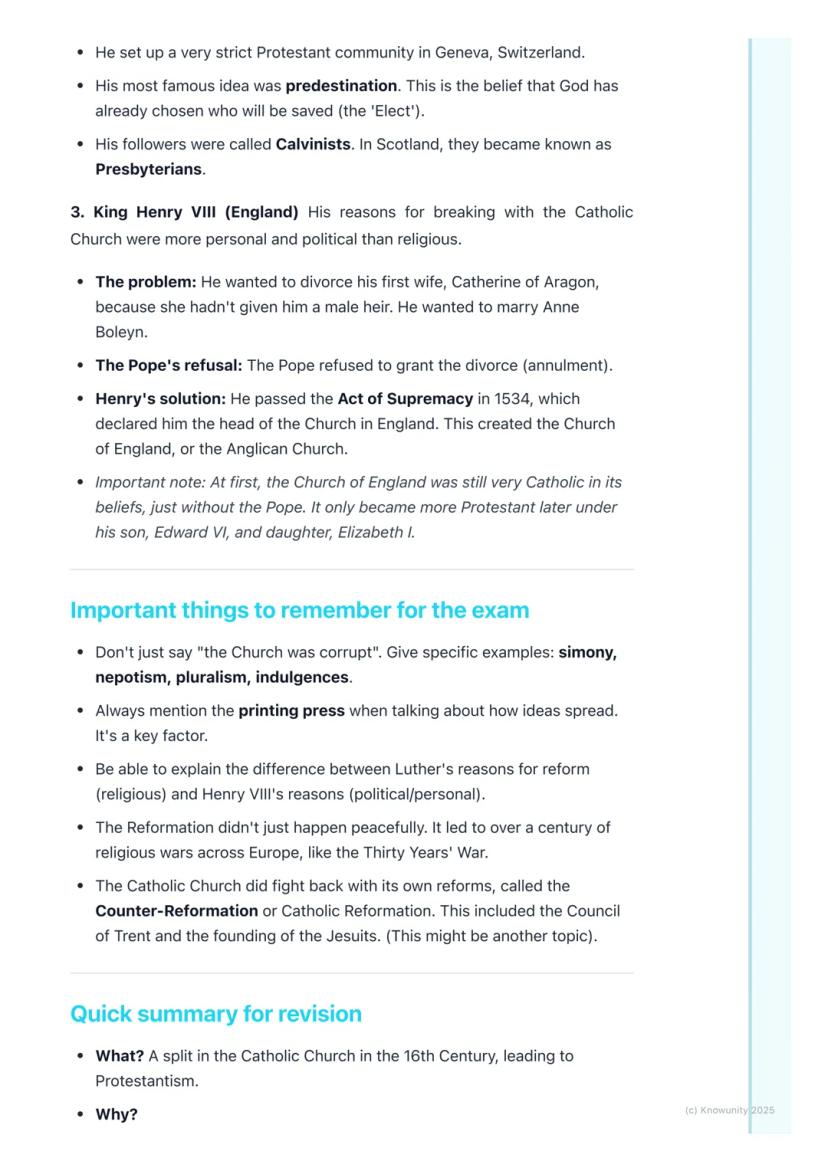
Why Did It All Kick Off?
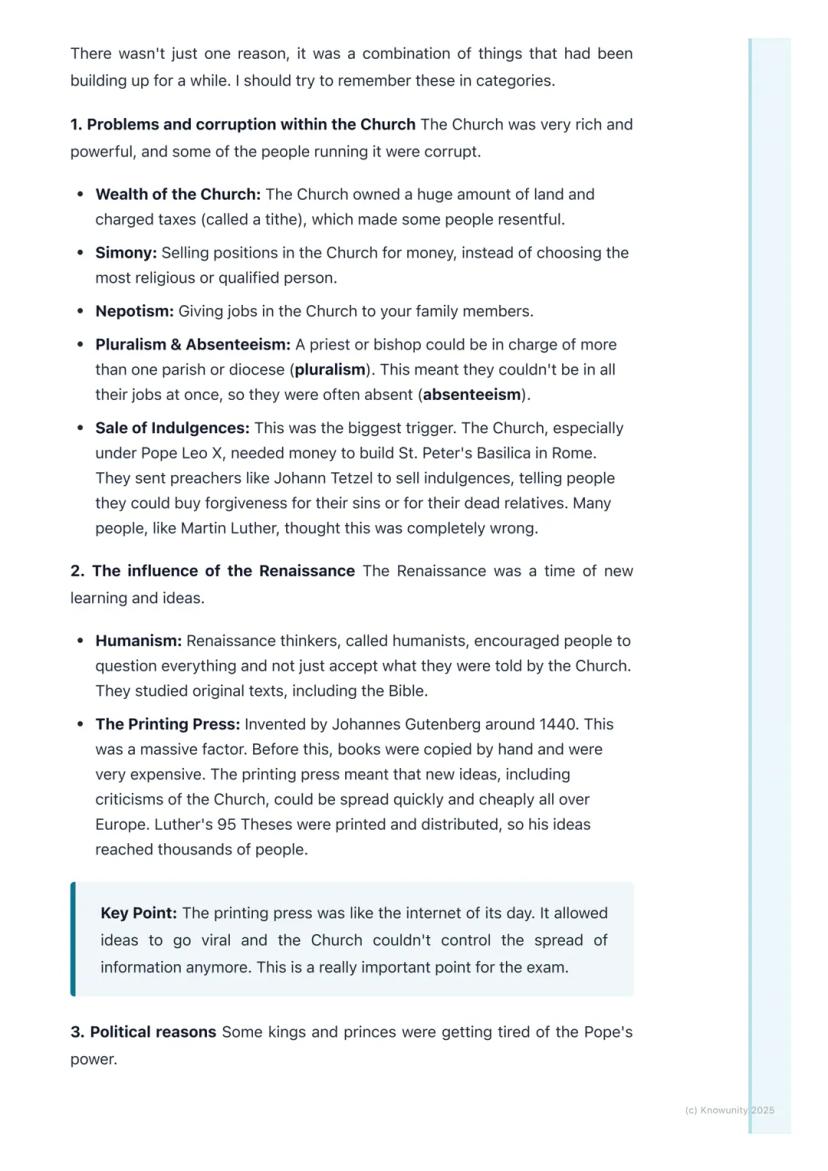
The Reformation didn't happen overnight - tensions had been building for ages. The biggest problem was serious corruption within the Catholic Church that was making people absolutely furious.
The Church was ridiculously wealthy and some leaders were completely taking the mick. They practiced simony (selling church positions for cash), nepotism (giving jobs to their mates and family), and pluralism (one person holding multiple church jobs they couldn't possibly do properly). But the final straw was selling indulgences - telling people they could literally buy forgiveness for their sins.
The Renaissance also played a massive role by encouraging people to question authority. Humanism taught people to think for themselves rather than blindly accepting what they were told. Most importantly, Johannes Gutenberg's printing press was like the internet of its day - it meant Luther's ideas could spread across Europe in weeks rather than years.
Kings and princes were also getting fed up with the Pope's interference in their countries. They wanted the Church's massive wealth and land for themselves, plus they didn't fancy some bloke in Rome telling them how to run their kingdoms.
Exam Gold: Always mention the printing press when explaining how Reformation ideas spread - it's a guaranteed mark-winner!
3
of 6
Martin Luther: The Man Who Started It All
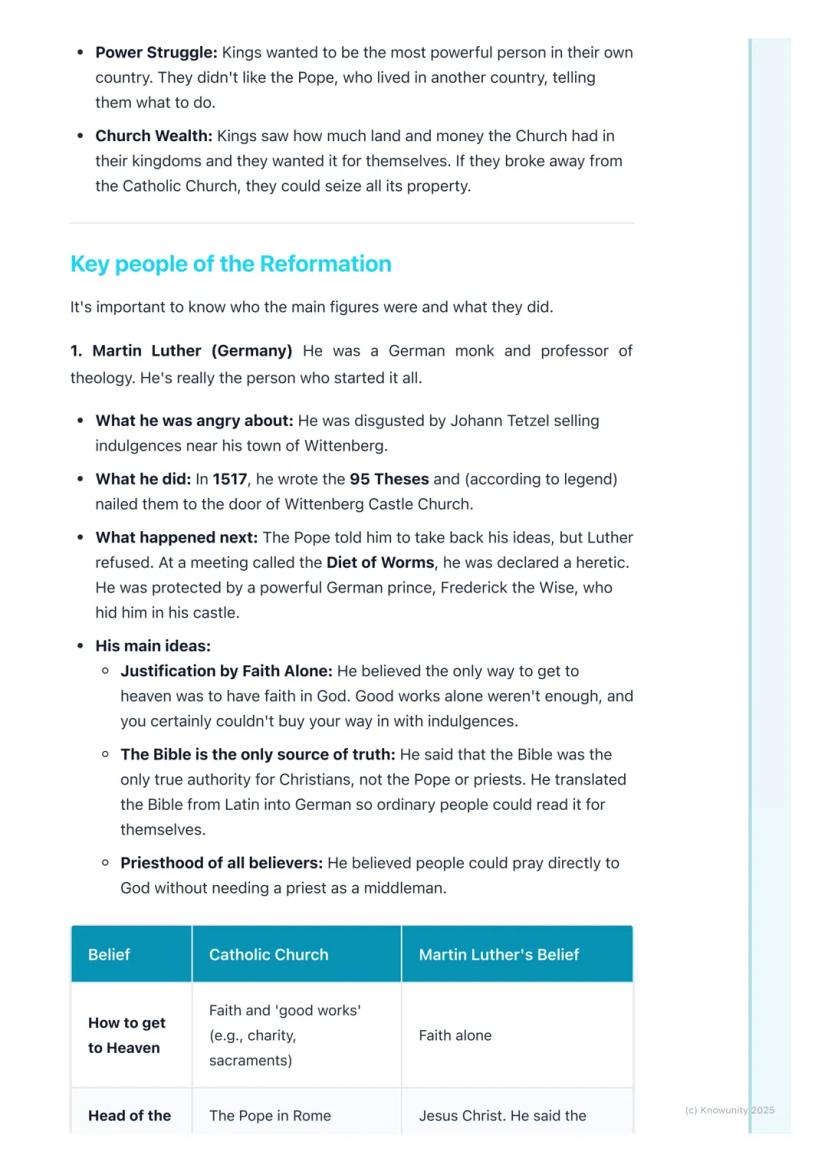
Martin Luther was a German monk who basically became the face of the Reformation after getting absolutely livid about a preacher called Johann Tetzel flogging indulgences near his town.
In 1517, Luther wrote his famous 95 Theses - essentially a strongly-worded complaint list that he stuck to Wittenberg Castle Church door (though this might just be a legend). When the Pope told him to shut up and take it all back, Luther refused point-blank.
Luther's revolutionary ideas completely challenged Catholic teaching. He believed in justification by faith alone - meaning you got to heaven through believing in God, not by buying indulgences or doing good deeds. He also argued that the Bible was the only true authority, not the Pope, and that people should be able to read it in their own language instead of Latin.
His idea of the priesthood of all believers was particularly radical - he reckoned people could chat directly to God without needing a priest as a middleman. This was basically telling the entire Catholic hierarchy that they were unnecessary!
Remember This: Luther's beliefs were the complete opposite of Catholic teaching - faith vs. good works, Bible vs. Pope, individual vs. institution.
4
of 6
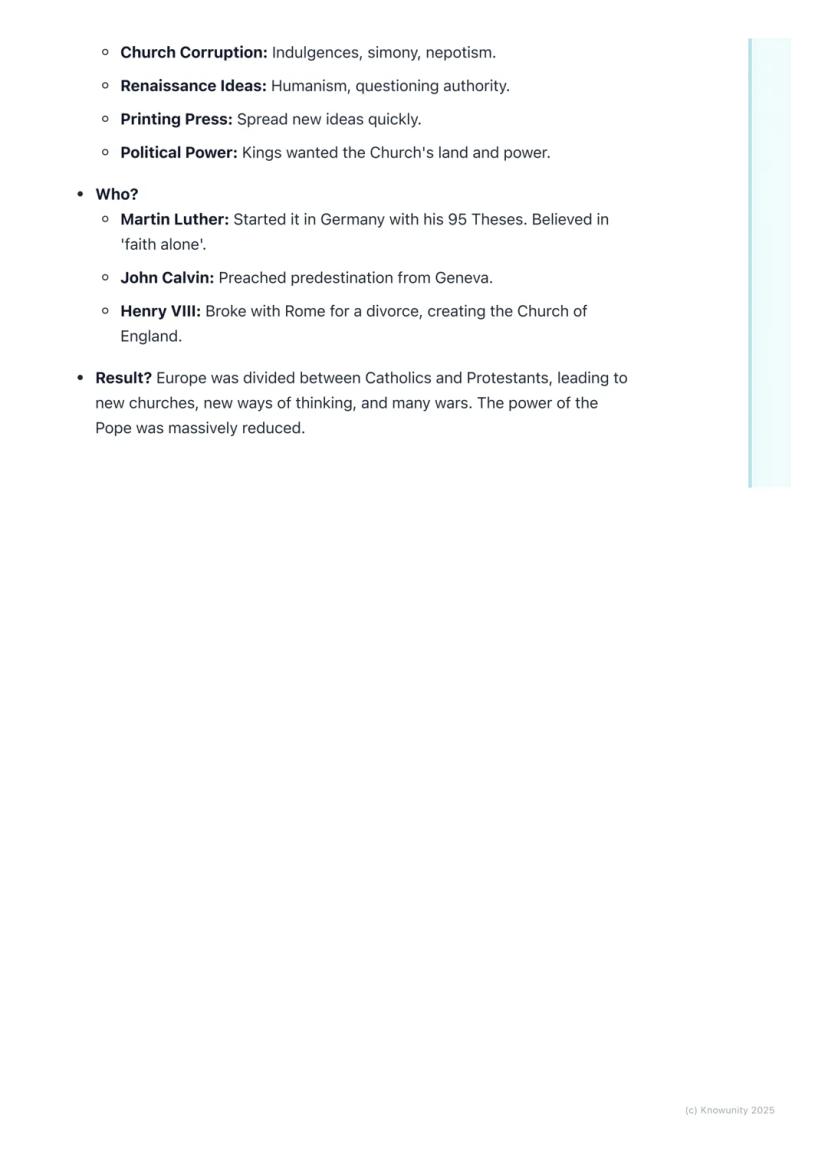
Other Major Players
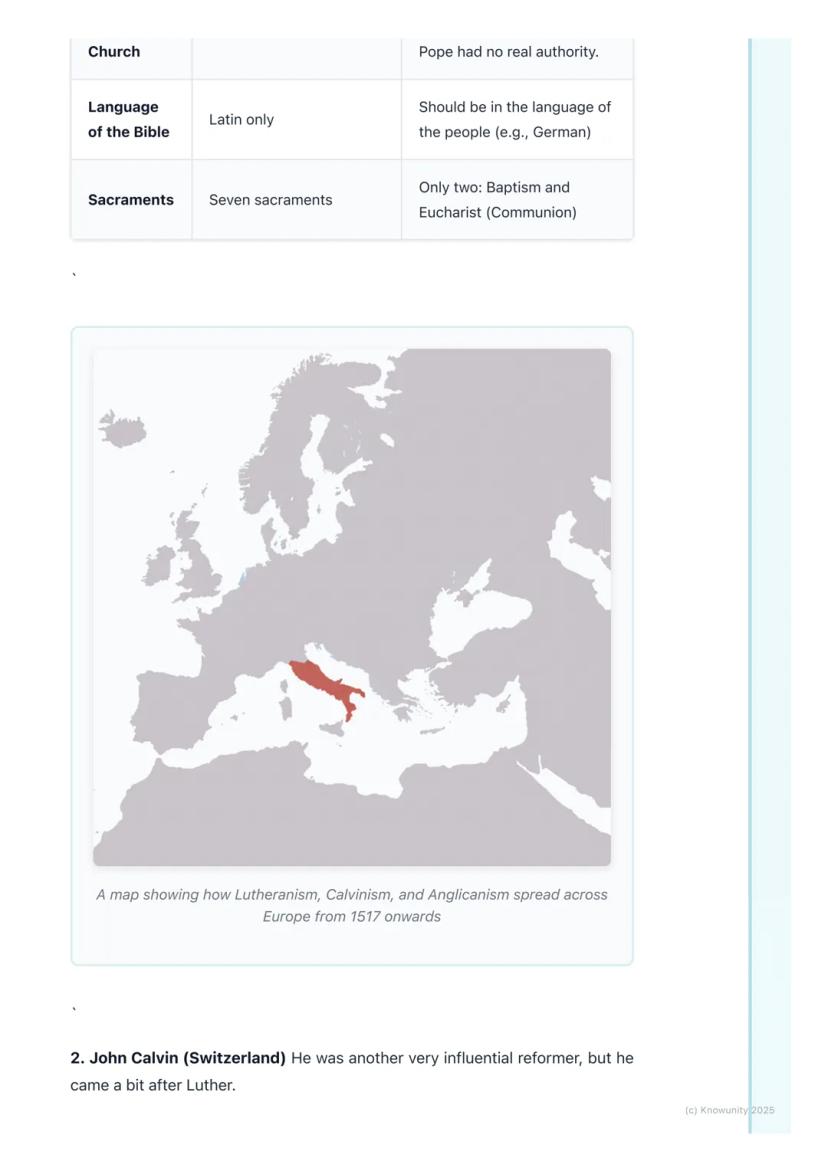
John Calvin set up an incredibly strict Protestant community in Geneva, Switzerland. His big idea was predestination - the belief that God had already handpicked who was going to heaven (called "the Elect") before they were even born. Calvin's followers became known as Calvinists, and in Scotland they were called Presbyterians.
King Henry VIII had completely different reasons for breaking with Rome - it was all about his love life rather than genuine religious concerns. When the Pope refused to grant him a divorce from Catherine of Aragon so he could marry Anne Boleyn, Henry basically said "fine, I'll start my own church."
Henry passed the Act of Supremacy in 1534, making himself head of the Church of England (also called the Anglican Church). Importantly, this new church was still pretty Catholic in its beliefs at first - it just didn't answer to the Pope anymore.
The Counter-Reformation was the Catholic Church's fightback, including the Council of Trent and the founding of the Jesuits. They weren't going down without a proper scrap!
Key Point: Henry's break with Rome was political and personal, while Luther's was genuinely religious - don't mix them up in your exam!
5
of 6
What It All Meant
The Reformation completely transformed European society and its effects are still visible today. Europe became permanently divided between Catholics and Protestants, leading to over a century of brutal religious wars including the Thirty Years' War.
The Pope's power was massively reduced - he went from controlling most of Western Europe to just Catholic regions. Meanwhile, new forms of Christianity like Lutheranism, Calvinism, and Anglicanism spread rapidly across different countries.
Kings gained much more control over religion in their own territories, and the idea that people could interpret the Bible for themselves encouraged literacy and independent thinking. The printing press meant that religious and political ideas could spread faster than ever before.
For your exams, remember the key causes: Church corruption (especially indulgences), Renaissance humanism, the printing press, and political ambition. The main figures were Luther (faith alone), Calvin (predestination), and Henry VIII (political break with Rome).
Exam Strategy: Don't just say "the Church was corrupt" - give specific examples like simony, nepotism, and pluralism to show you really understand the issues.
6
of 6
Wir dachten schon, du fragst nie...
Was ist der Knowunity KI-Begleiter?
Unser KI-Begleiter ist ein speziell für Schüler entwickeltes KI-Tool, das mehr als nur Antworten bietet. Basierend auf Millionen von Knowunity-Inhalten liefert er relevante Informationen, personalisierte Lernpläne, Quizze und Inhalte direkt im Chat und passt sich deinem individuellen Lernweg an.
Wo kann ich die Knowunity-App herunterladen?
Du kannst die App im Google Play Store und im Apple App Store herunterladen.
Ist Knowunity wirklich kostenlos?
Genau! Genieße kostenlosen Zugang zu Lerninhalten, vernetze dich mit anderen Schülern und hol dir sofortige Hilfe – alles direkt auf deinem Handy.
Beliebtester Inhalt in History
9Beliebtester Inhalt
9Findest du nicht, was du suchst? Entdecke andere Fächer.
Schüler lieben uns — und du auch.
4.6/5App Store
4.7/5Google Play
Die App ist sehr einfach zu bedienen und gut gestaltet. Ich habe bisher alles gefunden, wonach ich gesucht habe, und konnte viel aus den Präsentationen lernen! Ich werde die App definitiv für ein Schulprojekt nutzen! Und natürlich hilft sie auch sehr als Inspiration.
Stefan SiOS-Nutzer
Diese App ist wirklich super. Es gibt so viele Lernzettel und Hilfen [...]. Mein Problemfach ist zum Beispiel Französisch und die App hat so viele Möglichkeiten zur Hilfe. Dank dieser App habe ich mich in Französisch verbessert. Ich würde sie jedem empfehlen.
Samantha KlichAndroid-Nutzerin
Wow, ich bin wirklich begeistert. Ich habe die App einfach mal ausprobiert, weil ich sie schon oft beworben gesehen habe und war absolut beeindruckt. Diese App ist DIE HILFE, die man für die Schule braucht und vor allem bietet sie so viele Dinge wie Übungen und Lernzettel, die mir persönlich SEHR geholfen haben.
AnnaiOS-Nutzerin
History11 aufrufe·Aktualisiert Jun 12, 2026·6 SeitenThe Protestant Reformation: Key Causes and Figures
Ever wondered how one monk's complaints about corrupt church practices ended up splitting Christianity forever? The Reformation was a massive 16th-century religious revolution that shattered the Catholic Church's monopoly over Western Europe and created entirely new forms of Christianity that... Mehr anzeigen
1
of 6Melde dich an, um den Inhalt zu sehen. Kostenlos!
- Zugriff auf alle Dokumente
- Verbessere deine Noten
- Schließ dich Millionen Schülern an
What Was the Reformation?
Think of the Reformation as the biggest religious breakup in European history. Before the 1500s, nearly everyone in Western Europe was Catholic, with the Pope calling all the shots from Rome. Then everything changed when people started questioning whether the Church had become too corrupt and powerful.
The Reformation was basically a movement to reform (or fix) the Catholic Church that ended up creating Protestant churches instead. These Protestants got their name because German princes literally "protested" against the Church's dodgy practices.
Some key terms you'll definitely need to know: indulgences were like "get out of hell free" cards that the Church sold for money. The 95 Theses were Martin Luther's famous list of complaints that he nailed to a church door in 1517. If you went against Church teachings, you were guilty of heresy and could face excommunication - basically being kicked out of the Church forever.
Quick Tip: Remember that predestination was John Calvin's controversial idea that God had already decided who was going to heaven before they were even born!
2
of 6Melde dich an, um den Inhalt zu sehen. Kostenlos!
- Zugriff auf alle Dokumente
- Verbessere deine Noten
- Schließ dich Millionen Schülern an
Why Did It All Kick Off?
The Reformation didn't happen overnight - tensions had been building for ages. The biggest problem was serious corruption within the Catholic Church that was making people absolutely furious.
The Church was ridiculously wealthy and some leaders were completely taking the mick. They practiced simony (selling church positions for cash), nepotism (giving jobs to their mates and family), and pluralism (one person holding multiple church jobs they couldn't possibly do properly). But the final straw was selling indulgences - telling people they could literally buy forgiveness for their sins.
The Renaissance also played a massive role by encouraging people to question authority. Humanism taught people to think for themselves rather than blindly accepting what they were told. Most importantly, Johannes Gutenberg's printing press was like the internet of its day - it meant Luther's ideas could spread across Europe in weeks rather than years.
Kings and princes were also getting fed up with the Pope's interference in their countries. They wanted the Church's massive wealth and land for themselves, plus they didn't fancy some bloke in Rome telling them how to run their kingdoms.
Exam Gold: Always mention the printing press when explaining how Reformation ideas spread - it's a guaranteed mark-winner!
3
of 6Melde dich an, um den Inhalt zu sehen. Kostenlos!
- Zugriff auf alle Dokumente
- Verbessere deine Noten
- Schließ dich Millionen Schülern an
Martin Luther: The Man Who Started It All
Martin Luther was a German monk who basically became the face of the Reformation after getting absolutely livid about a preacher called Johann Tetzel flogging indulgences near his town.
In 1517, Luther wrote his famous 95 Theses - essentially a strongly-worded complaint list that he stuck to Wittenberg Castle Church door (though this might just be a legend). When the Pope told him to shut up and take it all back, Luther refused point-blank.
Luther's revolutionary ideas completely challenged Catholic teaching. He believed in justification by faith alone - meaning you got to heaven through believing in God, not by buying indulgences or doing good deeds. He also argued that the Bible was the only true authority, not the Pope, and that people should be able to read it in their own language instead of Latin.
His idea of the priesthood of all believers was particularly radical - he reckoned people could chat directly to God without needing a priest as a middleman. This was basically telling the entire Catholic hierarchy that they were unnecessary!
Remember This: Luther's beliefs were the complete opposite of Catholic teaching - faith vs. good works, Bible vs. Pope, individual vs. institution.
4
of 6Melde dich an, um den Inhalt zu sehen. Kostenlos!
- Zugriff auf alle Dokumente
- Verbessere deine Noten
- Schließ dich Millionen Schülern an
Other Major Players
John Calvin set up an incredibly strict Protestant community in Geneva, Switzerland. His big idea was predestination - the belief that God had already handpicked who was going to heaven (called "the Elect") before they were even born. Calvin's followers became known as Calvinists, and in Scotland they were called Presbyterians.
King Henry VIII had completely different reasons for breaking with Rome - it was all about his love life rather than genuine religious concerns. When the Pope refused to grant him a divorce from Catherine of Aragon so he could marry Anne Boleyn, Henry basically said "fine, I'll start my own church."
Henry passed the Act of Supremacy in 1534, making himself head of the Church of England (also called the Anglican Church). Importantly, this new church was still pretty Catholic in its beliefs at first - it just didn't answer to the Pope anymore.
The Counter-Reformation was the Catholic Church's fightback, including the Council of Trent and the founding of the Jesuits. They weren't going down without a proper scrap!
Key Point: Henry's break with Rome was political and personal, while Luther's was genuinely religious - don't mix them up in your exam!
5
of 6Melde dich an, um den Inhalt zu sehen. Kostenlos!
- Zugriff auf alle Dokumente
- Verbessere deine Noten
- Schließ dich Millionen Schülern an
What It All Meant
The Reformation completely transformed European society and its effects are still visible today. Europe became permanently divided between Catholics and Protestants, leading to over a century of brutal religious wars including the Thirty Years' War.
The Pope's power was massively reduced - he went from controlling most of Western Europe to just Catholic regions. Meanwhile, new forms of Christianity like Lutheranism, Calvinism, and Anglicanism spread rapidly across different countries.
Kings gained much more control over religion in their own territories, and the idea that people could interpret the Bible for themselves encouraged literacy and independent thinking. The printing press meant that religious and political ideas could spread faster than ever before.
For your exams, remember the key causes: Church corruption (especially indulgences), Renaissance humanism, the printing press, and political ambition. The main figures were Luther (faith alone), Calvin (predestination), and Henry VIII (political break with Rome).
Exam Strategy: Don't just say "the Church was corrupt" - give specific examples like simony, nepotism, and pluralism to show you really understand the issues.
6
of 6Melde dich an, um den Inhalt zu sehen. Kostenlos!
- Zugriff auf alle Dokumente
- Verbessere deine Noten
- Schließ dich Millionen Schülern an
Wir dachten schon, du fragst nie...
Was ist der Knowunity KI-Begleiter?
Unser KI-Begleiter ist ein speziell für Schüler entwickeltes KI-Tool, das mehr als nur Antworten bietet. Basierend auf Millionen von Knowunity-Inhalten liefert er relevante Informationen, personalisierte Lernpläne, Quizze und Inhalte direkt im Chat und passt sich deinem individuellen Lernweg an.
Wo kann ich die Knowunity-App herunterladen?
Du kannst die App im Google Play Store und im Apple App Store herunterladen.
Ist Knowunity wirklich kostenlos?
Genau! Genieße kostenlosen Zugang zu Lerninhalten, vernetze dich mit anderen Schülern und hol dir sofortige Hilfe – alles direkt auf deinem Handy.
Beliebtester Inhalt in History
9Beliebtester Inhalt
9Findest du nicht, was du suchst? Entdecke andere Fächer.
Schüler lieben uns — und du auch.
4.6/5App Store
4.7/5Google Play
Die App ist sehr einfach zu bedienen und gut gestaltet. Ich habe bisher alles gefunden, wonach ich gesucht habe, und konnte viel aus den Präsentationen lernen! Ich werde die App definitiv für ein Schulprojekt nutzen! Und natürlich hilft sie auch sehr als Inspiration.
Stefan SiOS-Nutzer
Diese App ist wirklich super. Es gibt so viele Lernzettel und Hilfen [...]. Mein Problemfach ist zum Beispiel Französisch und die App hat so viele Möglichkeiten zur Hilfe. Dank dieser App habe ich mich in Französisch verbessert. Ich würde sie jedem empfehlen.
Samantha KlichAndroid-Nutzerin
Wow, ich bin wirklich begeistert. Ich habe die App einfach mal ausprobiert, weil ich sie schon oft beworben gesehen habe und war absolut beeindruckt. Diese App ist DIE HILFE, die man für die Schule braucht und vor allem bietet sie so viele Dinge wie Übungen und Lernzettel, die mir persönlich SEHR geholfen haben.
AnnaiOS-Nutzerin