
Ever wondered why your favourite songs feel so catchy and...
 Music4 aufrufe·Aktualisiert Jun 15, 2026·5 Seiten
Understanding Musical Forms and Structures
1 / 5
1
of 5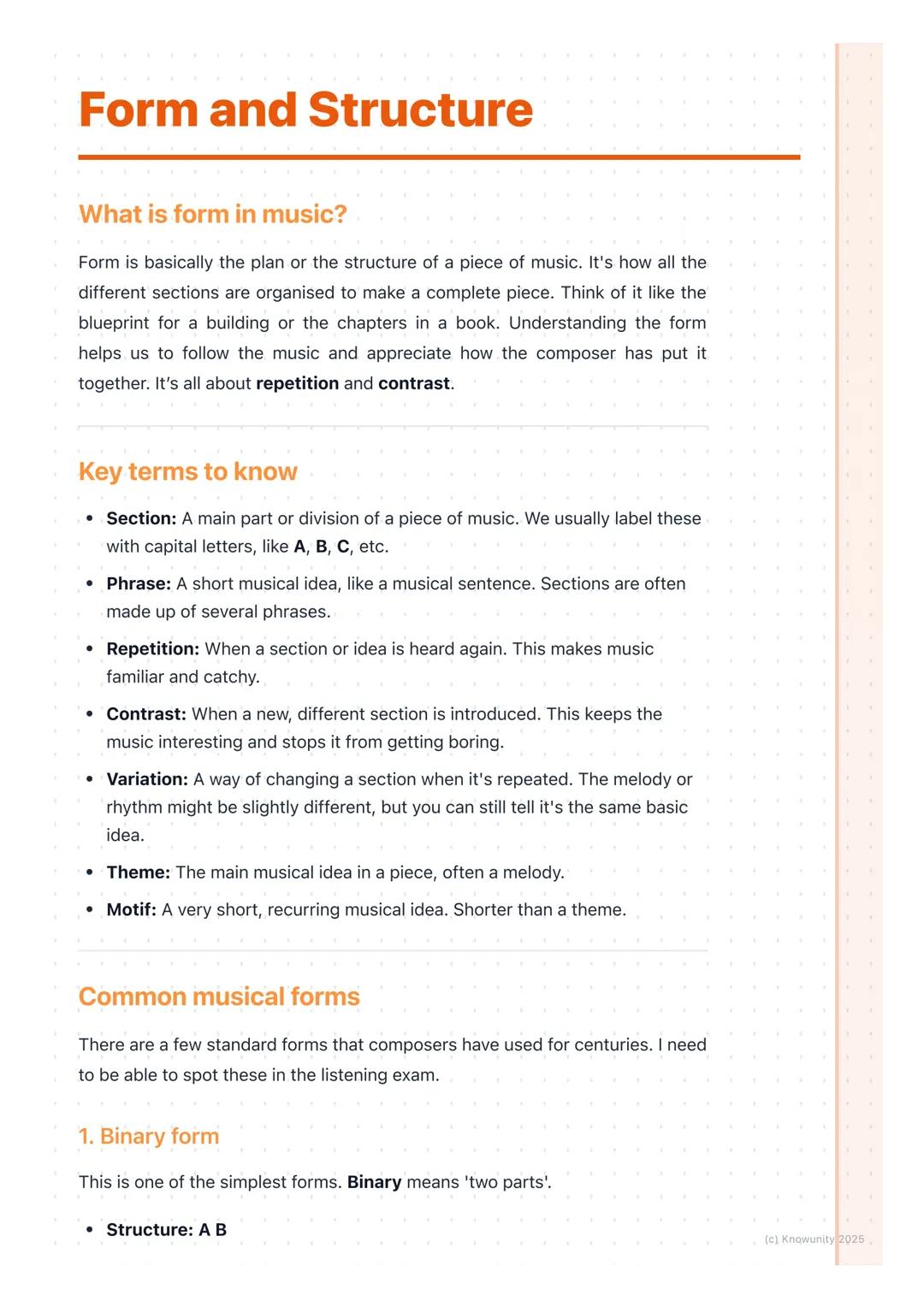
What is Form in Music?
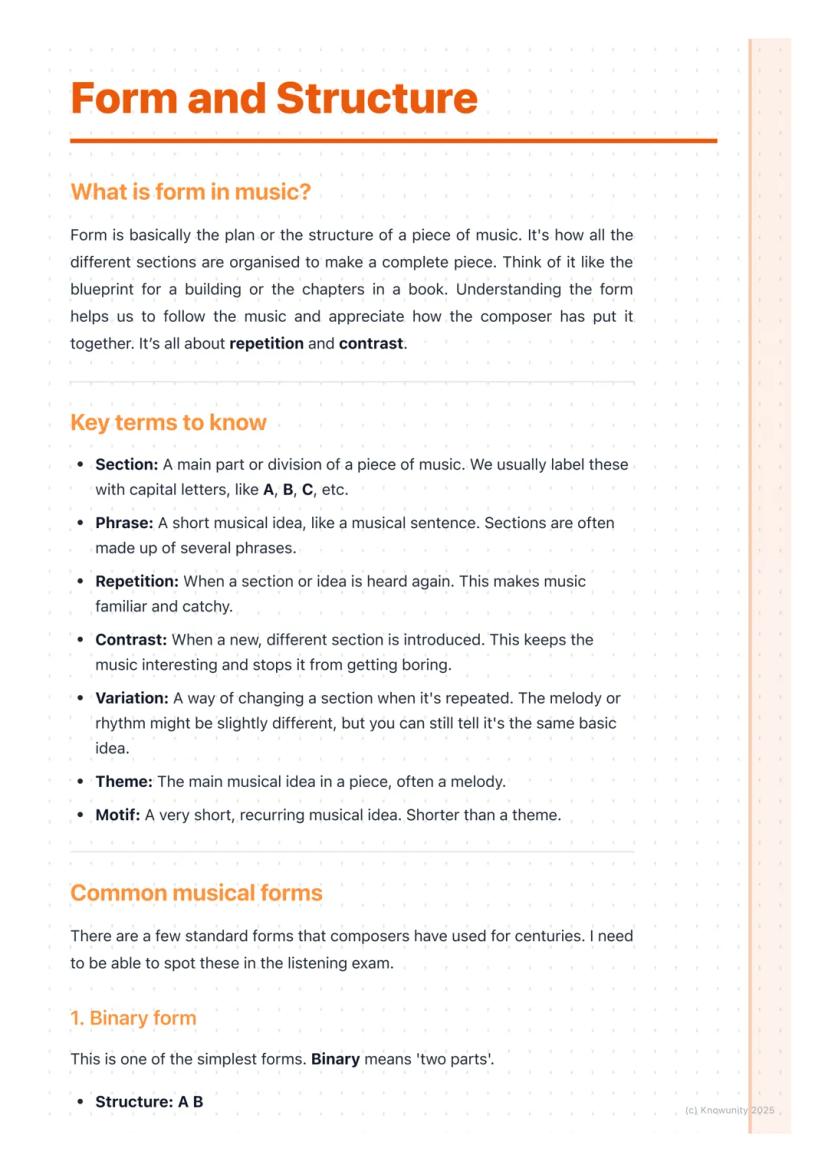
Think of form as the skeleton of a song - it's how composers organise different sections to create a complete piece. Just like a good story needs a beginning, middle, and end, music needs structure to make sense and keep you engaged.
Form works through two main principles: repetition (bringing back familiar bits) and contrast (introducing new sections). This balance keeps music both memorable and interesting - too much repetition gets boring, whilst too much contrast becomes confusing.
The building blocks are simple: sections (the main parts, labelled A, B, C), phrases (short musical sentences), and themes (the main melodies you remember). Master these basics, and you'll crack any listening exam question about structure.
Quick Tip: In exams, always listen for when the music changes significantly - that's usually where one section ends and another begins!
2
of 5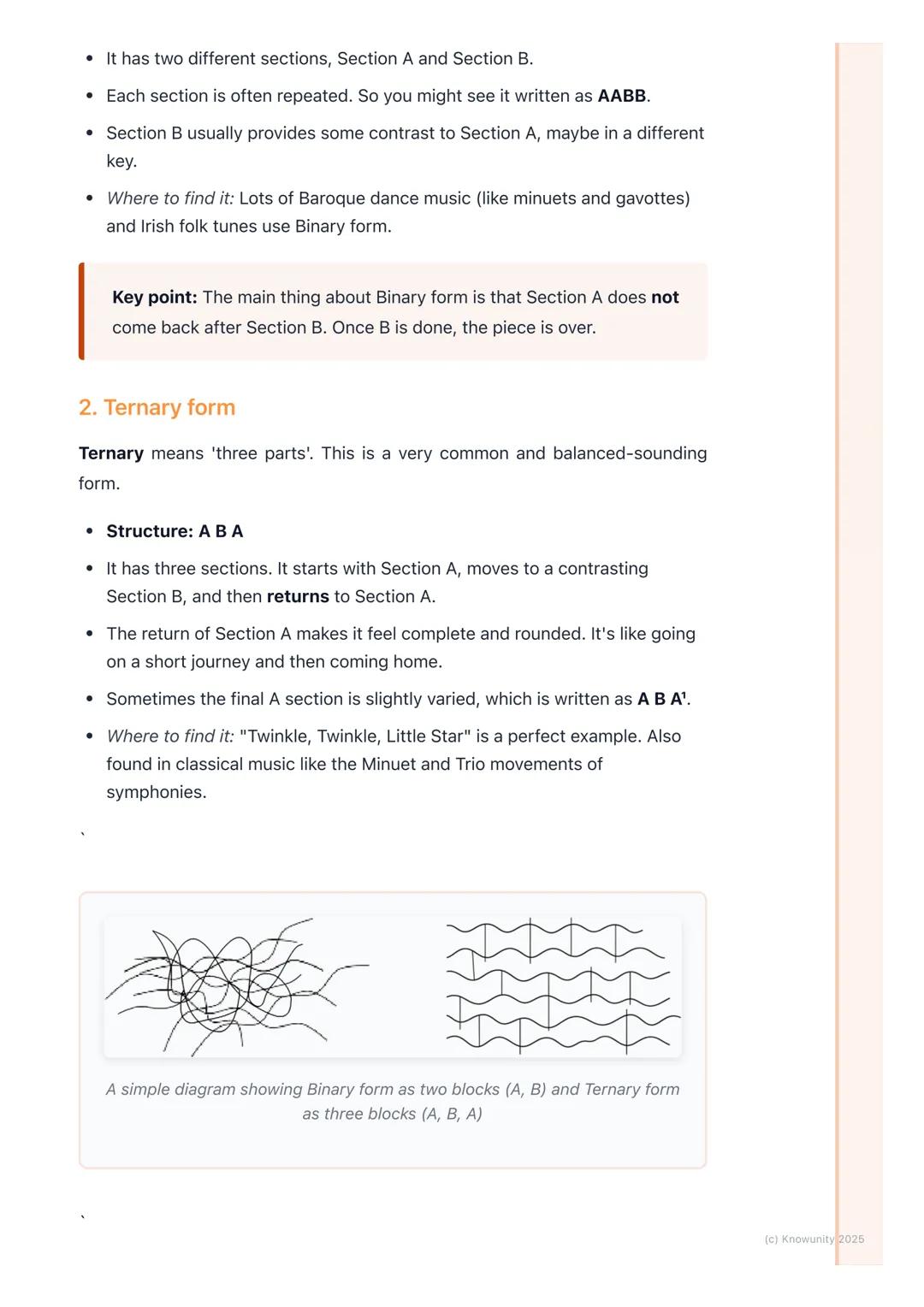
Binary and Ternary Forms
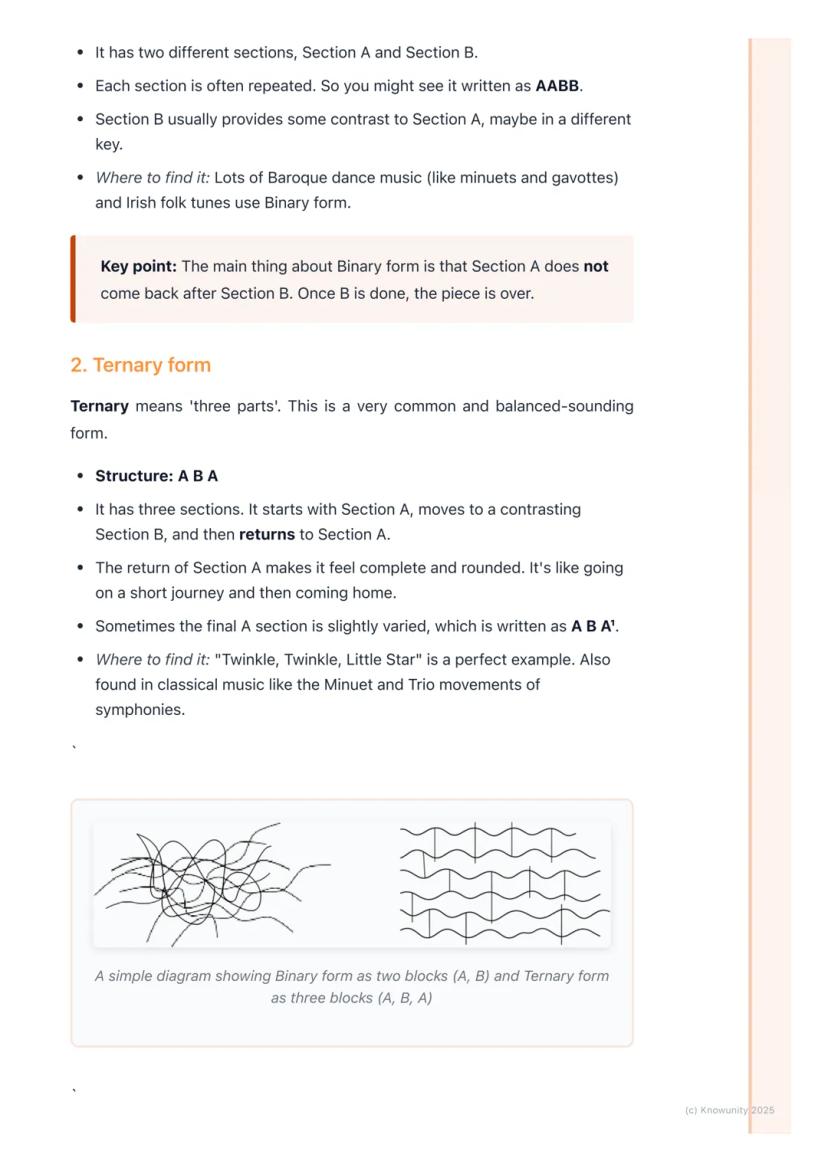
Binary form is dead simple - it's just two contrasting sections (A B). Think of it like a question and answer: Section A sets up an idea, Section B responds with something different, then it's over. You'll often hear each section repeated, making it A A B B.
Ternary form follows the classic journey structure: home, away, home again (A B A). "Twinkle, Twinkle, Little Star" is the perfect example - same melody at the start and end, with a contrasting middle bit. This form feels naturally satisfying because it brings you back to familiar territory.
The key difference? Binary never returns to the opening section, whilst ternary always does. In your listening exam, ask yourself: "Does the opening melody come back at the end?" If yes, it's ternary; if no, it's binary.
Exam Hack: Hum the first melody you hear, then listen for it returning later - instant ternary form identification!
3
of 5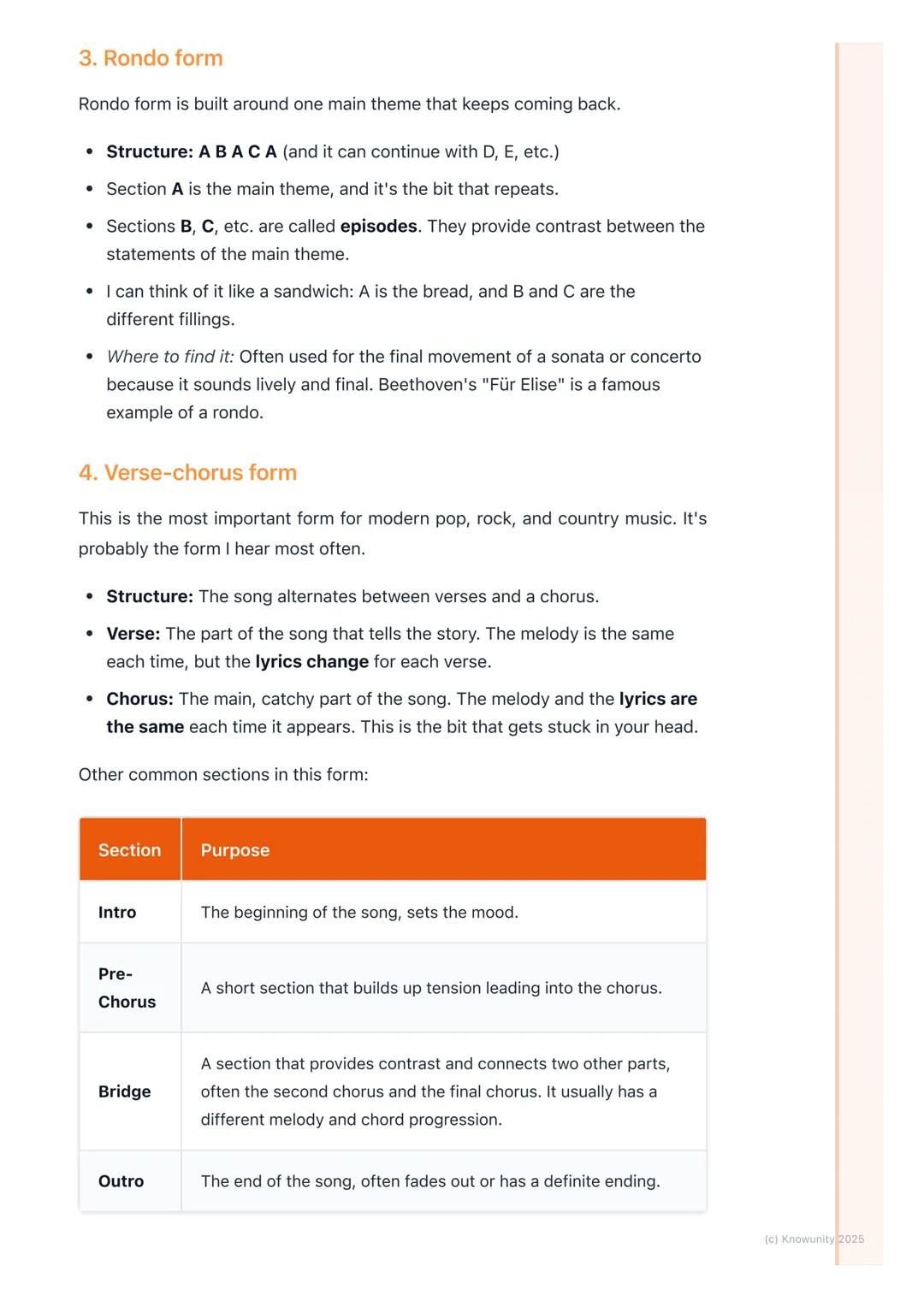
Pop Song Structures and Analysis
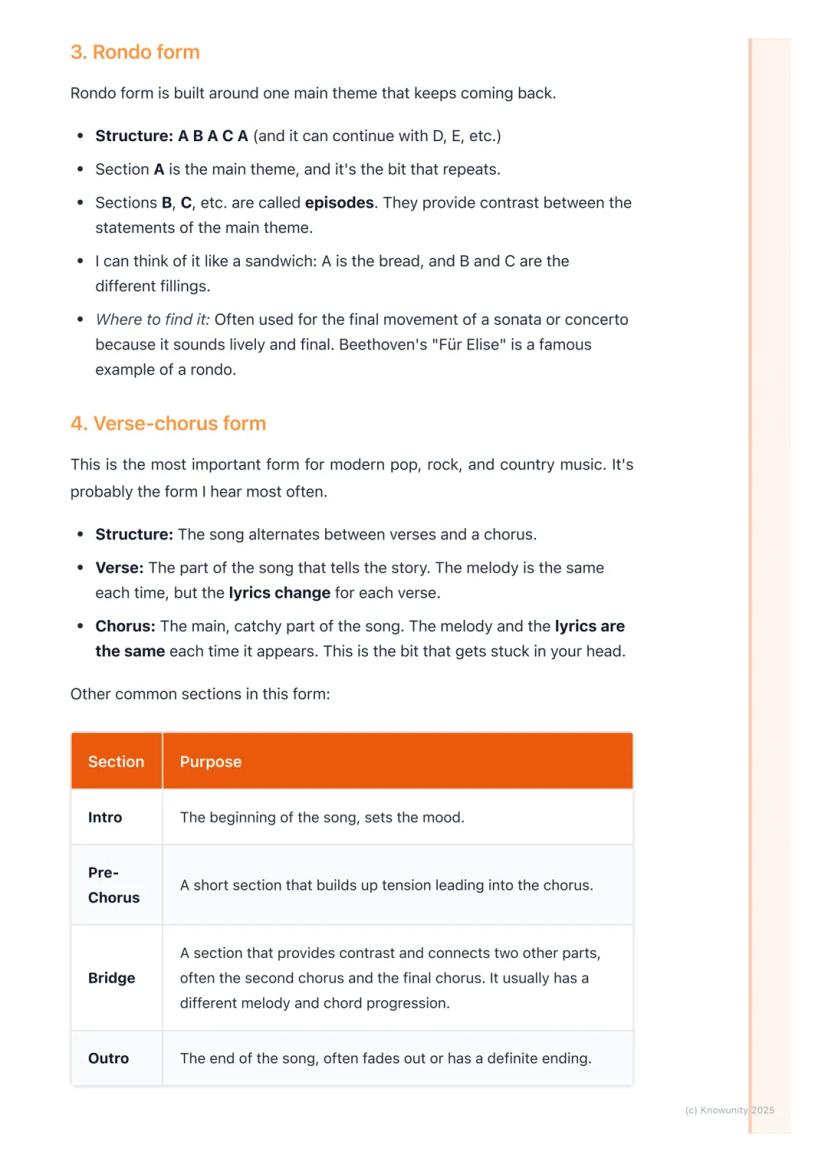
Most pop songs follow verse-chorus form, which is basically verses alternating with a chorus (the catchy, repeated hook). Add an intro, maybe a bridge, and an outro, and you've got your typical chart hit.
When analysing any piece, start by listening to the whole thing first - get the big picture. Then focus on the melody and lyrics (if there are any). Same tune with different words? That's repetition with variation. Completely new melody? That's a new section.
For "Castle on the Hill" by Ed Sheeran, you'd spot the storytelling verses ("When I was six years old..."), the soaring chorus ("I'm on my way..."), and the bridge that breaks things up before the final chorus. Each serves a different purpose in the song's emotional journey.
Pro Tip: Practise with songs you know well - it's much easier to spot structural changes when you're familiar with the music!
4
of 5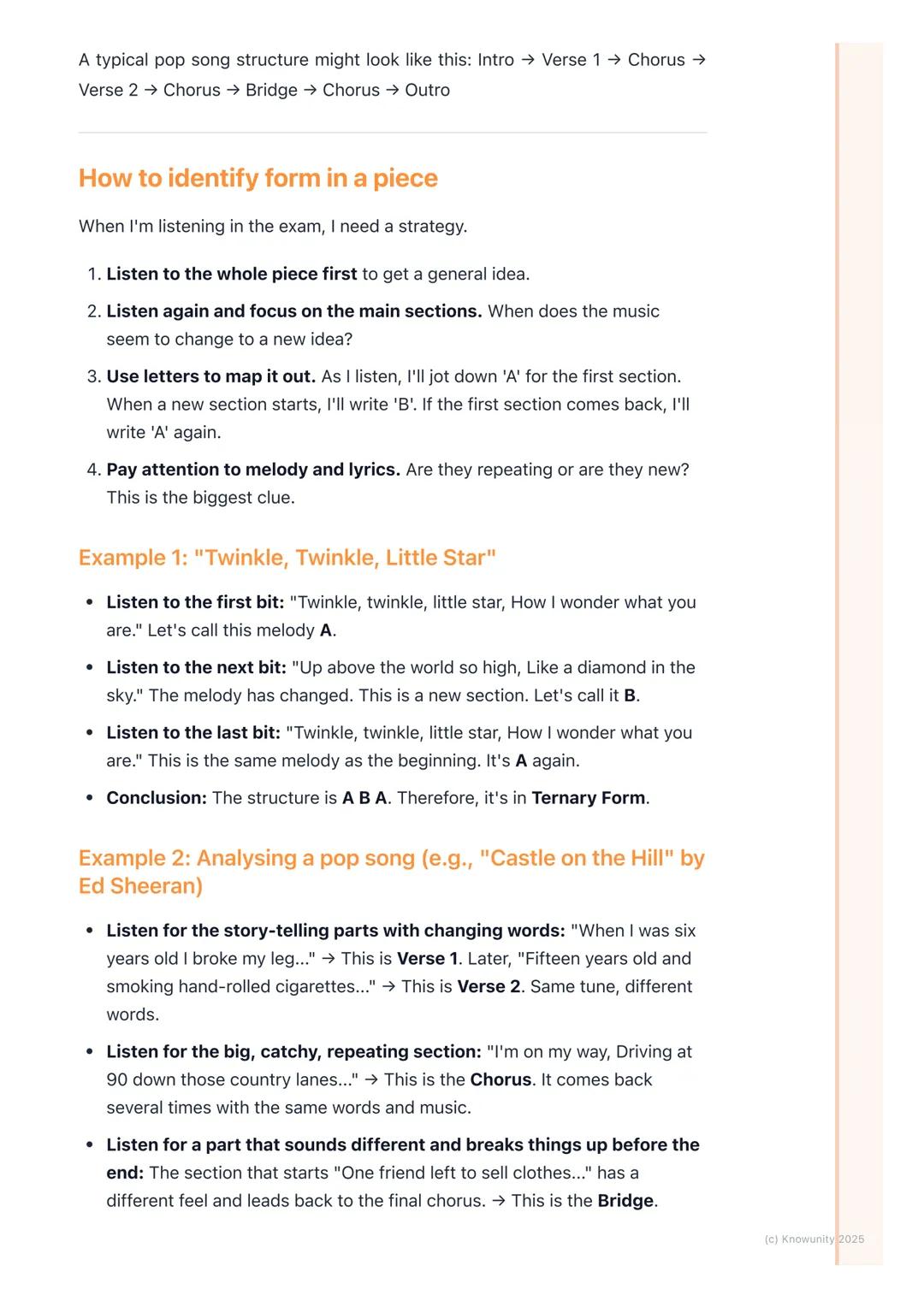
Exam Success Strategies
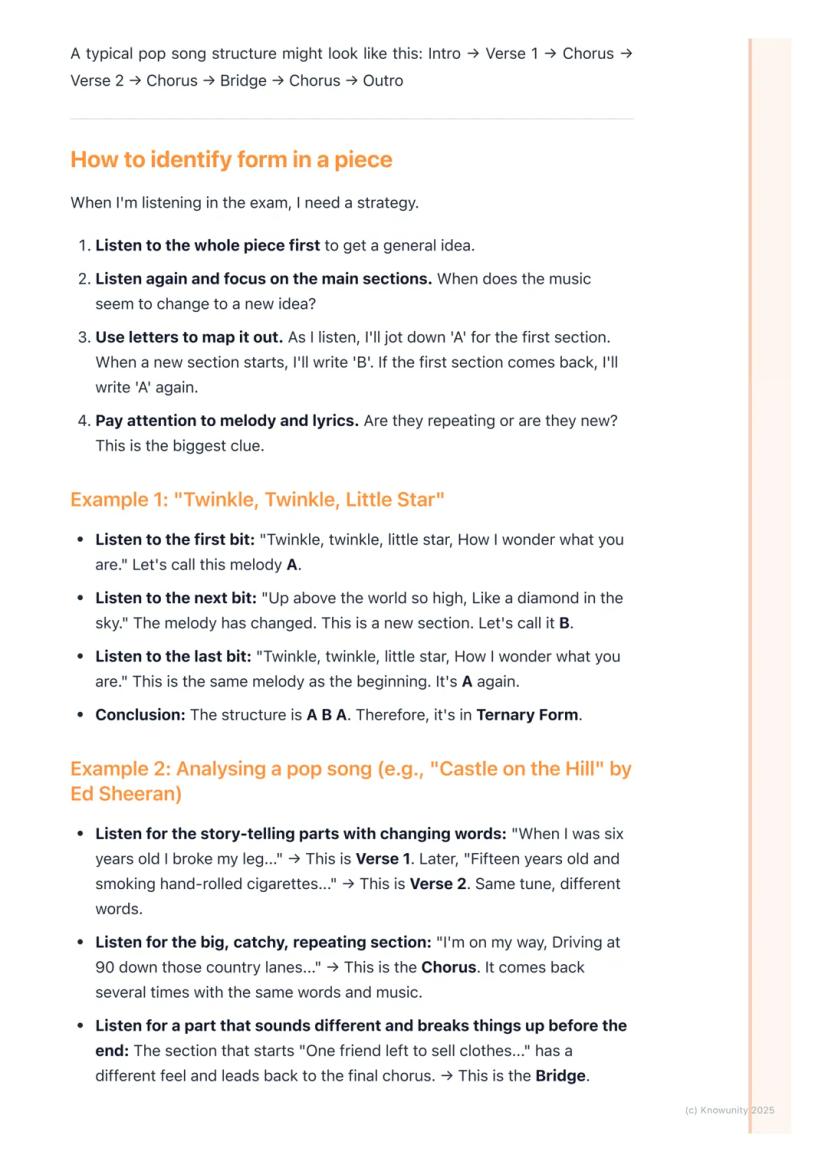
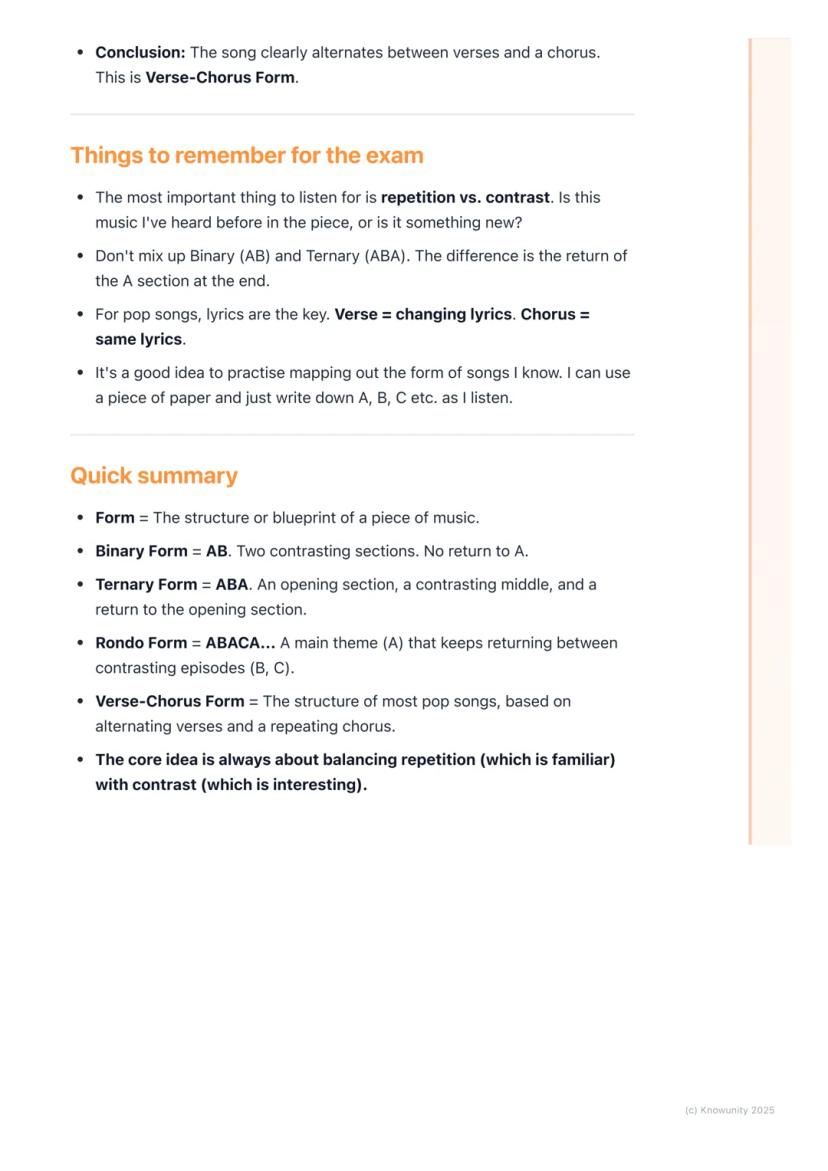
The golden rule for identifying form is simple: listen for repetition versus contrast. When you hear music you've heard before in the piece, it's repetition. When something sounds completely new, it's contrast.
Never confuse binary with ternary . For pop songs, lyrics are your best friend - verses change their words but keep similar melodies, whilst the chorus stays exactly the same each time.
Practice makes perfect, so grab some paper and map out songs you love using letters (A, B, C). Start with simple pieces like nursery rhymes, then work up to complex pop songs or classical pieces.
Remember, form is all about balance - composers mix the familiar (repetition) with the surprising (contrast) to create music that's both memorable and engaging. Once you understand this basic principle, you'll never struggle with structural analysis again.
Final Exam Tip: If you're stuck between two forms, trust your instincts about what sounds familiar versus what sounds new - your ears rarely lie!
5
of 5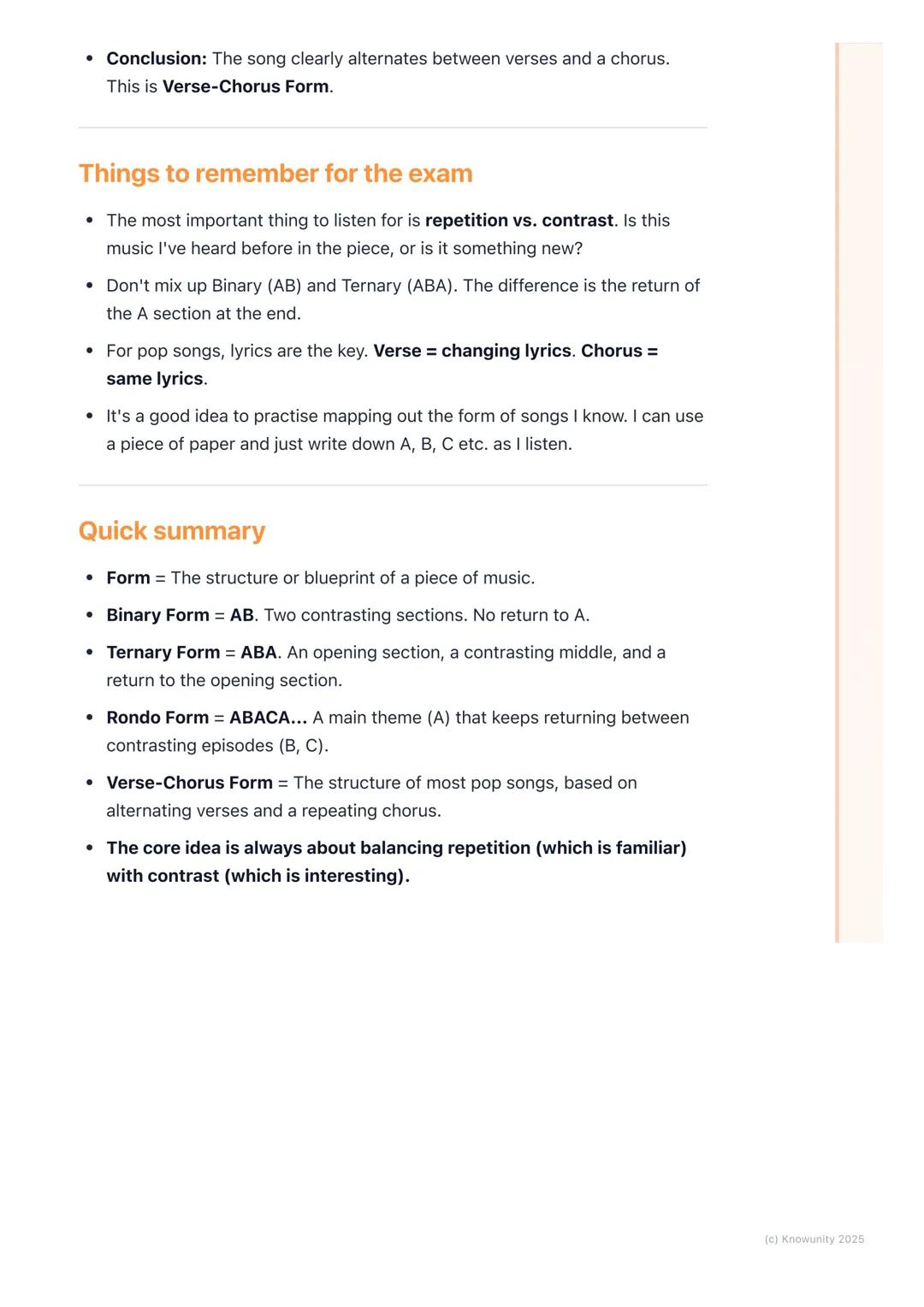
Wir dachten schon, du fragst nie...
Was ist der Knowunity KI-Begleiter?
Unser KI-Begleiter ist ein speziell für Schüler entwickeltes KI-Tool, das mehr als nur Antworten bietet. Basierend auf Millionen von Knowunity-Inhalten liefert er relevante Informationen, personalisierte Lernpläne, Quizze und Inhalte direkt im Chat und passt sich deinem individuellen Lernweg an.
Wo kann ich die Knowunity-App herunterladen?
Du kannst die App im Google Play Store und im Apple App Store herunterladen.
Ist Knowunity wirklich kostenlos?
Genau! Genieße kostenlosen Zugang zu Lerninhalten, vernetze dich mit anderen Schülern und hol dir sofortige Hilfe – alles direkt auf deinem Handy.
Beliebtester Inhalt in Music
2MusicRhythm and Beat
Students will explore the steady pulse (beat) and the patterns of sounds and silences (rhythm) in music, including tempo (speed) and duration of notes.
1st Year50
MusicSean-nós singing
Main aspects of this Irish essay into bulkier material (may need to add a little more content, otherwise great for studying)
5th Year51
Beliebtester Inhalt
9 Irish
IrishIrish oral questions and answers
Questions and answers for the leaving cert oral
5th Year4264
 English
Key Quotes : Sive
Key Quotes and explanations: Sive
6th Year2842
IrishIrish oral questions
Outline of oral questions
5th Year2055
IrishIníon- le hÁine Durkin
Aine Durkin’s poem, Iníon: Themes & summary
5th Year850
IrishIrish poetry 2027
Iníon + Dínit an Bhróin
5th Year1133
IrishLC HL notes- Iníon (poem)
Includes poem in English and Irish, theme, key words & phrases
5th Year2284
EnglishCultural Context : Shawshank Redemption : Sive : Small Things Like These
Comparative Study : Cultural Context : Shawshank Redemption, Sive and Small Things Like These
6th Year1430
IrishMo Ghrá-sa (Idir Lúibíní)
Notes on mo ghrá-sa
5th Year380
IrishAn Gaeilge Aiste
Irish Language essay
6th Year1320
Findest du nicht, was du suchst? Entdecke andere Fächer.
Schüler lieben uns — und du auch.
4.6/5App Store
4.7/5Google Play
Die App ist sehr einfach zu bedienen und gut gestaltet. Ich habe bisher alles gefunden, wonach ich gesucht habe, und konnte viel aus den Präsentationen lernen! Ich werde die App definitiv für ein Schulprojekt nutzen! Und natürlich hilft sie auch sehr als Inspiration.
Stefan SiOS-Nutzer
Diese App ist wirklich super. Es gibt so viele Lernzettel und Hilfen [...]. Mein Problemfach ist zum Beispiel Französisch und die App hat so viele Möglichkeiten zur Hilfe. Dank dieser App habe ich mich in Französisch verbessert. Ich würde sie jedem empfehlen.
Samantha KlichAndroid-Nutzerin
Wow, ich bin wirklich begeistert. Ich habe die App einfach mal ausprobiert, weil ich sie schon oft beworben gesehen habe und war absolut beeindruckt. Diese App ist DIE HILFE, die man für die Schule braucht und vor allem bietet sie so viele Dinge wie Übungen und Lernzettel, die mir persönlich SEHR geholfen haben.
AnnaiOS-Nutzerin
Music4 aufrufe·Aktualisiert Jun 15, 2026·5 SeitenUnderstanding Musical Forms and Structures
Ever wondered why your favourite songs feel so catchy and well-organised? It's all down to form- the blueprint that holds every piece of music together. Understanding musical form is like having a map that helps you navigate through any...
1
of 5
Melde dich an, um den Inhalt zu sehen. Kostenlos!
- Zugriff auf alle Dokumente
- Verbessere deine Noten
- Schließ dich Millionen Schülern an
What is Form in Music?
Think of form as the skeleton of a song - it's how composers organise different sections to create a complete piece. Just like a good story needs a beginning, middle, and end, music needs structure to make sense and keep you engaged.
Form works through two main principles: repetition (bringing back familiar bits) and contrast (introducing new sections). This balance keeps music both memorable and interesting - too much repetition gets boring, whilst too much contrast becomes confusing.
The building blocks are simple: sections (the main parts, labelled A, B, C), phrases (short musical sentences), and themes (the main melodies you remember). Master these basics, and you'll crack any listening exam question about structure.
Quick Tip: In exams, always listen for when the music changes significantly - that's usually where one section ends and another begins!
2
of 5Melde dich an, um den Inhalt zu sehen. Kostenlos!
- Zugriff auf alle Dokumente
- Verbessere deine Noten
- Schließ dich Millionen Schülern an
Binary and Ternary Forms
Binary form is dead simple - it's just two contrasting sections (A B). Think of it like a question and answer: Section A sets up an idea, Section B responds with something different, then it's over. You'll often hear each section repeated, making it A A B B.
Ternary form follows the classic journey structure: home, away, home again (A B A). "Twinkle, Twinkle, Little Star" is the perfect example - same melody at the start and end, with a contrasting middle bit. This form feels naturally satisfying because it brings you back to familiar territory.
The key difference? Binary never returns to the opening section, whilst ternary always does. In your listening exam, ask yourself: "Does the opening melody come back at the end?" If yes, it's ternary; if no, it's binary.
Exam Hack: Hum the first melody you hear, then listen for it returning later - instant ternary form identification!
3
of 5Melde dich an, um den Inhalt zu sehen. Kostenlos!
- Zugriff auf alle Dokumente
- Verbessere deine Noten
- Schließ dich Millionen Schülern an
Pop Song Structures and Analysis
Most pop songs follow verse-chorus form, which is basically verses alternating with a chorus (the catchy, repeated hook). Add an intro, maybe a bridge, and an outro, and you've got your typical chart hit.
When analysing any piece, start by listening to the whole thing first - get the big picture. Then focus on the melody and lyrics (if there are any). Same tune with different words? That's repetition with variation. Completely new melody? That's a new section.
For "Castle on the Hill" by Ed Sheeran, you'd spot the storytelling verses ("When I was six years old..."), the soaring chorus ("I'm on my way..."), and the bridge that breaks things up before the final chorus. Each serves a different purpose in the song's emotional journey.
Pro Tip: Practise with songs you know well - it's much easier to spot structural changes when you're familiar with the music!
4
of 5Melde dich an, um den Inhalt zu sehen. Kostenlos!
- Zugriff auf alle Dokumente
- Verbessere deine Noten
- Schließ dich Millionen Schülern an
Exam Success Strategies
The golden rule for identifying form is simple: listen for repetition versus contrast. When you hear music you've heard before in the piece, it's repetition. When something sounds completely new, it's contrast.
Never confuse binary with ternary . For pop songs, lyrics are your best friend - verses change their words but keep similar melodies, whilst the chorus stays exactly the same each time.
Practice makes perfect, so grab some paper and map out songs you love using letters (A, B, C). Start with simple pieces like nursery rhymes, then work up to complex pop songs or classical pieces.
Remember, form is all about balance - composers mix the familiar (repetition) with the surprising (contrast) to create music that's both memorable and engaging. Once you understand this basic principle, you'll never struggle with structural analysis again.
Final Exam Tip: If you're stuck between two forms, trust your instincts about what sounds familiar versus what sounds new - your ears rarely lie!
5
of 5Melde dich an, um den Inhalt zu sehen. Kostenlos!
- Zugriff auf alle Dokumente
- Verbessere deine Noten
- Schließ dich Millionen Schülern an
Wir dachten schon, du fragst nie...
Was ist der Knowunity KI-Begleiter?
Unser KI-Begleiter ist ein speziell für Schüler entwickeltes KI-Tool, das mehr als nur Antworten bietet. Basierend auf Millionen von Knowunity-Inhalten liefert er relevante Informationen, personalisierte Lernpläne, Quizze und Inhalte direkt im Chat und passt sich deinem individuellen Lernweg an.
Wo kann ich die Knowunity-App herunterladen?
Du kannst die App im Google Play Store und im Apple App Store herunterladen.
Ist Knowunity wirklich kostenlos?
Genau! Genieße kostenlosen Zugang zu Lerninhalten, vernetze dich mit anderen Schülern und hol dir sofortige Hilfe – alles direkt auf deinem Handy.
Beliebtester Inhalt in Music
2MusicRhythm and Beat
Students will explore the steady pulse (beat) and the patterns of sounds and silences (rhythm) in music, including tempo (speed) and duration of notes.
1st Year50
MusicSean-nós singing
Main aspects of this Irish essay into bulkier material (may need to add a little more content, otherwise great for studying)
5th Year51
Beliebtester Inhalt
9IrishIrish oral questions and answers
Questions and answers for the leaving cert oral
5th Year4264
EnglishKey Quotes : Sive
Key Quotes and explanations: Sive
6th Year2842
IrishIrish oral questions
Outline of oral questions
5th Year2055
IrishIníon- le hÁine Durkin
Aine Durkin’s poem, Iníon: Themes & summary
5th Year850
IrishIrish poetry 2027
Iníon + Dínit an Bhróin
5th Year1133
IrishLC HL notes- Iníon (poem)
Includes poem in English and Irish, theme, key words & phrases
5th Year2284
EnglishCultural Context : Shawshank Redemption : Sive : Small Things Like These
Comparative Study : Cultural Context : Shawshank Redemption, Sive and Small Things Like These
6th Year1430
IrishMo Ghrá-sa (Idir Lúibíní)
Notes on mo ghrá-sa
5th Year380
IrishAn Gaeilge Aiste
Irish Language essay
6th Year1320
Findest du nicht, was du suchst? Entdecke andere Fächer.
Schüler lieben uns — und du auch.
4.6/5App Store
4.7/5Google Play
Die App ist sehr einfach zu bedienen und gut gestaltet. Ich habe bisher alles gefunden, wonach ich gesucht habe, und konnte viel aus den Präsentationen lernen! Ich werde die App definitiv für ein Schulprojekt nutzen! Und natürlich hilft sie auch sehr als Inspiration.
Stefan SiOS-Nutzer
Diese App ist wirklich super. Es gibt so viele Lernzettel und Hilfen [...]. Mein Problemfach ist zum Beispiel Französisch und die App hat so viele Möglichkeiten zur Hilfe. Dank dieser App habe ich mich in Französisch verbessert. Ich würde sie jedem empfehlen.
Samantha KlichAndroid-Nutzerin
Wow, ich bin wirklich begeistert. Ich habe die App einfach mal ausprobiert, weil ich sie schon oft beworben gesehen habe und war absolut beeindruckt. Diese App ist DIE HILFE, die man für die Schule braucht und vor allem bietet sie so viele Dinge wie Übungen und Lernzettel, die mir persönlich SEHR geholfen haben.
AnnaiOS-Nutzerin