
Ever wondered why your fridge door stays shut or how... Mehr anzeigen
 Physics1 aufrufe·Aktualisiert May 31, 2026·7 Seiten
Understanding Magnets and Magnetic Fields
1 / 7
1
of 7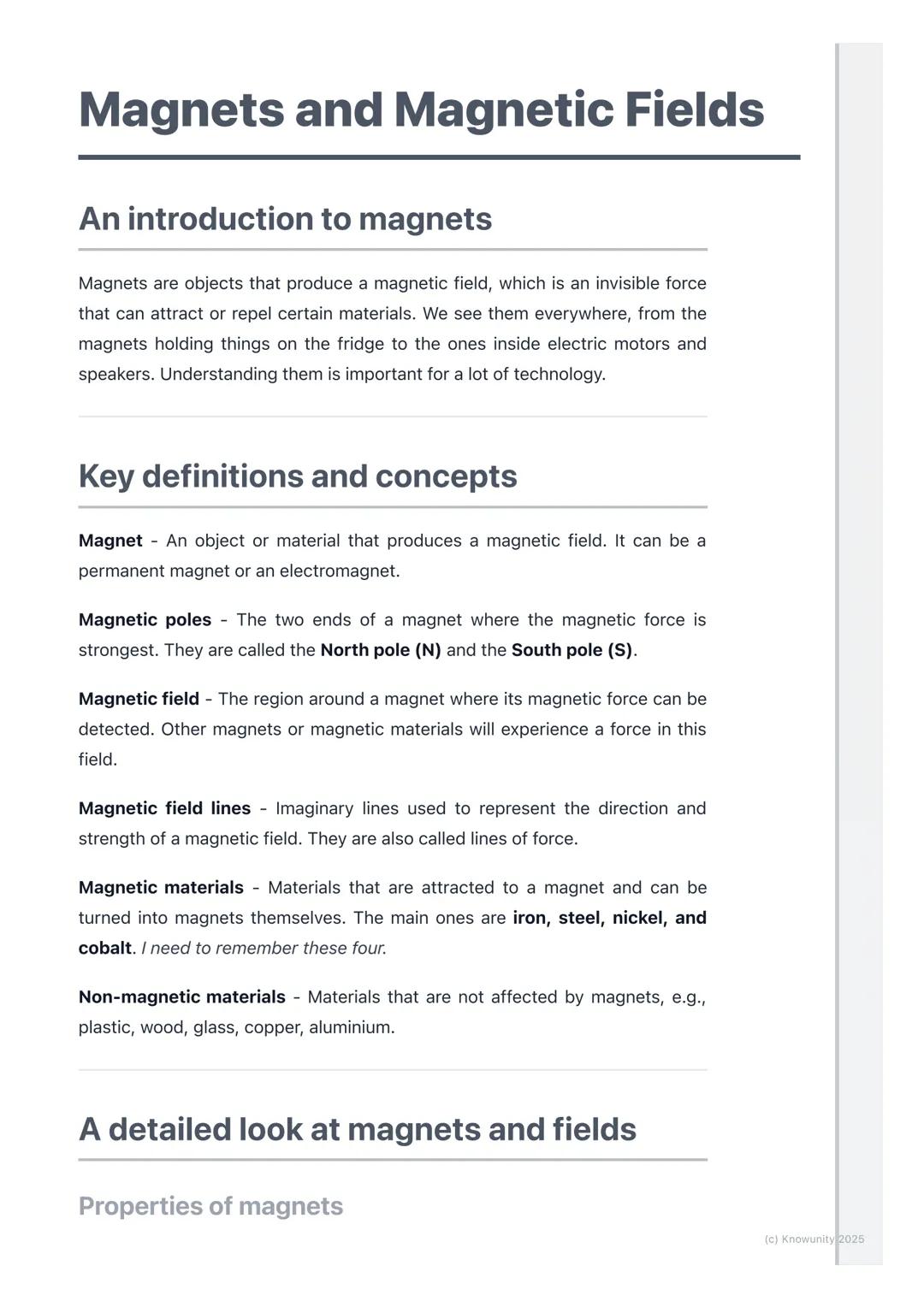
What Are Magnets and Magnetic Fields?
You're surrounded by magnets every day, from your phone's speakers to the motor in your washing machine. Magnets are objects that create an invisible force field around them, and this magnetic field can attract certain materials or push other magnets away.
The really important stuff to remember: magnets have two magnetic poles - a North pole (N) and a South pole (S) - where the magnetic force is strongest. Only four materials are naturally magnetic materials: iron, steel, nickel, and cobalt. Everything else like plastic, wood, or copper? Completely unaffected by magnets.
Magnetic field lines are how we draw the invisible field to see what's happening. Think of them as the paths that show where the magnetic force is acting and how strong it is.
Quick tip: Steel is just iron mixed with other elements, which is why it's magnetic too - perfect for making strong permanent magnets!
2
of 7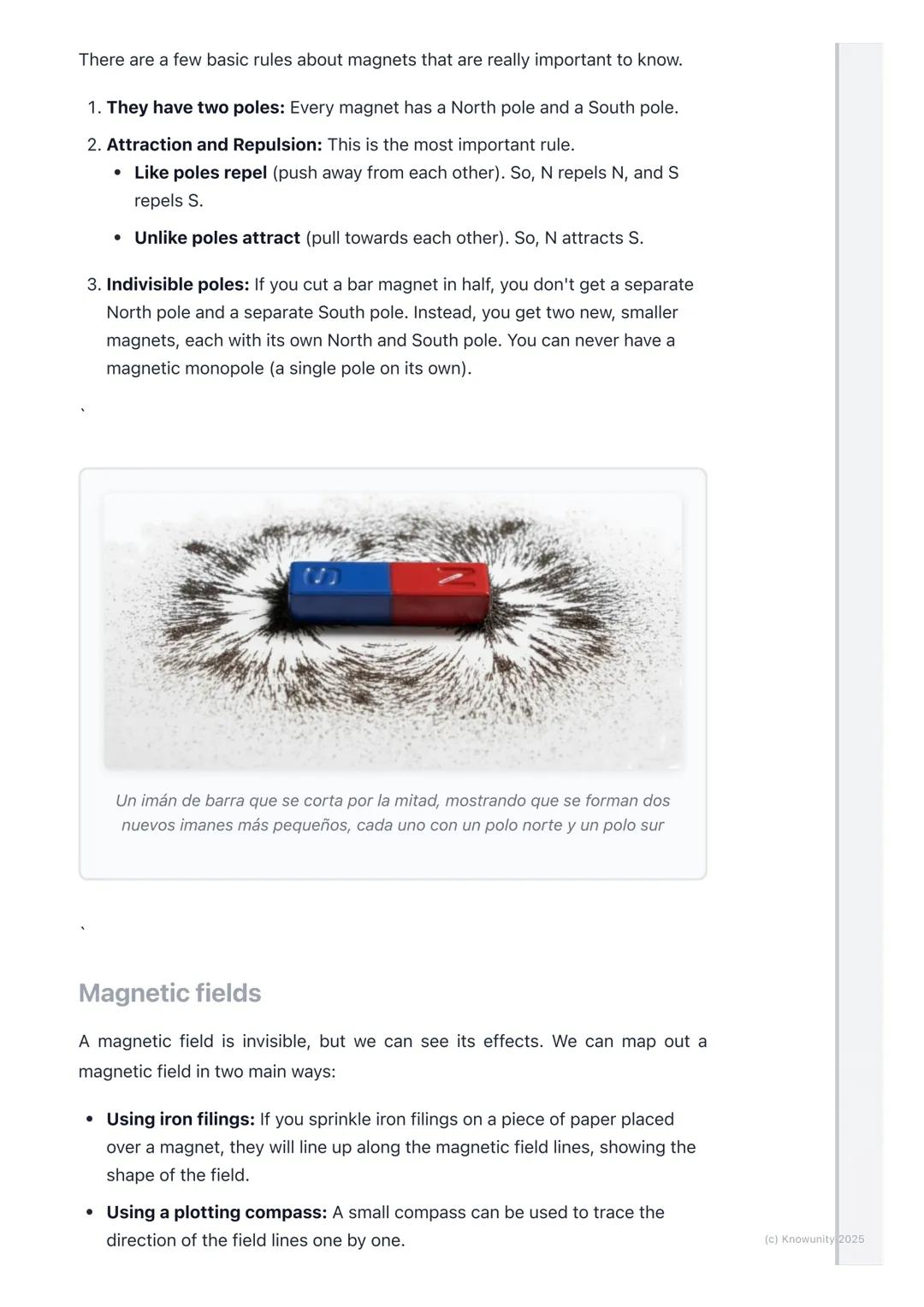
The Golden Rules of Magnetism
Here's where magnetism gets predictable, and these rules will save you in every exam. Like poles repel (N pushes away N, S pushes away S) and unlike poles attract (N pulls towards S). It's that simple, but it explains everything magnets do.
Here's something that might blow your mind: if you snap a bar magnet in half, you don't get separate N and S pieces. Instead, you get two complete magnets, each with their own North and South poles. You can never isolate a single pole on its own.
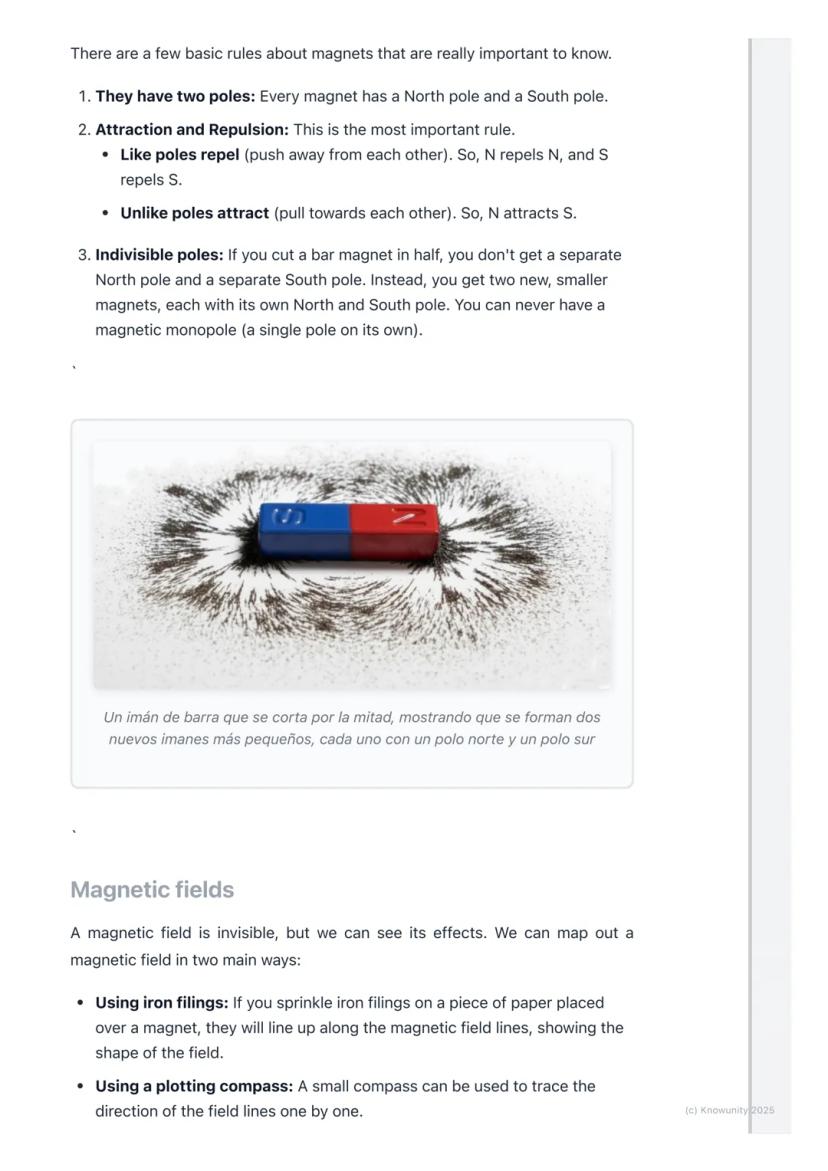
We can actually see magnetic fields by sprinkling iron filings around a magnet - they line up along the invisible field lines like magic. Alternatively, you can use a small compass to trace the field lines one by one.
Remember this: The closer together the field lines are drawn, the stronger the magnetic force is in that spot!
3
of 7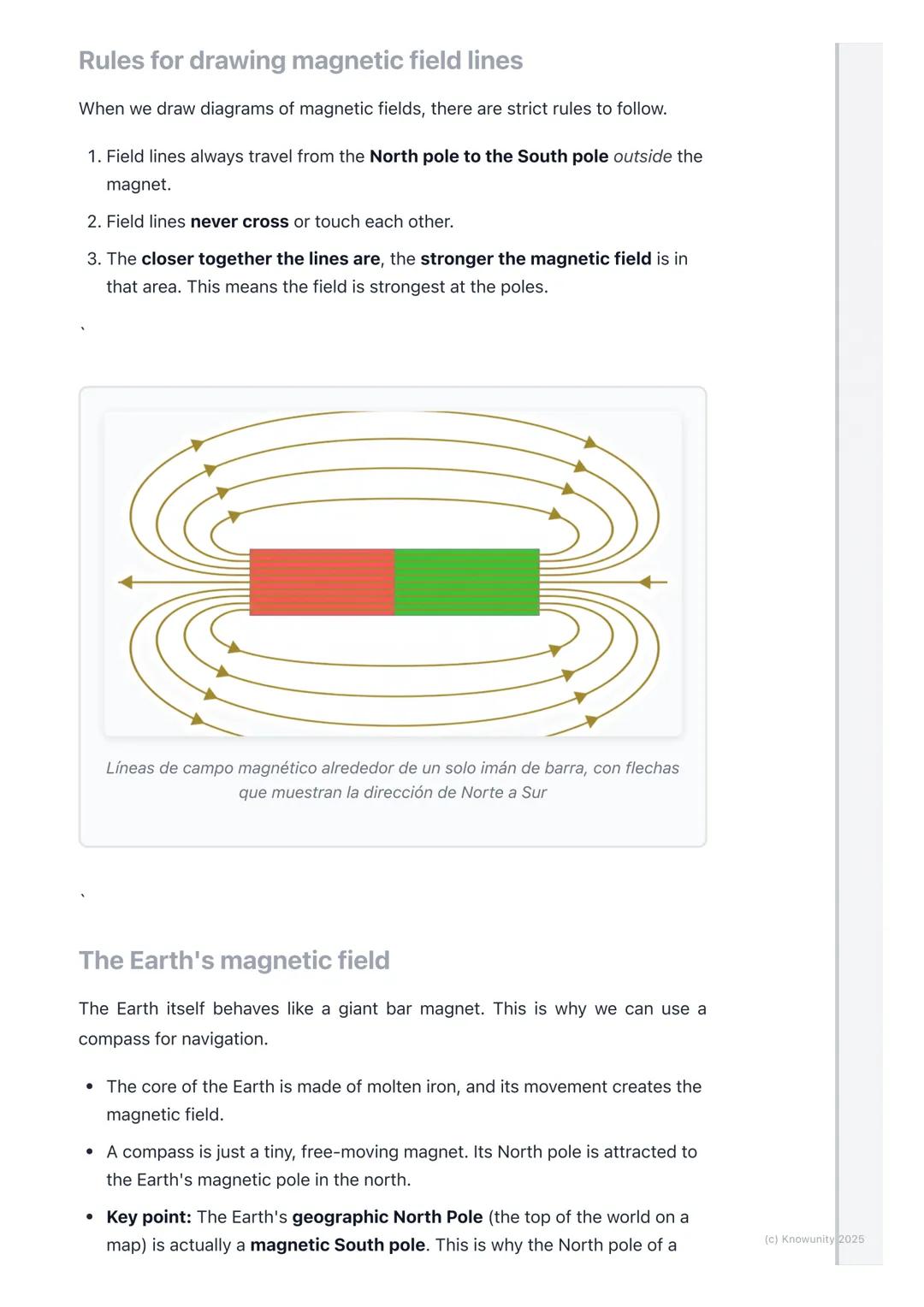
Drawing Magnetic Fields Like a Pro
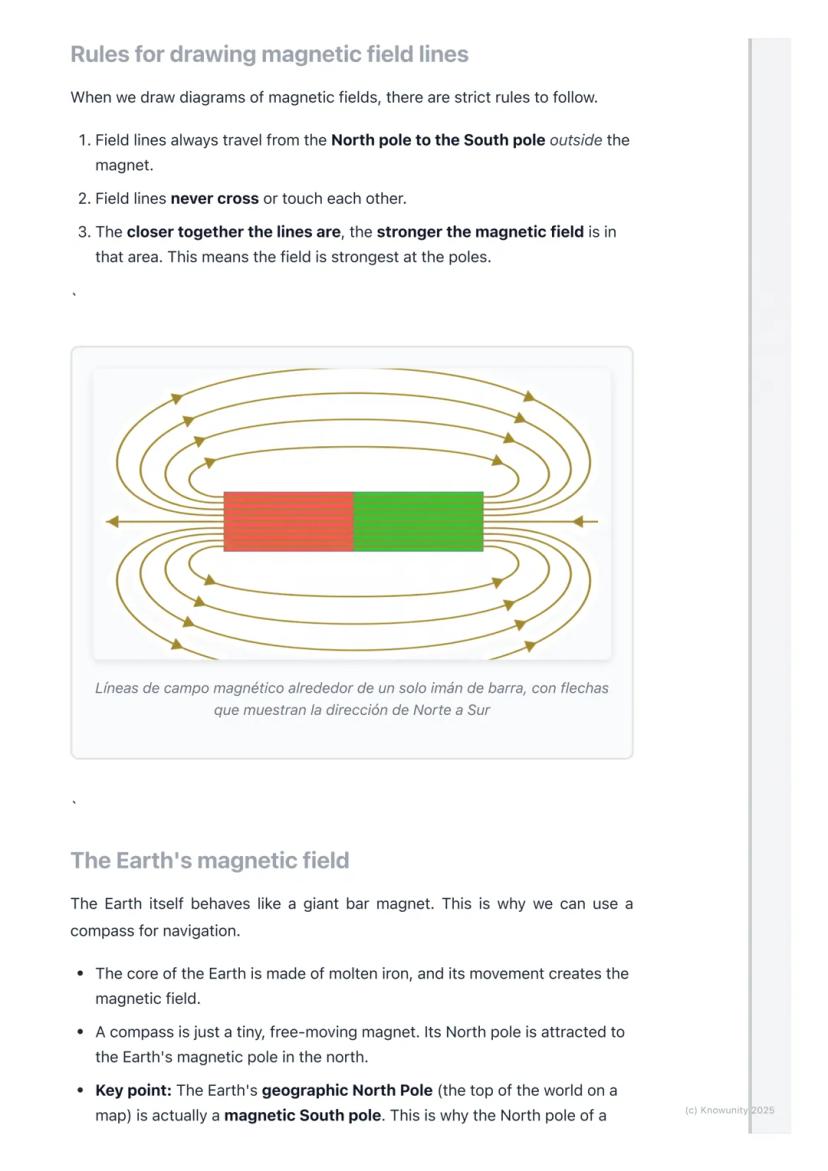
When you're sketching magnetic field diagrams, there are three non-negotiable rules. Field lines always travel from North to South outside the magnet, they never cross each other, and closer lines mean a stronger field.
The Earth's magnetic field is basically our planet acting like a massive bar magnet. The molten iron core creates this field, which is why compasses work for navigation.
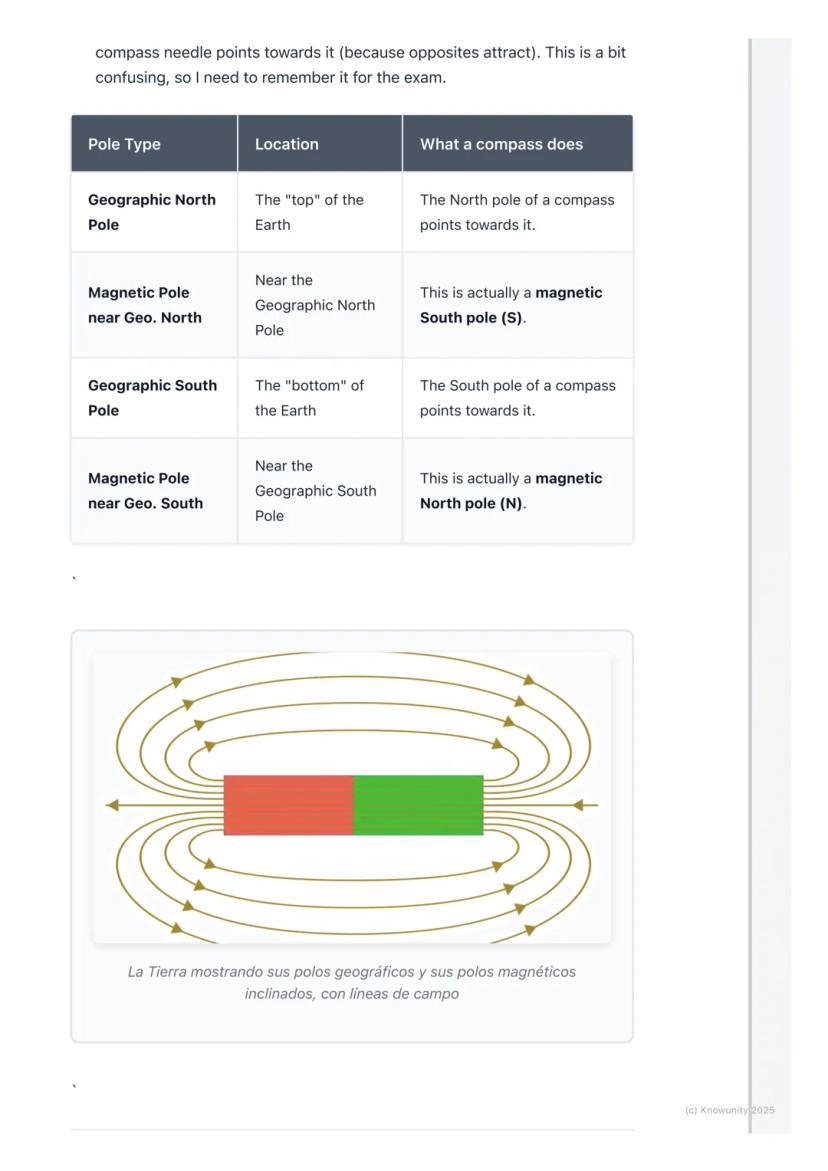
Here's the tricky bit that catches loads of students: Earth's geographic North Pole (the top on maps) is actually a magnetic South pole. That's why the North end of a compass needle points towards it - opposites attract, remember?
Exam alert: This Earth's pole confusion is a classic trick question - don't let it catch you out!
4
of 7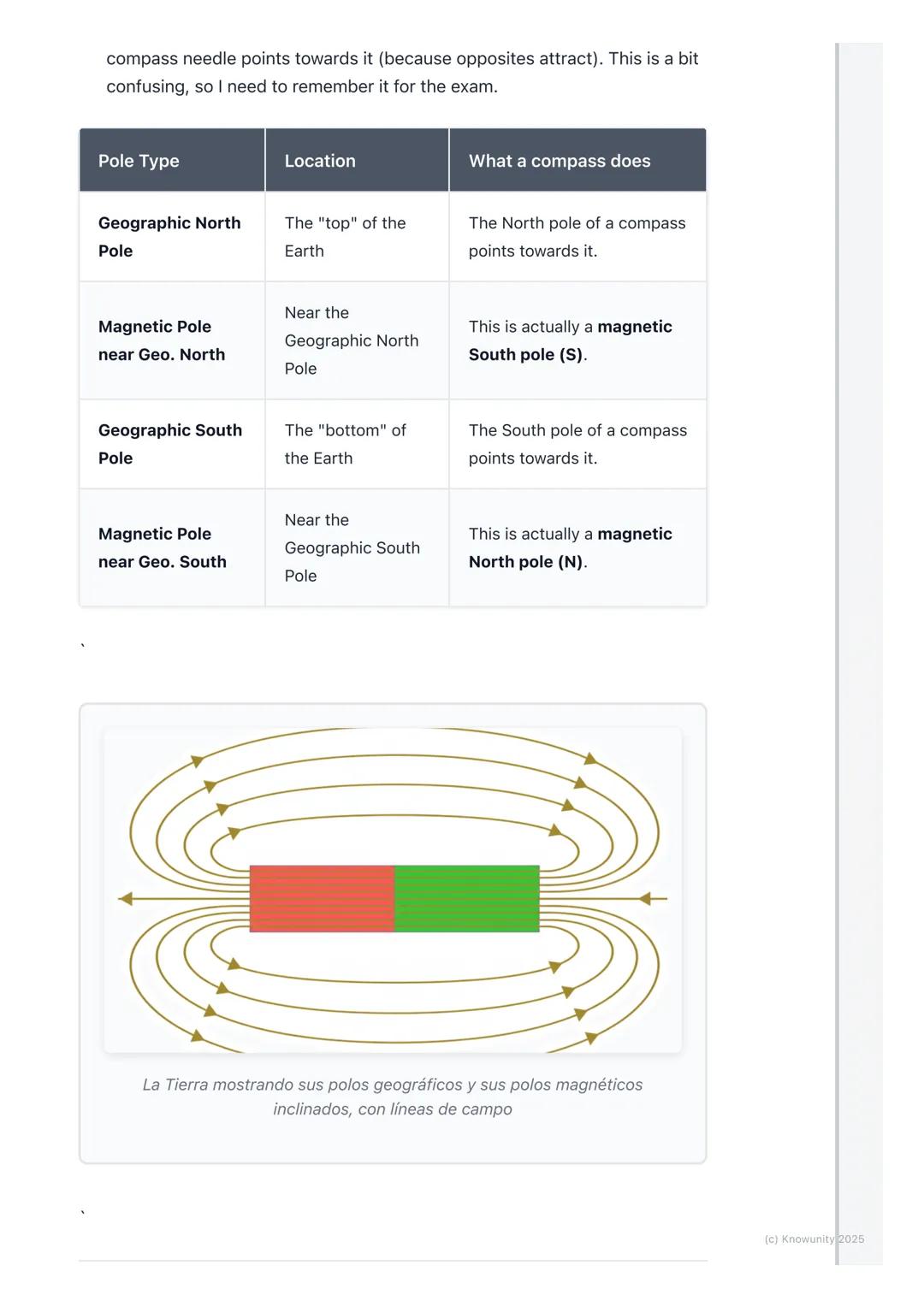
Real-World Applications You Need to Know
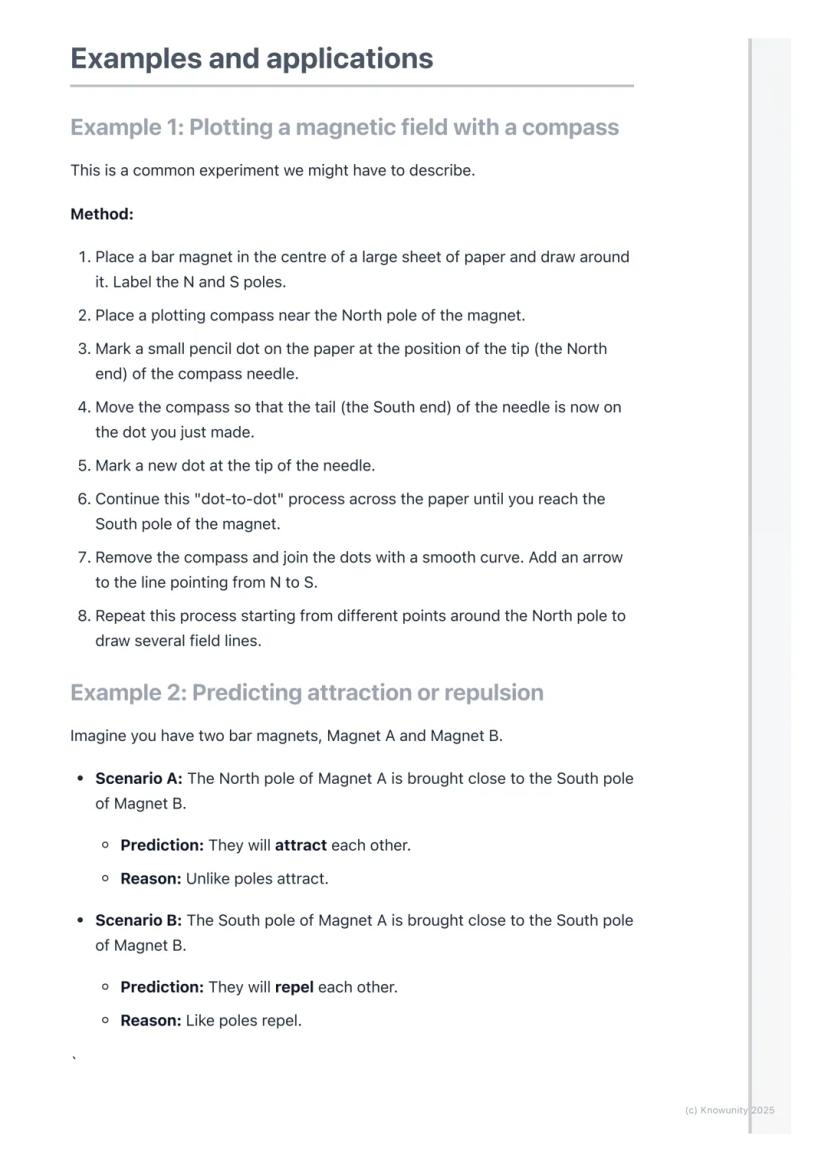
The compass plotting experiment is dead likely to appear in your exam. You place a plotting compass near a magnet's North pole, mark where the needle points, then move the compass so its tail sits on that mark. Keep going dot-to-dot until you reach the South pole, then join the dots with arrows pointing N to S.
Let's practice predicting what happens when magnets meet. If you bring the North pole of one magnet near the South pole of another, they'll attract because unlike poles attract. But bring two North poles together? They'll repel each other with surprising force.
The four magnetic materials - iron, steel, nickel, and cobalt - are essential to memorise. Steel makes brilliant permanent magnets because it holds its magnetism really well.
Pro tip: In field line drawings, always add arrows showing the N→S direction, and remember that poles are where lines are most crowded together!
5
of 7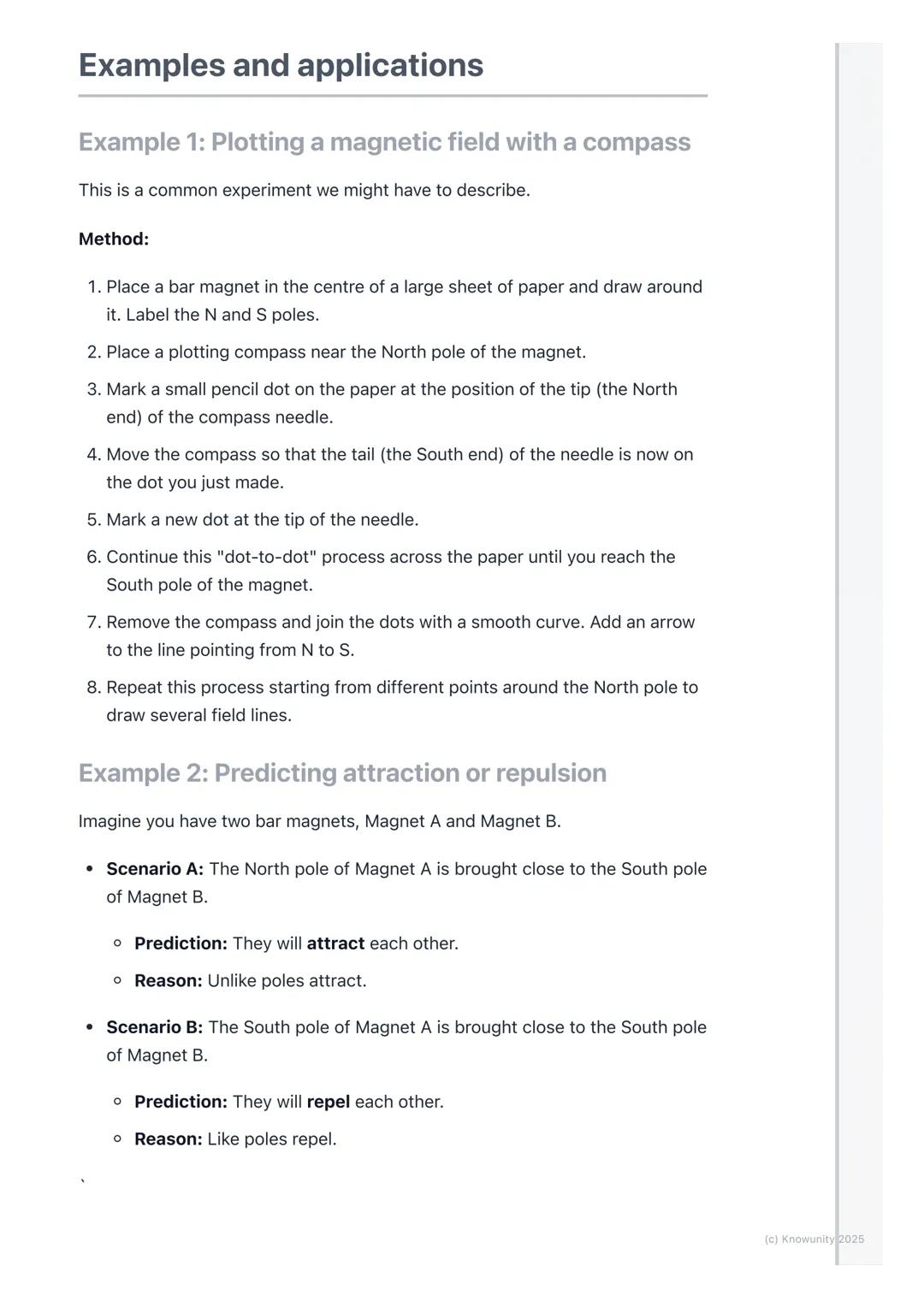
6
of 7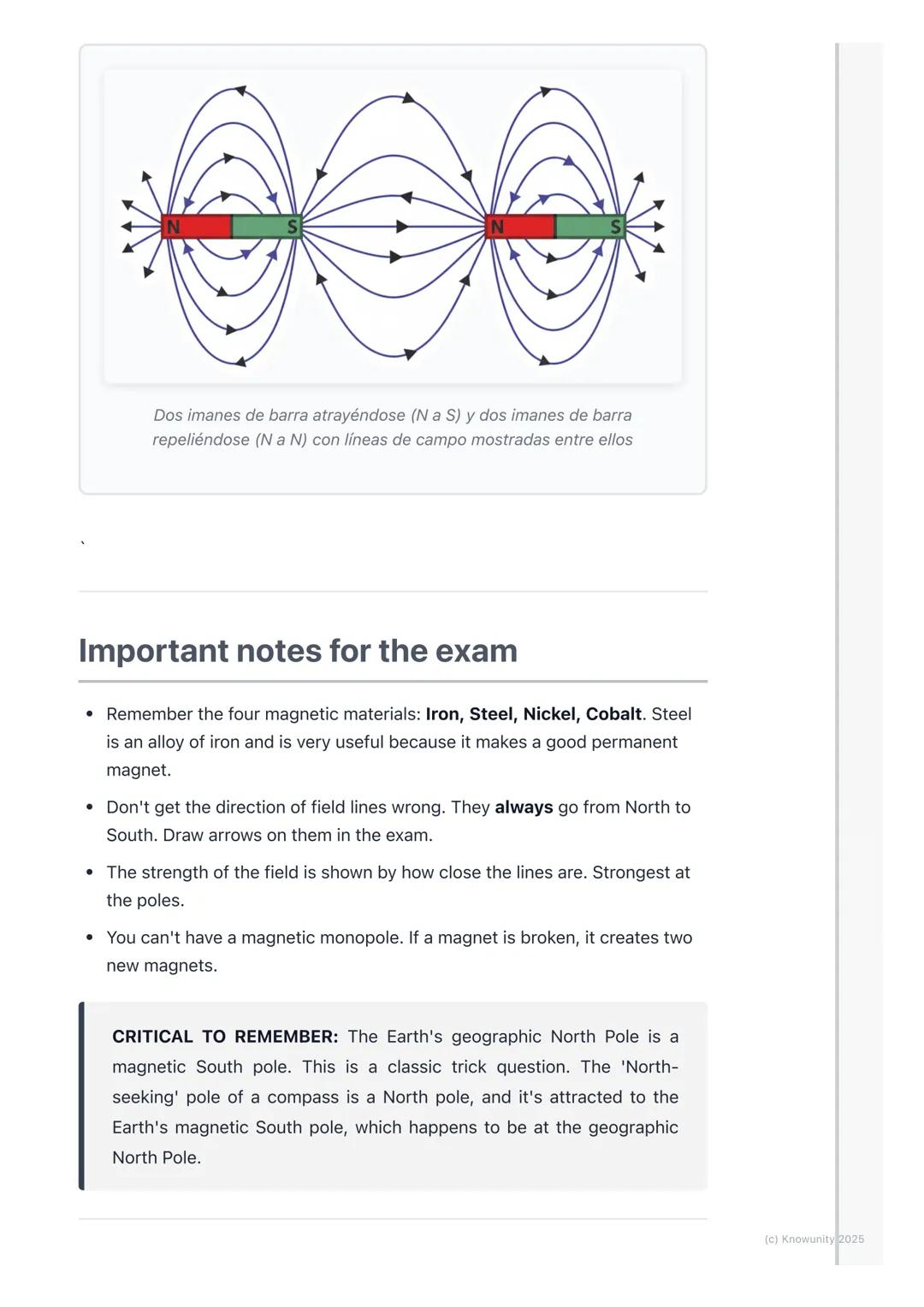
7
of 7
Wir dachten schon, du fragst nie...
Was ist der Knowunity KI-Begleiter?
Unser KI-Begleiter ist ein speziell für Schüler entwickeltes KI-Tool, das mehr als nur Antworten bietet. Basierend auf Millionen von Knowunity-Inhalten liefert er relevante Informationen, personalisierte Lernpläne, Quizze und Inhalte direkt im Chat und passt sich deinem individuellen Lernweg an.
Wo kann ich die Knowunity-App herunterladen?
Du kannst die App im Google Play Store und im Apple App Store herunterladen.
Ist Knowunity wirklich kostenlos?
Genau! Genieße kostenlosen Zugang zu Lerninhalten, vernetze dich mit anderen Schülern und hol dir sofortige Hilfe – alles direkt auf deinem Handy.
Beliebtester Inhalt in Physics
3Beliebtester Inhalt
9Findest du nicht, was du suchst? Entdecke andere Fächer.
Schüler lieben uns — und du auch.
4.6/5App Store
4.7/5Google Play
Die App ist sehr einfach zu bedienen und gut gestaltet. Ich habe bisher alles gefunden, wonach ich gesucht habe, und konnte viel aus den Präsentationen lernen! Ich werde die App definitiv für ein Schulprojekt nutzen! Und natürlich hilft sie auch sehr als Inspiration.
Stefan SiOS-Nutzer
Diese App ist wirklich super. Es gibt so viele Lernzettel und Hilfen [...]. Mein Problemfach ist zum Beispiel Französisch und die App hat so viele Möglichkeiten zur Hilfe. Dank dieser App habe ich mich in Französisch verbessert. Ich würde sie jedem empfehlen.
Samantha KlichAndroid-Nutzerin
Wow, ich bin wirklich begeistert. Ich habe die App einfach mal ausprobiert, weil ich sie schon oft beworben gesehen habe und war absolut beeindruckt. Diese App ist DIE HILFE, die man für die Schule braucht und vor allem bietet sie so viele Dinge wie Übungen und Lernzettel, die mir persönlich SEHR geholfen haben.
AnnaiOS-Nutzerin
Physics1 aufrufe·Aktualisiert May 31, 2026·7 SeitenUnderstanding Magnets and Magnetic Fields
Ever wondered why your fridge door stays shut or how a compass knows which way is north? It's all down to magnetism - one of the most useful invisible forces in our world. Understanding magnets isn't just about sticking things... Mehr anzeigen
1
of 7Melde dich an, um den Inhalt zu sehen. Kostenlos!
- Zugriff auf alle Dokumente
- Verbessere deine Noten
- Schließ dich Millionen Schülern an
What Are Magnets and Magnetic Fields?
You're surrounded by magnets every day, from your phone's speakers to the motor in your washing machine. Magnets are objects that create an invisible force field around them, and this magnetic field can attract certain materials or push other magnets away.
The really important stuff to remember: magnets have two magnetic poles - a North pole (N) and a South pole (S) - where the magnetic force is strongest. Only four materials are naturally magnetic materials: iron, steel, nickel, and cobalt. Everything else like plastic, wood, or copper? Completely unaffected by magnets.
Magnetic field lines are how we draw the invisible field to see what's happening. Think of them as the paths that show where the magnetic force is acting and how strong it is.
Quick tip: Steel is just iron mixed with other elements, which is why it's magnetic too - perfect for making strong permanent magnets!
2
of 7Melde dich an, um den Inhalt zu sehen. Kostenlos!
- Zugriff auf alle Dokumente
- Verbessere deine Noten
- Schließ dich Millionen Schülern an
The Golden Rules of Magnetism
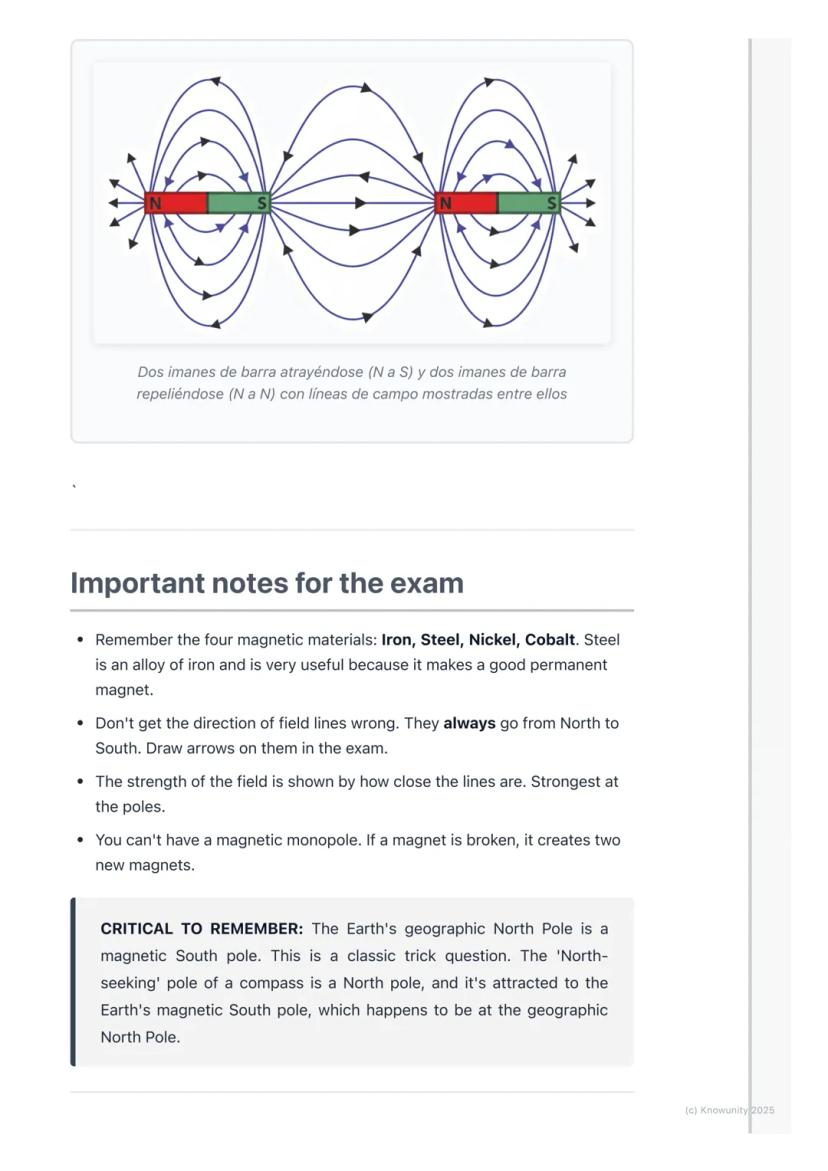
Here's where magnetism gets predictable, and these rules will save you in every exam. Like poles repel (N pushes away N, S pushes away S) and unlike poles attract (N pulls towards S). It's that simple, but it explains everything magnets do.
Here's something that might blow your mind: if you snap a bar magnet in half, you don't get separate N and S pieces. Instead, you get two complete magnets, each with their own North and South poles. You can never isolate a single pole on its own.
We can actually see magnetic fields by sprinkling iron filings around a magnet - they line up along the invisible field lines like magic. Alternatively, you can use a small compass to trace the field lines one by one.
Remember this: The closer together the field lines are drawn, the stronger the magnetic force is in that spot!
3
of 7Melde dich an, um den Inhalt zu sehen. Kostenlos!
- Zugriff auf alle Dokumente
- Verbessere deine Noten
- Schließ dich Millionen Schülern an
Drawing Magnetic Fields Like a Pro
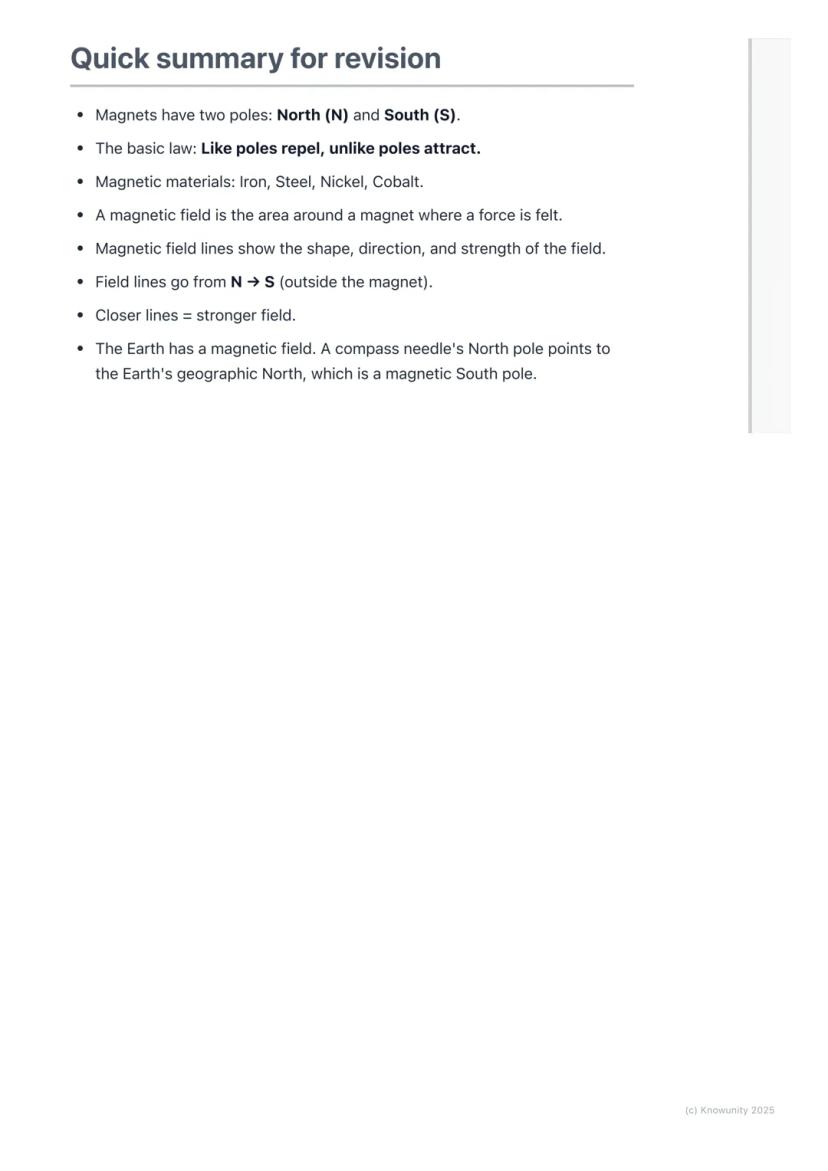
When you're sketching magnetic field diagrams, there are three non-negotiable rules. Field lines always travel from North to South outside the magnet, they never cross each other, and closer lines mean a stronger field.
The Earth's magnetic field is basically our planet acting like a massive bar magnet. The molten iron core creates this field, which is why compasses work for navigation.
Here's the tricky bit that catches loads of students: Earth's geographic North Pole (the top on maps) is actually a magnetic South pole. That's why the North end of a compass needle points towards it - opposites attract, remember?
Exam alert: This Earth's pole confusion is a classic trick question - don't let it catch you out!
4
of 7Melde dich an, um den Inhalt zu sehen. Kostenlos!
- Zugriff auf alle Dokumente
- Verbessere deine Noten
- Schließ dich Millionen Schülern an
Real-World Applications You Need to Know
The compass plotting experiment is dead likely to appear in your exam. You place a plotting compass near a magnet's North pole, mark where the needle points, then move the compass so its tail sits on that mark. Keep going dot-to-dot until you reach the South pole, then join the dots with arrows pointing N to S.
Let's practice predicting what happens when magnets meet. If you bring the North pole of one magnet near the South pole of another, they'll attract because unlike poles attract. But bring two North poles together? They'll repel each other with surprising force.
The four magnetic materials - iron, steel, nickel, and cobalt - are essential to memorise. Steel makes brilliant permanent magnets because it holds its magnetism really well.
Pro tip: In field line drawings, always add arrows showing the N→S direction, and remember that poles are where lines are most crowded together!
5
of 7Melde dich an, um den Inhalt zu sehen. Kostenlos!
- Zugriff auf alle Dokumente
- Verbessere deine Noten
- Schließ dich Millionen Schülern an
6
of 7Melde dich an, um den Inhalt zu sehen. Kostenlos!
- Zugriff auf alle Dokumente
- Verbessere deine Noten
- Schließ dich Millionen Schülern an
7
of 7Melde dich an, um den Inhalt zu sehen. Kostenlos!
- Zugriff auf alle Dokumente
- Verbessere deine Noten
- Schließ dich Millionen Schülern an
Wir dachten schon, du fragst nie...
Was ist der Knowunity KI-Begleiter?
Unser KI-Begleiter ist ein speziell für Schüler entwickeltes KI-Tool, das mehr als nur Antworten bietet. Basierend auf Millionen von Knowunity-Inhalten liefert er relevante Informationen, personalisierte Lernpläne, Quizze und Inhalte direkt im Chat und passt sich deinem individuellen Lernweg an.
Wo kann ich die Knowunity-App herunterladen?
Du kannst die App im Google Play Store und im Apple App Store herunterladen.
Ist Knowunity wirklich kostenlos?
Genau! Genieße kostenlosen Zugang zu Lerninhalten, vernetze dich mit anderen Schülern und hol dir sofortige Hilfe – alles direkt auf deinem Handy.
Beliebtester Inhalt in Physics
3Beliebtester Inhalt
9Findest du nicht, was du suchst? Entdecke andere Fächer.
Schüler lieben uns — und du auch.
4.6/5App Store
4.7/5Google Play
Die App ist sehr einfach zu bedienen und gut gestaltet. Ich habe bisher alles gefunden, wonach ich gesucht habe, und konnte viel aus den Präsentationen lernen! Ich werde die App definitiv für ein Schulprojekt nutzen! Und natürlich hilft sie auch sehr als Inspiration.
Stefan SiOS-Nutzer
Diese App ist wirklich super. Es gibt so viele Lernzettel und Hilfen [...]. Mein Problemfach ist zum Beispiel Französisch und die App hat so viele Möglichkeiten zur Hilfe. Dank dieser App habe ich mich in Französisch verbessert. Ich würde sie jedem empfehlen.
Samantha KlichAndroid-Nutzerin
Wow, ich bin wirklich begeistert. Ich habe die App einfach mal ausprobiert, weil ich sie schon oft beworben gesehen habe und war absolut beeindruckt. Diese App ist DIE HILFE, die man für die Schule braucht und vor allem bietet sie so viele Dinge wie Übungen und Lernzettel, die mir persönlich SEHR geholfen haben.
AnnaiOS-Nutzerin